Get all your news in one place.
100's of premium titles.
One app.
Start reading
The Economic Times
The Economic Times
Divyadeep Singh

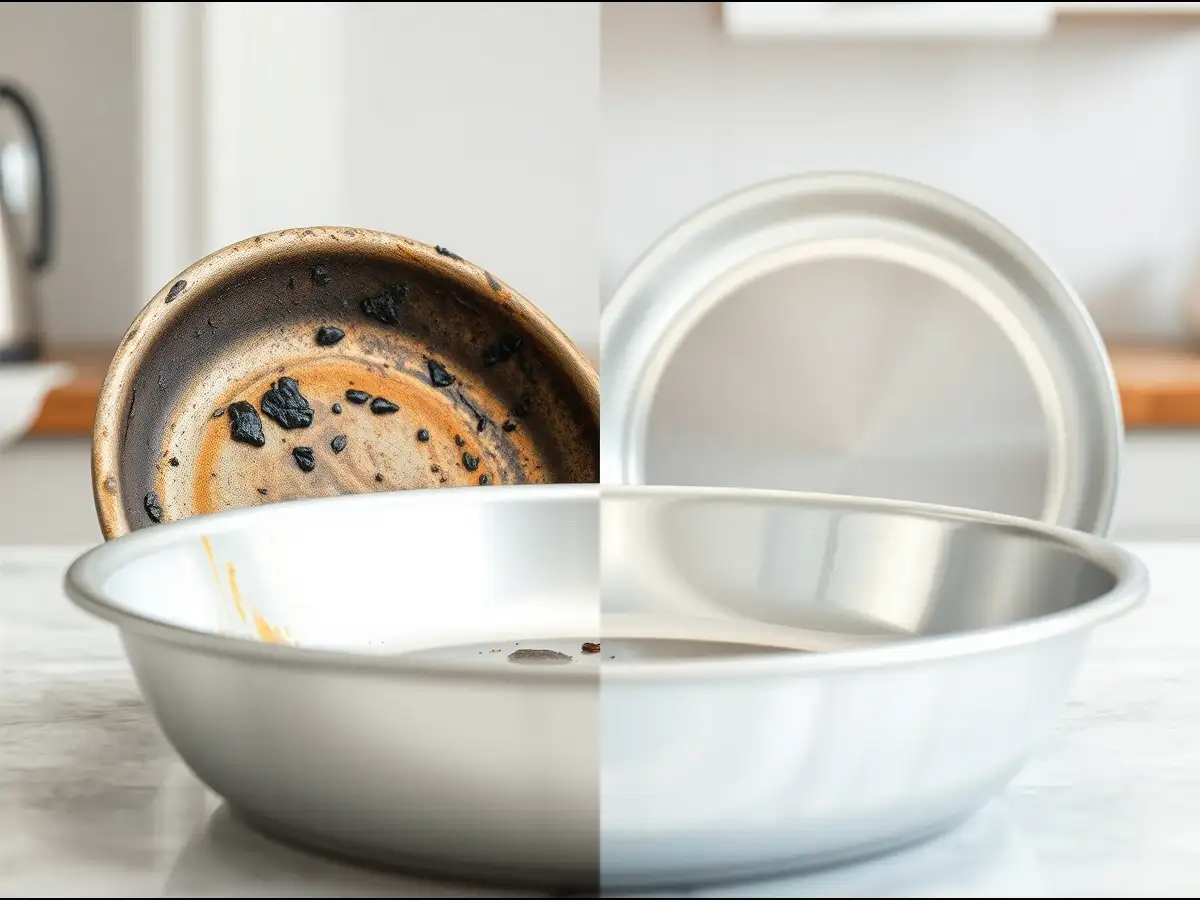
Aluminum pans need the right kind of cleaning if grease, grime, burnt food or mineral deposits make them look permanently blackened; here are a few ways to bring back their shine

A buildup of grease, grime, burnt food or mineral deposits can make an aluminum pan look permanently blackened. But discoloration does not necessarily mean the cookware is beyond cleaning. The right materials and techniques can help remove residue and restore the pan’s original luster.

Why Does an Aluminum Pan Turn Black?

Aluminum cookware can become blackened because of improper care, misuse or exposure to conditions that cause the metal to discolor.

High Heat Can Darken Aluminum

Prolonged exposure to high temperatures can cause aluminum pans to discolor and blacken. Alicia Sokolowski, president and co-CEO of AspenClean, says this can happen when an aluminum pan is heated at very high temperatures, particularly when it is empty or contains only a small amount of oil or food, according to Martha Stewart. The surface of the aluminum can oxidize and turn dark.

To reduce the risk of heat-related blackening, preheat an aluminum pan over low heat and gradually increase the temperature to the desired cooking level. This can minimize surface damage caused by sudden exposure to high heat.

Burnt Food and Oil Can Leave Blackened Areas

Burnt food or oil can stick to the surface and create darkened areas. This can be particularly challenging with nonstick aluminum pans because removing burnt-on residue can be difficult without damaging the nonstick coating.

Certain Foods Can Cause Discoloration

Aluminum can react with some acidic or alkaline ingredients, which can cause the surface to discolor. For example, cooking tomatoes or sour sauces in an aluminum pan can darken the aluminum surface, according to Sokolowski.

Improper Cleaning Can Also Cause Discoloration

The way an aluminum pan is cleaned can also affect its appearance. Sokolowski says that failing to properly dry a pan after cleaning it with hard water can allow mineral deposits to build up on the surface and cause discoloration.

Cleaning aluminum cookware in a dishwasher can also damage it. Jennie Varney, brand manager for Molly Maid, says the combination of alkaline dishwasher detergent, high heat and minerals in water can trigger a reaction that darkens the metal, according to Martha Stewart.

What You Need to Clean an Aluminum Pan

Keep these materials on hand before cleaning an aluminum pan:

  • Natural dish soap
  • Non-abrasive sponge
  • Baking soda
  • Water
  • Salt
  • Soft-bristle brush
  • Dish towel
  • How to Clean an Aluminum Pan

Before you begin, make sure the aluminum cookware has completely cooled. Cleaning hot cookware can be dangerous and less effective, according to Sokolowski.

Step 1: Rinse the Pan

Rinse the pan with warm water to remove loose food particles and residue.

Step 2: Prepare Soapy Water

Fill a sink or basin with warm water and add a few drops of natural dish soap.

Step 3: Soak the Pan

Place the aluminum pan in the soapy water and let it soak for a while.

Step 4: Scrub With a Non-Abrasive Sponge

After soaking, use a non-abrasive sponge to clean both the interior and exterior of the pan.

Step 5: Rinse Thoroughly

Once the pan is clean, rinse it thoroughly with warm water.

Step 6: Dry Completely

Use a kitchen towel to dry the pan, or let it air-dry on a dish rack. Make sure it is completely dry before storing it.

How to Remove Stains From an Aluminum Pan

If an aluminum pan has become blackened or has accumulated grime, dish soap alone may not be enough. Baking soda and salt can be used for additional cleaning.

How to Remove Aluminum Pan Stains With Baking Soda

When mixed with water, baking soda forms a paste that can help restore the appearance of aluminum cookware. Start by rinsing the pan with warm water to remove loose food particles or residue. Fill a sink or basin with warm water and add a few drops of natural dish soap. Place the pan in the soapy water and let it soak for a while.

After soaking, clean the interior and exterior with a non-abrasive sponge. Next, make a paste using baking soda and water, then use a soft-bristle brush to clean the stained areas.

Rinse the pan thoroughly with warm water once it is clean. Dry it with a kitchen towel or let it air-dry on a dish rack, making sure the pan is completely dry before storing it.

How to Remove Aluminum Pan Stains With Salt

  • Salt can also help remove built-up food debris from aluminum cookware because of its coarseness.
  • Fill the stained pan with water and add a few tablespoons of table salt. Bring the mixture to a boil and let it simmer for a few minutes.
  • Remove the pan from the heat and allow it to cool. Then wipe it clean with a non-abrasive sponge.
  • Rinse the pan thoroughly with warm water and dry it with a kitchen towel or let it air-dry on a dish rack. The pan should be completely dry before it is stored. Whatever method you use, thoroughly rinse the pan and make sure it is completely dry before storing it.
Sign up to read this article
Read news from 100's of titles, curated specifically for you.
Already a member? Sign in here
Related Stories
Top stories on inkl right now
One subscription that gives you access to news from hundreds of sites
Already a member? Sign in here
Our Picks
Fourteen days free
Download the app
One app. One membership.
100+ trusted global sources.