
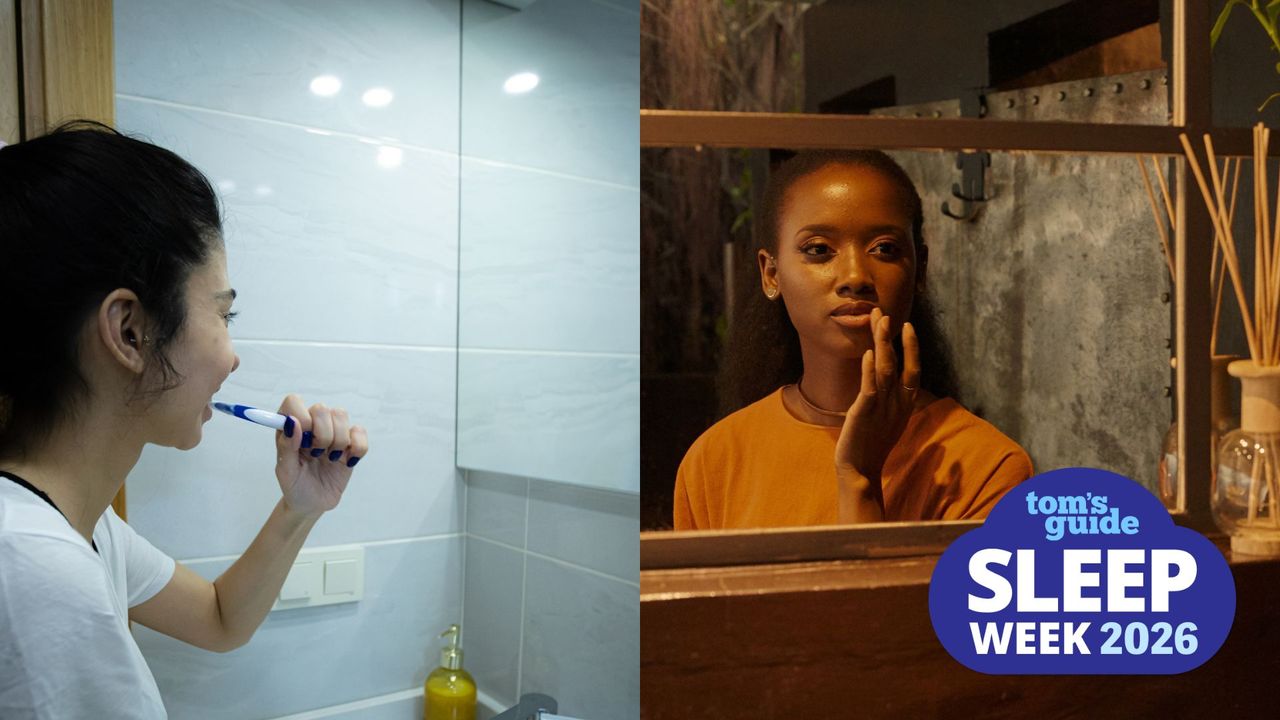
A common household item could be stopping you from falling asleep fast and getting enough deep sleep, without you even knowing. However, the good news is that there is an easy way to fix it.
Health scientist Tom Coleman, who is also a sleep expert at Hillary's, explains how your home's ultra-bright bulbs, especially ones emitting cool blueish-white light, could be making it harder for you to fall asleep and make you more prone to insomnia.

"The last rooms you’re in before you go to bed, such as the bathroom, the hallway and the kitchen, are [normally] fitted with ultra-bright overhead LEDs that are closer to studio lighting than a calming nighttime environment," Coleman says. "Bright, cool-toned light tells the brain it’s daytime."
Here's why ultra-bright LED lights make it harder for you to fall asleep and get the deep sleep you need, plus the $7 fix you could use instead.
Key take-aways: At a glance
- Exposure to bright, blue-white light two hours before bed can shift your circadian rhythm back by two hours.
- This will make it harder for you to fall asleep, and it can increase middle insomnia (nighttime awakenings).
- Exposure to any type of light while sleeping can decrease the amount of deep sleep you get and increase how often you wake up during the night.
- To stop light disrupting your sleep, the health expert recommends switching to warm, amber light in the evenings and especially two hours before the time you want to sleep.
- You could also use light-blocking eye masks and blackout curtains at night.
How bright light before bed affects your sleep
- Blue light acts as a biological 'off switch' for melatonin, the hormone your body needs to transition into deep, restorative sleep.
I recently tested (and still use) the Lumie Bodyclock Luxe 700FM, and I know from its sunrise simulation and sunset simulation that bright, blue-white lightings signal daylight, while dim, warm-toned lighting signals dusk.
And this can be a problem when every room in your house is all aglow with dazzling cool-toned lighting, with one study finding that exposure within two to fours hours before bed can delay bedtime by an average of 14 minutes.
Meanwhile, the US Centers for Disease Control and Prevention says there's evidence that light bulbs, which are found in 47% of U.S. households, in the evening (about two hours before and after usual bedtime) can shift circadian rhythm about two hours later per day.

Meanwhile, LED light bulbs (which 47% of U.S. households) have also been found to emit blue light that can suppress twice as much melatonin than a yellow-green light.
"You’re essentially telling your brain it’s midday," warns Coleman.
Specialized cells in your eyes contain a light-sensitive protein called melanopsin. When hit by blue-wavelength light from your bathroom LED, these cells send a direct signal to the brain's 'master clock' to stop producing melatonin immediately.
Coleman also says that the common nighttime routine mistake of showering, brushing your teeth, and washing your face right before bed can also wreak havoc on your sleep thanks to bright bathroom lighting that "blasts your brain with a wake-up call."

However, it's not just LED light in the bathroom that can disrupt sleep.
According to Coleman, even when when you're tucked up in bed with all the lights switched off, light can still creep in to ruin your night.
"Once you’re in bed, light continues to be one of the biggest threats to deep sleep — we massively underestimate how sensitive the brain is to brightness," the sleep expert warns.
He explains that outside light or even the a crack in the curtain can cause nighttime awakenings and leave people "feeling groggy, irritable, and less resilient".

"Natural dawn light, street lamps, car headlights, and even the standby glow of electronics can nudge the brain out of deeper sleep stages, where rest and recovery happen," says Coleman.
In fact, a 2021 study found that sleeping in a room with even a small amount of light elevates heart rate throughout the night, which can lead to nighttime awakenings, have adverse effects on cardiovascular and metabolic health.
Another study discovered that those living with heavy light pollution tend to get much less sleep, leading to an increase in experiencing anxiety and mood disorders.
How to reduce light pollution in your bedroom
According to Coleman, if bright, cool-toned lighting is causing sleep issues, then the best thing to do is to switch it with dim, warm-toned lighting instead. And this can be as simple as choosing to buy a $7 pack of amber-colored bulbs at Amazon.
"Warm, amber-toned bulbs, shaded lamps, candles, and dimmers all help reinforce the body’s natural preparation for sleep," he suggests. "It’s not about making your house dim; it’s about giving your brain consistent cues."
Amber lighting, which mimics candlelight or a fireplace, is a dim artificial light that has been shown to help people fall asleep faster and fewer awakenings, making it a perfect reading light.

Research has also found that amber-tinted lenses can block out blue light and improve sleep quality and mood.
As for light when you're trying to fall asleep, research proves that closing your eyes at night is not enough to block out sleep-disrupting light. However, the good news is that eye masks have been proven to promote deep sleep and improve alertness the next day.
As for blocking out external light, such as street lamps or your neighbours annoying security light, Coleman recommends blackout blinds, as a room with complete darkness has been shown to reduce insomnia.
3 products that stop light from ruining your sleep
Optimizing your sleep environment doesn't require much effort. Based on Coleman's expert advice, here are three budget-friendly ways to fall asleep faster and reclaim your deep sleep tonight...
Other bedtime mistakes keeping you awake at night

Too much exposure to light in the hours before bed isn't the only thing that's disrupting your sleep.
For instance, 2019 study found that those who ate meals after 8pm were more likely to take longer to fall asleep, experience poor sleep quality, and experience daytime sleepiness. Late meals also exacerbated conditions such as sleep apnea.
As for staying hydrated, a study has shown that a fluid intake of more than 500ml within two hours before bedtime can trigger nocturia, increasing nocturnal awakenings and decreasing next-day alertness.
Also, if your bedtime includes sharing a bed with a four-legged friend, then you should know that it's been reported that 63% of pet owners who sleep with their pet more than four nights a week have poor sleep quality.
Another nighttime routine mistake is working out less than four hours before bed. Research has found that vigorous exercise within a four-hour window before bedtime can shorted sleep duration and make it harder to fall asleep.