
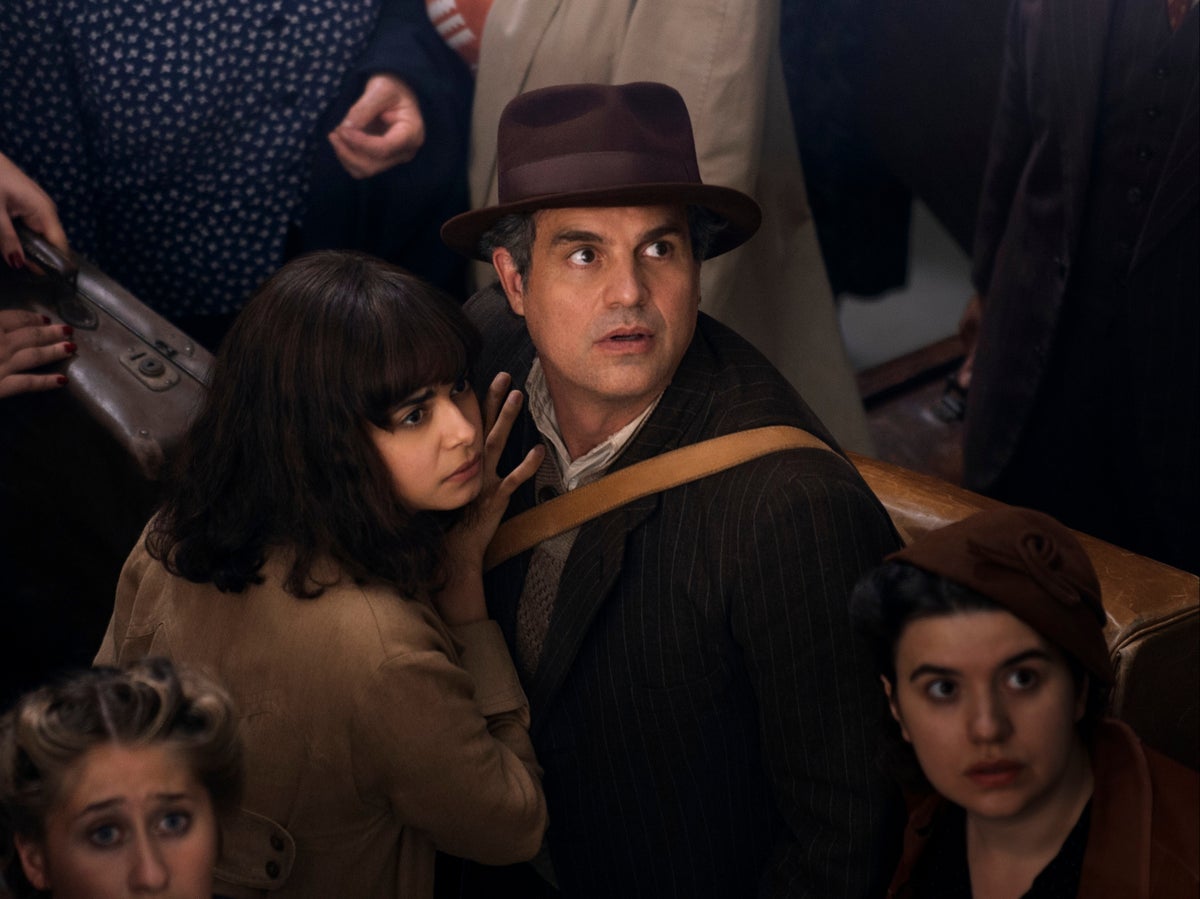
Right now, war doesn’t seem that glamorous. In the present tense, it seems an unlikely canvas for romance or adventure, and yet, time after time, war – with the clarifying distance of history – is used as a narrative prop. Suddenly, teenage heartbreak has huge emotional depth, grief and relief perform their tango, and all the struggles of being human are amplified to their maximum level. In war, everything is overwrought: and that’s precisely the timbre of Netflix’s new four-part drama, All the Light We Cannot See.
France, the Second World War. Marie (Aria Mia Loberti), a blind teenager, broadcasts snippets of Jules Verne’s novel Twenty Thousand Leagues Under the Sea from her attic in Saint-Malo. Her father Daniel (Mark Ruffalo) is gone, and Saint-Malo is awaiting the arrival of the Americans, who might end the Nazi’s occupation. Among the ranks of the Germans is Werner (Louis Hofmann), a sensitive young radio engineer. The two are bound by an obsession: a professor who, through their childhoods, spoke to them via shortwave radio, telling stories of the world. “The most important light,” comes the professor’s most influential maxim, “is the light you cannot see.”














