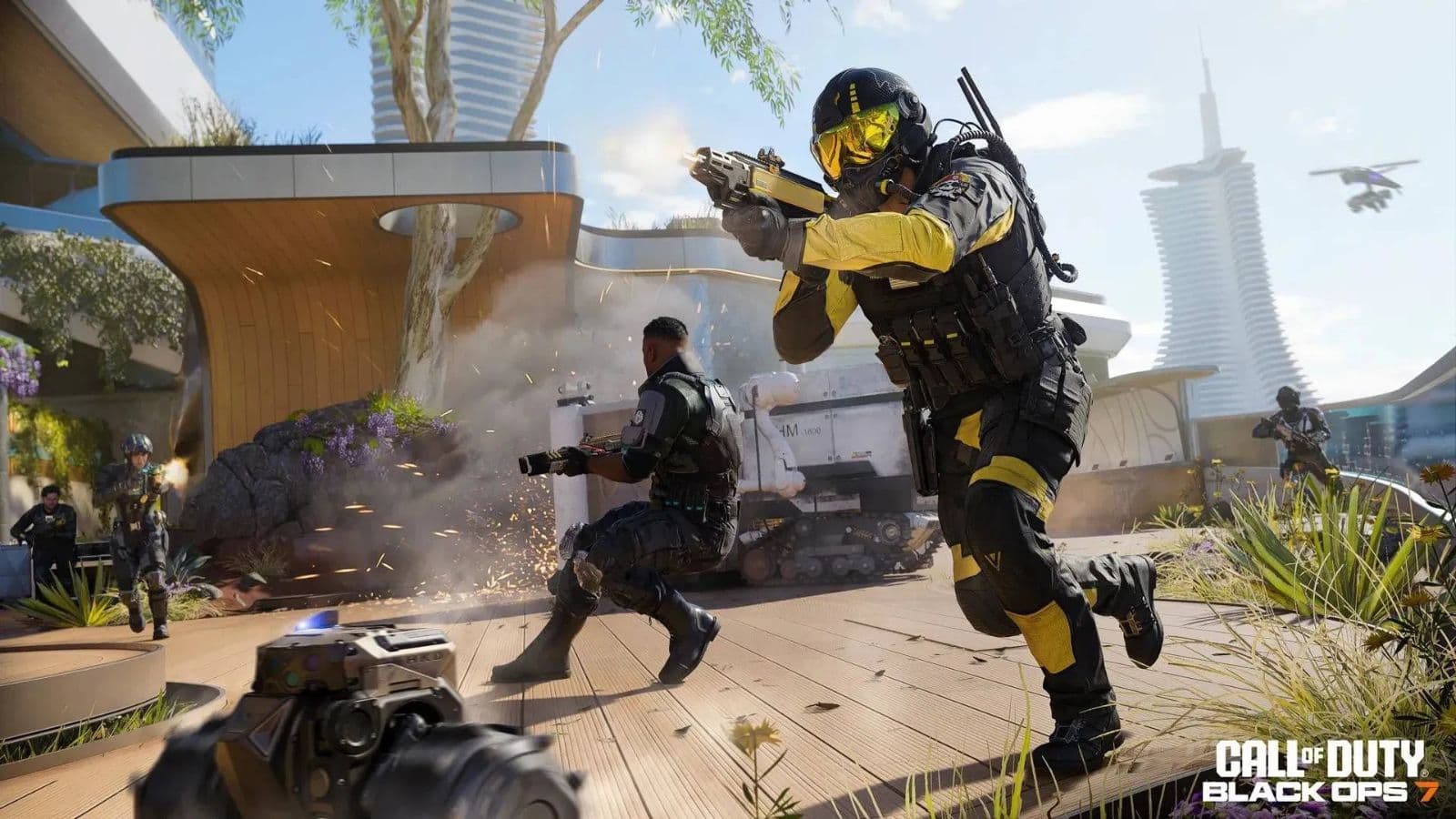
Black Ops 7 Ranked Play has officially launched with Season 2, introducing some significant competitive updates. Treyarch has reworked key systems to align with the current Call of Duty League standards.
These changes directly impact how players progress and queue in ranked mode. We break down the three biggest changes in Black Ops 7 Ranked Play at launch and explain what they mean for competitive players.
Table of contents
3 big changes in BO7 Ranked Play
Overload added to the Ranked Play mode rotation

In line with CDL rules, Overload has replaced Control and now joins Hardpoint and Search & Destroy as the three core modes in BO7 Ranked Play. Overload is an objective-driven mode where teams fight for possession of a device that spawns dynamically on the map. Once secured, the device must be carried to one of two scoring zones located inside the enemy base, creating constant pressure around rotations, map control, and escort timing.
Overload places a heavy emphasis on teamwork and structured play, making it far less forgiving for uncoordinated teams. Individual slaying power still matters, but success in Overload often comes down to communication, positioning, and the ability to control spawns around device locations. Its competitive viability was highlighted during the CDL 2026 Major 1 Grand Final, where Paris Gentle Mates stunned OpTic Texas in a series that showcased clutch device runs and well-timed defensive holds.
Placement Matches introduced for starting rank
Black Ops 7 also introduces Placement Matches, changing how you earn your starting rank. Instead of being placed immediately into a division, all players begin as unranked and play three Placement Matches to receive their initial rank.
This system speeds up progression for highly skilled players, allowing them to reach appropriate ranks far more quickly than in Black Ops 6. At the same time, it protects newer or lower-skilled players from being immediately matched against top-tier opponents, improving match quality early in the season.
4-stack parties restricted in Crimson and above

The biggest change in Black Ops 7 Ranked Play is the restriction on four-player stacks in Crimson Rank and higher. From Crimson through the Top 250, players are limited to solo or duo queues, preventing full parties from overwhelming lobbies through coordination alone. This change has been made to ensure a fairer competitive field where success at the highest ranks reflects individual skill, adaptability, and decision-making rather than premade team advantage.
While this restriction tightens competition at the top, Ranked Play remains flexible for the majority of the player base. Players in Diamond rank and below can still queue in teams of one to four, provided they meet party skill requirements.
Alongside these Ranked Play updates, Activision has also reinforced its RICOCHET Anti-Cheat system ahead of Ranked Play going live in both Black Ops 7 and Warzone Season 2. The latest upgrades introduce new detection methods to disable input-modifying devices such as Cronus Zen and XIM Matrix, which the developer has explicitly labeled as cheating tools.