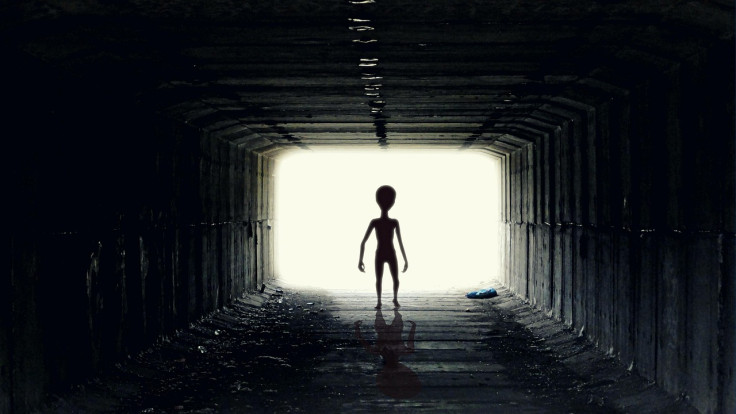
Call it a distraction. Transparency advocates say that misses the point entirely.
President Donald Trump's announcement last week that he would direct federal agencies to release files on unidentified anomalous phenomena (UAP) drew immediate scepticism.

Republican congressman Thomas Massie didn't hold back. 'They've deployed the ultimate weapon of mass distraction,' he wrote on X, 'but the Epstein files aren't going away... even for aliens.'
They’ve deployed the ultimate weapon of mass distraction, but the Epstein files aren’t going away… even for aliens. https://t.co/u050EhKkMm
— Thomas Massie (@RepThomasMassie) February 20, 2026
The timing looks suspicious. Trump faces ongoing pressure over heavily redacted Jeffrey Epstein files. A UFO announcement shifts the conversation. Simple enough.
But here's what that framing ignores: UAP disclosure isn't a Trump invention. It's a decades-long push backed by congressional hearings, military whistleblowers, and bipartisan legislation. Dismissing it as a shiny distraction? That's insulting to the people who've risked their careers chasing answers.
The Paper Trail Runs Deep
Christopher Mellon, former deputy assistant secretary of defence for intelligence and current chair of the Disclosure Foundation's board, pointed out that the Pentagon's All-Domain Anomaly Resolution Office (AARO) 'has yet to fulfil its statutory obligations,' DefenseScoop reported. The office hasn't released its congressionally mandated second volume report. It hasn't submitted its required 2025 annual report either.
'The public's trust has been eroded and must be restored,' Mellon said. 'Fulfilling reporting obligations is a good step in that direction.'
This isn't fringe territory. In September 2025, the House Oversight Committee's Task Force on the Declassification of Federal Secrets held its first UAP-focused hearing. Military veterans testified under oath. An active-duty Navy official spoke publicly before Congress about a UAP incident for the first time.
Air Force veteran Jeffrey Nuccetelli didn't mince words: 'What we saw changed our lives — the way we think about everything. Protect the witnesses. Many stay silent out of fear for their careers, reputations, and the safety of their families.'
Why Dismissing Disclosure Insults Decades of Research
The debate spilled onto Reddit's r/aliens forum, where user Dyffin sparked a heated discussion with a post titled 'Calling UFO Disclosure a 'Distraction' from the Epstein Files Misses the Bigger Picture.'
'Verified physical evidence of non-human intelligence would be the single most significant discovery in human history,' Dyffin wrote. 'It would fundamentally reshape science, philosophy, religion, geopolitics, and our understanding of humanity's place in the universe.'
The post didn't defend Trump. It defended the issue itself. 'The Epstein files are important. So is any credible disclosure of long-kept secrets regarding unidentified aerial phenomena. These are not mutually exclusive issues. A society capable of demanding transparency in one area should be capable of demanding it in another.'
Not everyone agreed. One user shot back: 'The problem is that this guy doesn't give two shits about aliens or disclosure or anyone or anything. He's desperate and trying to get people to stop demanding we look into his connections.' The scepticism ran deep. Another wrote: 'I just cannot get excited about it. He's saying release the UFO files. That's it. Many redacted files have been released via FOIA over the years. I'm not convinced we will see anything new of any value.'
Others took a different angle altogether. 'Aliens exist. Why are people so worried about disclosure?' one commenter asked. 'If you believe, then you've already experienced disclosure. Now let's get back on track and focus on the evil predators that are actively destroying humanity.'
But Dyffin pushed back against the cynicism. 'Skepticism is reasonable. I share it,' the user wrote in an edit. 'But it doesn't make the matter unimportant. The point isn't to take a side on whether we should expect groundbreaking disclosure. The point is to keep the momentum of public discussion moving toward meaningful oversight, transparency, and institutional follow-through.'
That's the crux. Distrust Trump all you want. But letting that distrust bury a decades-long push for answers? That's a different problem entirely.
What's Actually at Stake
Beyond curiosity, there's a governance question. If parts of the government have sat on extraordinary information without proper congressional oversight, that's a constitutional problem. It's about accountability and not entertainment.
Retired Rear Admiral Tim Gallaudet, who has testified before Congress on UAP topics, acknowledged that Trump 'has the authority' to push for disclosure. But he also flagged concerns about the administration's mixed signals on other fronts.
'This might be a consequential moment, but the impact will depend on the follow-through,' Mellon cautioned.
Scepticism about Trump's motives? Fair. Scepticism about whether meaningful files will actually surface? Also fair. But treating decades of research, testimony, and bipartisan congressional action as nothing more than a convenient headline grab? That's the real dismissal. And it's the researchers, veterans, and whistleblowers who've pushed this issue forward — long before Trump's Truth Social post — who deserve better.
Call it what you want. Just don't call it nothing.