Get all your news in one place.
100's of premium titles.
One app.
Start reading
Sports Illustrated
Sports Illustrated
Sport
Albert Breer

Albert Breer’s Takeaways: The Prospect Who Makes Sense for the Jets at No. 2

We’re 10 days away until the first night of the NFL draft, and we’re working the phones. Here are some of the early things we’ve gathered for this week’s takeaways …


New York Jets

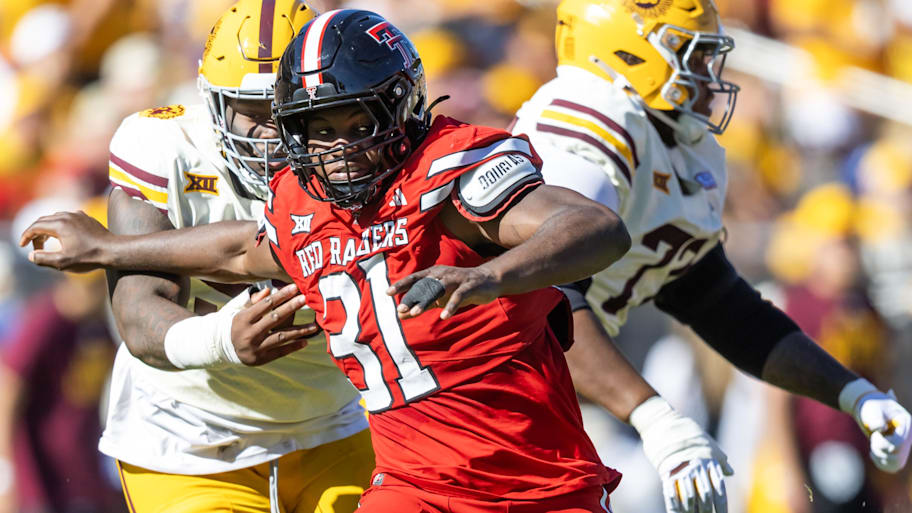
There’s a reason why a consensus seems to be crystallizing that Texas Tech edge rusher David Bailey will be the second pick in the draft. For a while now, we have all been operating under the presumption that the Raiders are going to select Indiana Heisman winner Fernando Mendoza off the board early in the 8 p.m. ET hour. And to be clear, the idea that Bailey will be a Jet isn’t exactly a fait accompli yet.

But a lot of things are lining up—and the main one, to me, is the spot the Jets are in.

Ownership had a heavy hand in head coach Aaron Glenn blowing up his first coaching staff and doing it in phases, first firing defensive coordinator Steve Wilks on Dec. 15, then six lower-level assistants on Jan. 23, then offensive coordinator Tanner Engstrand on Jan. 27. After that, the Jets went down the road with experienced DC Wink Martindale—and a list of other candidates they announced as interviewees—before pulling back on the premise they were paying Wilks around $3 million not to coach in 2026, and going with an off-list candidate.

That has left Glenn as the defensive play-caller, new OC Frank Reich as the offensive play-caller and the entire staff, after a total of 12 assistants were whacked, under a lot of pressure. It’s clear the late-2025 rumblings that owner Woody Johnson wasn’t happy with the state of his team will only get louder if the Jets stumble out of the gate in ’26.

At the same time, despite all the tumult, a roster that was stripped of most of its best players from the 2024 team, and a five-game losing skid that ended a 3–14 season, capped by a blowout loss to the Bills’ backups, Glenn never lost his team. And given that and everything else, including high-profile, in-season trades of stars Sauce Gardner and Quinnen Williams, it’s pretty remarkable the first-year coach pulled that off.

The trouble from here is twofold. One, ownership has already flashed impatience. And at some point, the coaches must have some proof of concept in what they’re trying to build.

That, to me, is where the decision on the second pick comes in. Having dealt away Williams and Jermaine Johnson, and emptied out the deep crew of pass rushers Robert Saleh had assembled, the Jets were among the worst teams in football last year at getting after the quarterback. For that reason, it makes sense that Bailey and Ohio State’s Arvell Reese would be two guys discussed for the No. 2 pick.

All of the above is why Bailey makes more sense for the Jets than Reese.

Yes, the Jets are set up to build with an eye on the long term. They have five first-round picks in the next two drafts, four of the top 44 picks this year and a stopgap in Geno Smith at quarterback. But they need results now. That doesn’t mean they need to win 11 or 12 games this year. It does mean they need to create light at the end of the tunnel.

They need that for the owner, and to give the locker room reason to keep grinding along.

This is no affront to Reese—but of the two, Bailey is clearly that guy. Where with Reese, you must have a plan to use and develop him at positions he has great ability but not much experience at, there’s not a lot of that with Bailey. His ceiling isn’t as high as Reese’s, but no one has to close their eyes and conjure up a vision for what he’ll be as a pro.

Which, with Reese, is precisely what you need to do.

“He’s maybe as physically gifted as anyone in the draft,” said one exec of Reese. “It’s time on task—he’s never spent a ton of time at one spot. Off the ball, he’s got a ton of ability. He can rush the passer, and that’s probably where his greatest value is. You want to have a vision for the guy.”

In other words, it might take time, and time is at a premium for Glenn and his staff.

Bailey is the guy who’ll help now—help get a defensive system off the ground, help create belief in the locker room and help provide that light at the end of the tunnel. He’s worthy of the pick, too, with sparkling advanced statistics backing up a lot of tape showing a plug-and-play, hand-in-the-ground pass rusher. That explains why so many NFL folks see this one coming down the tracks and why it would make so much sense for the Jets.


Which teams could trade up

Teams picking behind the Jets are looking to move down. Count the Cardinals, Titans, Giants, Browns and Commanders among those already looking at trying to drop down in the order to accumulate capital. The problem for those five is finding teams to move up.

I’d say there are two players who could provoke such a move.

One is Reese, assuming Bailey is off the board at No. 2. His value from team to team will differ, but the high end is really, really high, and with this new genre of off-the-ball/on-the-ball, Swiss Army knife linebackers (Micah Parsons, Abdul Carter, Jalon Walker, Jihaad Campbell et al.), more teams have a home for guys with his profile. And if you’re scared off by Rueben Bain Jr.’s arm length—30 7/8-inch arms—and some are, the drop from Reese to the next rusher might be massive.

The other player who could inspire a trade is Jeremiyah Love, based on the sort of difference-maker he can be for an offense and the high-volume nature of the impact he can make. Of course, a team would have to be comfortable valuing a running back that way, but he’s very much in the Saquon Barkley–Zeke Elliott–Bijan Robinson–Christian McCaffrey class as a tough, rugged inside runner with the ability as a receiver to stay on the field in all situations.

So who would trade up to select one of those two? The Saints, who pick eighth, have shown a willingness to get aggressive in the past and have a pass-rush need. There’s also Dallas.

The Cowboys could view Reese like they did Parsons in 2021. They also have two first-round picks. On the draft value chart, the 12th and 20th picks add up to 2,050 points, which is in between the value of the third (2,200) and fourth (1,800) picks. Would Arizona take a slight discount or ask Dallas for its third-rounder, which would leave the Cowboys with just one pick in the top 100? It’s interesting to ponder, anyway.

At this point, for teams picking that high, it’s going to be challenging to find partners to move into that range. It’s more likely that we’ll get more movement in the middle of the first round than we do at the top of it.


Eagles and A.J. Brown

The Eagles now have at least built in the flexibility to move A.J. Brown after June 1. By now, you should know the realities of this situation: If Philadelphia trades Brown today, all the dead money (money Philly pushed forward previously in the contract for cap relief) will accelerate on to its 2026 cap, creating a dead-money hit of $43.515 million. If the Eagles move him after June 1, they’d push $27.161 million of that charge over to their 2027 cap (leaving just the $16.353 million in cap debt already on their 2026 cap).

With Brown’s cap number at $23.393 million for this year, trading him now would mean adding $20.11 million in charges to their 2026 cap, while trading him after June 1 could save them around $7.04 million on their 2026 cap (albeit with a ’27 charge of $27.162 million looming).

So the lingering question, accounting for all this, is what Philly would do at the position if Brown isn’t part of their equation for 2026. We have some answers now.

Friday’s trade for Packers veteran Dontayvion Wicks was the latest one. They’d already signed Hollywood Brown and Elijah Moore. And they have six of the first 137 picks in a receiver-deep draft. Now, to expect any one of those three—or a rookie—to be what A.J. Brown has been for the team would be stupid. But put together, they’re complementary pieces to place around DeVonta Smith and at least make the idea of dealing their three-time All-Pro receiver without turning the position into a weakness feasible.

And I really like Wicks, for what it’s worth.

He’s a big-bodied receiver with a lot of untapped potential. He has never had so much as a single 100-yard game, but that was also the case with Romeo Doubs, who just signed a three-year, $51 million deal with the Patriots. Those two were together with Christian Watson and Jayden Reed the past three years in Green Bay, and last year top-100 picks Matthew Golden and Savion Williams joined that fray as well. The logjam created a fight for snaps, and also an idea among rival evaluators that there might be more meat on the bone with these guys.

So maybe Wicks will break out in Philly (the team gave him a one-year extension to protect itself, if that happens), maybe he won’t. Either way, he’s a good player to have in the mix at a baseline, and a good get for a fifth-round pick this year and a sixth-rounder in 2027. That also gives the Eagles the flexibility to move Brown.

Whether they will remains to be seen, at least for probably another seven weeks or so.


Houston Texans defensive end Will Anderson Jr.
Texans defensive end Will Anderson Jr. could be in line for a $50 million per year extension. | Troy Taormina-Imagn Images

Houston Texans

I believe defensive end Will Anderson Jr. will have a new contract with the Texans at the start of the 2026 season. I’m not as sure about QB C.J. Stroud. And that, to me, boils down to this: There is zero question about Anderson’s long-term viability as an elite player at his position; that’s not the case with Stroud, who has been up and down since a starry rookie year.

With Anderson, the question really is the price point. Nick Bosa changed the market in 2023, landing a deal at $34 million per year, well above T.J. Watt’s $28 million deal. Maxx Crosby topped Bosa at $35.5 million 18 months later, and weeks after that, Myles Garrett pushed the market to $40 million per year. Months later, T.J. Watt got $41 million per year, then Parsons landed at $46 million per year after he was traded.

Given that wild rate of inflation, it would be a stunner if Anderson went for less than $50 million per year, and the Texans showed last year with Derek Stingley Jr. that they have a desire to get these deals done early. Yes, that price sounds wild, but the market isn’t going to reverse itself, and this is a guy who is legitimately the standard as a worker and a player that head coach DeMeco Ryans wants to set.

So let’s say in June, Houston signs Anderson to a four-year, $200 million extension.

Then what? At that point, having another big piece locked up long-term, and not having the quarterback they took with the No. 2 pick in 2023 signed, would be glaring. And given that Dak Prescott’s deal done at $60 million per year is now over a year and a half old, the next big one most certainly could be at $65 million or $70 million per year, with guarantees topping $200 million.

Given how last year ended, it would make sense if the Texans wanted to wait another year, the way the Dolphins did with Tua Tagovailoa or the Packers (essentially) did with Jordan Love.

There’d be a lot of noise that would come along with that, of course.

Then again, seeing how Stroud handled that might get Houston closer to its final answer on him.


Quarterback prospects

There’s a good chance Mendoza and Ty Simpson will be the only quarterbacks taken during the first two days of the draft. That would be the first time only two quarterbacks went in the first three rounds since back-to-back years in the 1990s: It was only Jim Druckenmiller and Jake Plummer in 1997, and Tony Banks and Bobby Hoying the year before that. It also, by the way, sort of makes sense.

History tells us that quarterbacks mostly go in the first round or fall through. The evidence is pretty straightforward. Since 2000, 77 quarterbacks have been drafted in the first round, 25 in the second round and 35 in the third. It has been over a decade since multiple quarterbacks went in the second round (Derek Carr and Jimmy Garoppolo in 2014).

The logic for that is simple. If you think a quarterback can be your full-time starter, you’re probably drafting him in the first round. And if you don’t see a guy that way, you probably won’t take him in the second or third rounds, where full-time starters are probably going to be available to you at other positions.

Anyway, I think this year could be a sort of case study in that. Mendoza is the first pick, a potential franchise player. Simpson has NFL starter tape, but maybe not NFL starter tools, which is why he’d go in the second round (that’s where I think he’ll land) rather than the first. Then you have LSU’s Garrett Nussmeier, Penn State’s Drew Allar, Miami’s Carson Beck, Arkansas’s Taylen Green and North Dakota State’s Cole Payton, and I feel like teams would be taking fliers on those guys.

Is it possible a couple of those guys will be taken in the third round? Sure. But I don’t know which ones, and I’m not sure it’s likely, either.


2027 QB outlook

The 2027 class affects that, too. The list is long: Oregon’s Dante Moore, Texas’s Arch Manning, Notre Dame’s CJ Carr, Ohio State’s Julian Sayin, USC’s Jayden Maiava, South Carolina’s LaNorris Sellers, LSU’s Sam Leavitt, Texas Tech’s Brendan Sorsby, Ole Miss’s Trinidad Chambliss, Oklahoma’s John Mateer, Miami’s Darian Mensah and UCLA’s Nico Iamaleava.

You get the picture. Throw in dark-horse transfers such as DJ Lagway at Baylor and Drew Mestemaker at Oklahoma State, and you have 14 quarterbacks who at least have a chance of being taken high in 2027.

Now, what next year’s class lacks is the sure things, quarterbacks who are virtual locks to land in the top 10, like Caleb Williams and Drake Maye were a year ahead of time in 2023, or Trevor Lawrence was for virtually his entire college career. Moore is the closest to that, as it stands now. But with more than a dozen guys considered in this running and the chance that others emerge from outside the group, there’s a good chance next year will be a quarterback-rich year for teams in need.

That’s why, as I see it, the Jets, Browns, Dolphins and Cardinals are kicking the can down the road a year (though getting Malik Willis is a worthy swing by Miami at perhaps settling the position in another way). It’s also why teams may spend their second- and third-round picks at other positions this year, knowing there’s likely going to be not just a few franchise guys, but a lot of depth coming in 2027.


Reuben Bain Jr.

The Rueben Bain Jr. car accident reported by The Read Optional on Sunday is something NFL teams have been aware of for quite some time. The Ollie Connolly story detailed a March 17, 2024, crash in which Bain’s vehicle struck another car, per the police report, on I-95 in Miami, then hit concrete barriers on both sides of the highway. The accident left one of four passengers in Bain’s car, 22-year-old college student Destiny Betts, from Georgia, who was visiting on spring break, in a coma. Betts died June 13, 2024.

The Miami-Dade court system also has records of a lawsuit, later settled, filed by the driver of the other vehicle in the accident.

Obviously, this is a terrible tragedy. And that Betts’s family and friends might have to relive it now as part of Bain’s draft process is awful. They’ve already been through a lot, and what they’ve dealt with is bigger than where Bain gets selected on April 23.

But the reason this has come out is because Bain’s a football player, and this could materially affect where he plays football in 2026 and beyond.

However, teams have known about this for some time and have vetted it—and Bain—since the fall, given that he’s a top prospect. The GM of one team picking in the top 10 told me Bain didn’t seem willing to discuss the incident when questioned on it. An exec with another team in the top 10 said Bain was open “to the extent he could be” about the situation.

For what it’s worth, I don’t think this is going to change where Bain gets picked in the draft. This isn’t exactly a curveball for the people involved.


Indianapolis Colts

Kenny Moore II could be a good addition for a team. As ESPN’s Adam Schefter reported last week, the Colts and the veteran nickel corner agreed to explore a trade that could lead to the team captain being traded after nine years in Indianapolis.

First of all, he’s still a good football player.

Now 30, Moore had six pass breakups, an interception, 1.5 sacks and three tackles for losses in 14 games last year. As you’d expect from a guy who has been a captain four times, he’s also a front-of-the-room type who was nominated by the team for the Walter Payton Man of the Year Award the past two years. His position, too, has taken on greater importance across the NFL—guys who were once purely nickels, playing part-time, are now viewed as starters.

As for potential landing spots, I think Dallas would be one, with the nickel being an important piece in new coordinator Christian Parker’s defense and the Cowboys having a hole after Jourdan Lewis’s departure to the Jaguars last year. The Vikings are another potential fit, with Moore’s versatility meshing, at least on paper, with how DC Brian Flores builds his defense. Those teams being in the NFC should also make them likely suitors, assuming Indy would rather not help out a conference rival.

Moore, who will turn 31 in August, is in a contract year, so that’ll drive down his value some. But if the price was a Day 3 pick on the higher end, and I had a need like Dallas and Minnesota, I’d probably do it.


New York Giants

I think Dexter Lawrence II will remain a Giant. Looking back at the history of John Harbaugh and how he and his teams have valued big men on both sides of the ball over the years, it would seem likely that he and GM Joe Schoen and his staff will find a way to keep Lawrence. As we wrote last Wednesday, Lawrence hitting the nonguaranteed phase of his deal, along with a new staff, made this sort of dustup between the team and its star defensive tackle likely, but it’s still manageable.

Lawrence has $20 million due this year and $22 million due next year. This year, he has an $18.5 million base salary, $500,000 workout bonus and $1 million in per-game roster bonuses; next year, he has a $2.5 million roster bonus and an $18 million base salary, plus another $500,000 workout bonus and $1 million in per-game roster bonuses.

The Giants will either extend the 28-year-old, who is coming off a bit of a down year, or they will guarantee a portion of his pay and add meaningful incentives.

As I see it, this shouldn’t be too complicated, and I don’t see the Giants moving Lawrence unless some other team goes way off-script with a trade offer. New York already has the makings of a really good defensive front. No need to mess with that.


Quick-hitters

And here are a few more notes on what I’m hearing as we draw closer to the draft…

• I’d say Ohio State WR Carnell Tate is secure as a top-10 pick, and could go as high as No. 4 to the Titans or No. 5 to the Giants. After that, I don’t sense there’s a consensus No. 2 at the receiver position, with USC’s Makai Lemon, Arizona State’s Jordyn Tyson, Texas A&M’s KC Concepcion and Indiana’s Omar Cooper Jr. among those that different teams see as the next guy after Tate. I also think the depth of the draft class at the position could lead to some teams passing on receivers altogether in the first round.

• If Love’s Notre Dame backfield mate Jadarian Price goes in the first round, it’ll be because of his high ceiling and also, I think, because after the two Irish runners, there’s a big dropoff, to the point where it may be the third or fourth round before another back is selected.

• So if there is movement in the second 10 picks—and I expect there to be some—it could be generated by the tackles. Alabama OT Kadyn Proctor will go higher than I think some people have him right now. He’s wildly talented, though there have been discipline/entitlement questions surrounding him. And then you have Georgia’s Monroe Freeling and Utah’s Caleb Lomu, who are both very raw but have more left tackle potential than presumed top linemen.

• Speaking of O-linemen, Miami OT Francis Mauigoa went through the Indianapolis medical recheck, and some teams believe he’s going to need a cleanup procedure on his back at some point (he’s symptom-free now). It’s not the end of the world. Mauigoa, for what it’s worth, was spectacularly durable with the Hurricanes, starting and playing every snap for Miami from the minute he arrived as a true freshman.

• Oregon tight end Kenyon Sadiq remains the most intriguing player in the draft, in my mind. I think you could argue, too, that if you’ve got a creative offensive coordinator/system, he has the best chance of any of the guys in the class to become the focal point of a team’s passing game. The Chiefs and Ravens would be fun landing spots for him.

• Ohio State’s Sonny Styles is the draft’s best pure off-ball linebacker, but Cincinnati’s Jake Golday is another one to watch. He’s a converted edge rusher who has tested off the charts and has great instincts at the position.

• Happy trails to Kaleb McGary, the Falcons’ right tackle who is retiring at 31. He’s a good story because he came in as a first-round pick and was labeled a bust, but kept chugging along, working and improving, and eventually turned himself from a liability into one of the reasons Atlanta’s lines have been so good the past few years. His path is a good one for players to be aware of, in that it shows how tough it really is to establish yourself in the NFL.

• The owners’ involvement in the referee talks last week is a good sign. It is to be hoped that common sense prevails and a deal is reached.

• Sorry to see former first-round pick Paxton Lynch tear his LCL in a National Arena League game earlier this month. But I give him credit for playing on that sort of small stage. A lot of guys say they’ll do whatever it takes to keep playing football, but few who have been high draft picks like Lynch have actually played in a league like that to keep their hopes alive.

• Finally, I don’t want to sit here and pretend I didn’t see the stories that came out last week about Mike Vrabel and Dianna Russini. I’ve known both for a long time. I like and respect both, and they’re both great at their jobs. I don’t have anything more to add other than I really feel for the family members involved who are going through it. And that this is way more of a media story than a football story—and, honestly, I’ve never seen it as part of my job to cover other sports media.


More NFL on Sports Illustrated


This article was originally published on www.si.com as Albert Breer’s Takeaways: The Prospect Who Makes Sense for the Jets at No. 2.

Sign up to read this article
Read news from 100's of titles, curated specifically for you.
Already a member? Sign in here
Related Stories
Top stories on inkl right now
Our Picks
Fourteen days free
Download the app
One app. One membership.
100+ trusted global sources.