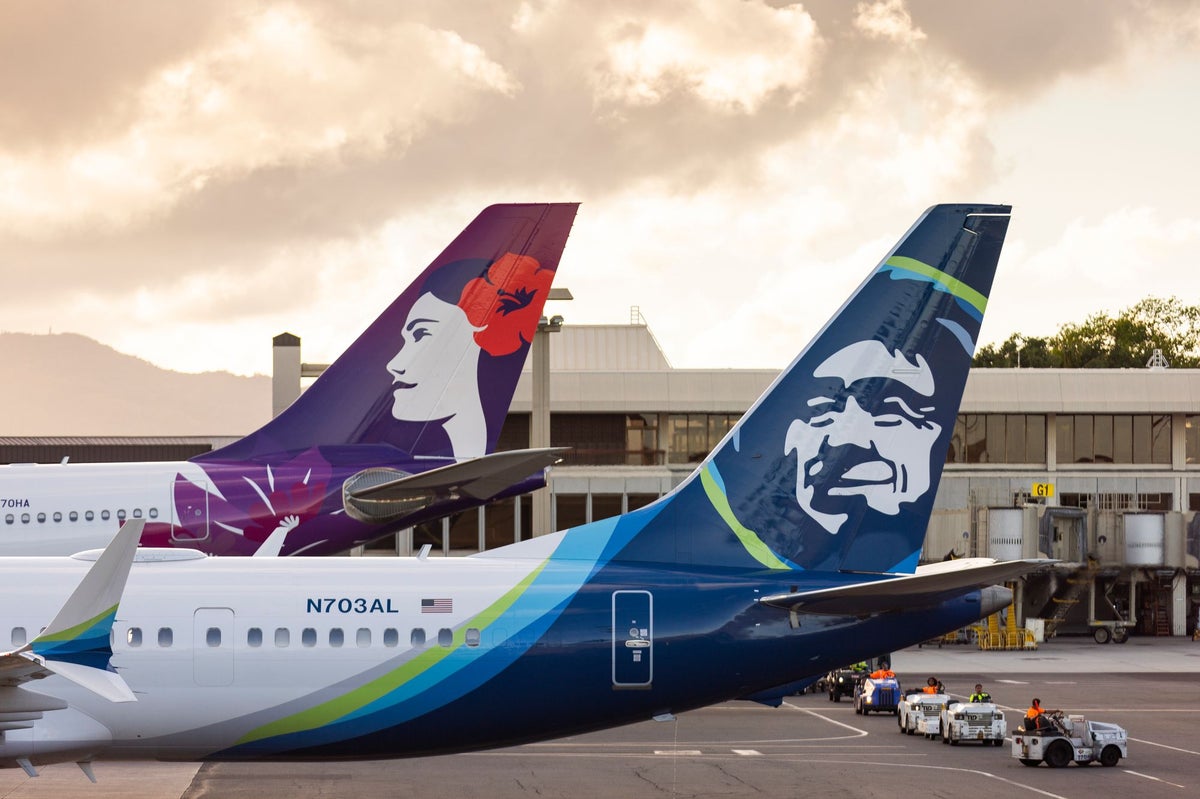
Alaska Airlines has reportedly barred flight attendants from its newly acquired Hawaiian Airlines subsidiary from wearing traditional floral attire and aloha shirts on certain international flights.
The new dress code restrictions affect approximately 250 Seattle-based cabin crew members who have transitioned to operating international routes out of Seattle-Tacoma International Airport, the Hawaii Tribune-Herald reported.
Under the temporary policy, flight attendants working on flights marketed under the Alaska Airlines brand are restricted from wearing signature uniform elements, including flower lei, aloha shirts and floral hairpieces.
The decision follows the $1.9 billion acquisition of Hawaiian Holdings by Alaska Air Group in September 2024. Management is attempting a dual-brand strategy that maintains distinct passenger experiences for each carrier, even as corporate operations are combined.
On long-haul international flights out of Seattle operated on Boeing 787-9 Dreamliners, the onboard service is marketed exclusively under the Alaska Airlines brand. Flight attendants on these routes must follow Alaska’s standard dress code, wearing neutral tops accented by the carrier’s Northern Lights-inspired design rather than their traditional attire, the Hawaii Tribune-Herald reports.
Flight attendants at Hawaiian Airlines have been permitted to wear flowers in their hair since the 1950s, a tradition heavily tied to the airline’s identity and its “Pualani” logo.
“We have flight attendants that have flown for 40 years that are now part of this Seattle base that tie the flower in their hair to their identity as even a flight attendant,” Alisa Onishi, managing director of Hawaii marketing for Hawaiian and Alaska airlines, told the Hawaii Tribune-Herald.
Onishi acknowledged the internal pushback regarding the uniform changes but defended the policy as a necessary step to maintain clear branding.
“We have lots of opinions from our union leadership as well as our flight attendants,” Onishi told the outlet. “Not everybody is happy necessarily about the decision. But once we explain it, they understand how important it is to not mix our brands.”
The restrictions do not apply to all routes. Hawaiian cultural elements remain permitted on any flights traveling directly to or from Hawaii, regardless of whether the aircraft carries Alaska or Hawaiian branding.
“If you are flying to Hawaii anything that touches Hawaii, even if it's Alaska branded, if it's on a 787 or even the 737s that are served by the Alaska flight attendants, they can wear flowers in their hair,” Onishi said. “They can wear lei.”
Executives from both carriers stated that the strict separation of uniform standards was part of a broader effort to prevent the two brands from blurring together during the integration process. The airlines transitioned to a single reservation system in April and expect to begin flying under a single operating certificate in October.
“It’s not something that has been done by a U.S. airline before,” Eric Edge, vice president of brand and marketing for both Alaska and Hawaiian, told Hawaii Tribune-Herald. “There isn’t something that we can point to and say, ‘Let’s do it like them. We’ll copy them.’ We are doing this on our own.”
The two carriers also continue to maintain separate onboard service philosophies, with Hawaiian Airlines using Hawaii-based food and beverage vendors and Alaska Airlines sourcing suppliers from the Pacific Northwest, as reported by Simple Flying.
The Association of Flight Attendants, the union representing the crew members, is currently negotiating joint labor agreements with airline management.
“We have advocated from the start that Hawaiian maintains their brand identity and we will continue to hold the company accountable to their promise to the employees and to the public,” the AFA told the Hawaii Tribune-Herald in an email.
Company officials stated that a new uniform program featuring input from Hawaiian cultural creators was in development.