Get all your news in one place.
100's of premium titles.
One app.
Start reading
Medical Daily
Medical Daily
Health
Dorothy Brooks

Alabama Sends 144 Million Dollars to Rural Clinics for Maternity Care, Mental Health and Emergency Transport

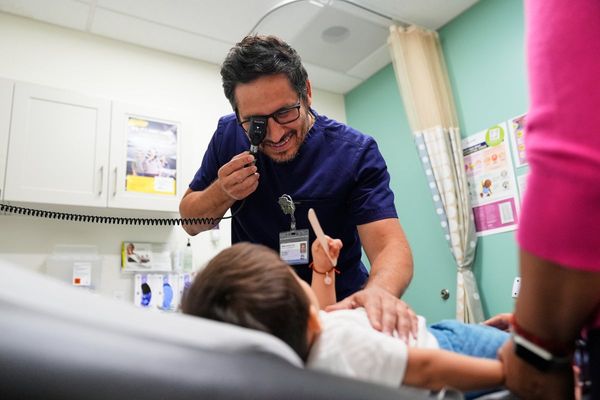
Alabama has awarded 138 grants worth more than $144 million to hospitals, clinics, universities and emergency services across the state, in the first round of funding under a federal rural health program now operating in all 50 states.

Governor Kay Ivey announced the awards Monday under the Alabama Rural Health Transformation Program. The state says the funded projects cover rural areas in every county in Alabama.

The money is federal. The projects are supported by a Centers for Medicare and Medicaid Services financial assistance award of $203,404,326.54, funded entirely by CMS and the Department of Health and Human Services and administered in-state by the Alabama Department of Economic and Community Affairs. That figure is Alabama's share for the current period, not a five-year total. CMS awarded all 50 states in December, with first-year awards averaging about $200 million and ranging from $147 million to $281 million.

For rural households, the practical question is not the headline figure. It is which services appear where, and how long before anything opens.


The Five Funded Initiatives

The state program includes 11 initiatives. Five received money in this round: Rural Health, Rural Workforce, Mental Health, Rural Health Practice, and a Collaborative Electronic Health Record, IT and Cybersecurity track. Awards for the remaining initiatives are in process and will be announced later.

The plan was developed by a team drawn from the Governor's Office, ADECA, the Alabama Department of Finance, the Alabama Medicaid Agency and the Alabama State Health Planning and Development Agency.

ADECA Director Kenneth Boswell described the scale of interest, saying the announcement followed six packed informational meetings around the state, five grant application workshops, and hundreds of applications.

CMS Administrator Mehmet Oz framed the federal program in a statement accompanying the announcement, saying, "Your access to quality health care shouldn't depend on your ZIP code."


Maternity and Emergency Care Draw Large Awards

Several awards address services rural Alabama has been losing.

Cullman Regional Medical Center received $3.8 million to establish a family medicine residency with an obstetrics track, aimed at training physicians who can deliver babies across seven counties. Cahaba Medical Care Foundation received $430,304 to build rural obstetric training capacity at four Alabama hospitals. Infirmary Health received $386,000 for a rural women's health hub serving Clarke and Washington counties, and $1.12 million to expand preventive, prenatal, postpartum, and specialty-connected care in four more.

The backdrop is a maternity care system under strain. March of Dimes analysis of maternity care access in Alabama classified about a third of the state's counties as maternity care deserts, meaning no birthing hospital, no birth center, and no obstetric clinician, a higher share than the national figure.

Emergency and transport capacity drew similar attention. NorthStar EMS received $987,906 to replace aging heart monitors, airway equipment, ventilators and automated CPR devices. The DCH Health Care Authority received $2 million to establish a non-emergency medical transportation program across west Alabama, and several hospitals received smaller awards for wheelchair-accessible vans and discharge transport, a recurring theme that reflects how often rural patients miss care because they cannot reach it.

Diagnostic equipment replacement is also on the list, including $625,257 for a CT scanner at Andalusia Health and $305,775 for a 3D mammography system at Dale Medical Center, intended to keep breast cancer screening available locally.


Behavioral Health Runs Through Schools

The Mental Health initiative concentrated heavily on children, which is notable in a state where rural behavioral health providers are scarce.

AltaPointe Health Systems received $935,895 to establish a school mental health network that delivers crisis services via telehealth across 44 counties. Cahaba Medical Care Foundation received $958,307 to expand school-based behavioral health in Bibb County and start services in Perry County. Rural Health Medical Program received $660,527 for school-based services across six west Alabama counties, and WellStone received $86,660 to place tablets in every Cullman County school for immediate telehealth connections when an in-person therapist is unavailable.

Several community mental health centers received funding to convert to the Certified Community Behavioral Health Clinic model, a designation that carries broader service requirements. Under the separate Rural Health initiative, Crenshaw County Healthcare Authority received $1.08 million for a tele-psychiatry program intended to reduce transfers and delays in psychiatric evaluation.


Money Awarded Is Not Care Delivered

This is the part worth holding onto, and it applies to every state receiving this funding.

A grant announcement is a commitment to build, not a service that exists. Residency programs take years to accredit and fill. Recruitment incentives depend on finding clinicians willing to relocate. Equipment purchases move faster than staffing, and a new scanner still needs a technologist. Several awards fund planning and infrastructure rather than direct patient services.

The federal program carries a limit worth noting. The Rural Health Transformation Program runs across five budget periods, from fiscal 2026 to fiscal 2030, with $50 billion distributed nationally over that span. Projects that do not become self-sustaining within that window face the same pressures that produced the gaps in the first place. Half the money is split equally among approved states, and the other half is allocated based on factors such as rural population and the condition of rural health facilities, according to the AHA.

Alabama residents who want to know what is coming to their area can review the award list, which names each recipient, the amount, and the counties served. Questions about a specific project belong with the receiving organization rather than with the state. People who need care now should not wait on these projects, and can contact their county health department, a federally qualified health center, or the Alabama Medicaid Agency about coverage and services already operating.

ADECA has said grant awards for the remaining initiatives will be announced later, with no date specified. MedicalDaily will report subsequent funding rounds and, where possible, whether funded projects reach patients.


Key Questions Answered

What was announced? Alabama awarded 138 grants totaling more than $144 million to healthcare providers and institutions in the first round of the Alabama Rural Health Transformation Program.

Where does the money come from? The Centers for Medicare and Medicaid Services. The projects are supported by a federal award of $203,404,326.54, funded entirely by CMS and HHS, and administered by ADECA.

Which parts of the program were funded? Five of 11 initiatives: Rural Health, Rural Workforce, Mental Health, Rural Health Practice, and a shared electronic health record, IT, and cybersecurity track.

Does every county benefit? The state says the funded projects cover rural areas in each Alabama county, though individual grants name specific counties served.

When will patients see changes? It varies widely. Equipment purchases move faster than residency programs or clinician recruitment, and some awards fund planning and infrastructure rather than direct services.

Is this program permanent? No. The national program allocates $50 billion over five budget periods ending in fiscal 2030, raising questions about sustaining projects afterward.

Where can residents find details for their area? The governor's announcement lists each recipient, award amount, and counties served. Questions about a specific project should go to the organization receiving the grant.

Sign up to read this article
Read news from 100's of titles, curated specifically for you.
Already a member? Sign in here
Related Stories
Top stories on inkl right now
One subscription that gives you access to news from hundreds of sites
Already a member? Sign in here
Our Picks
Fourteen days free
Download the app
One app. One membership.
100+ trusted global sources.