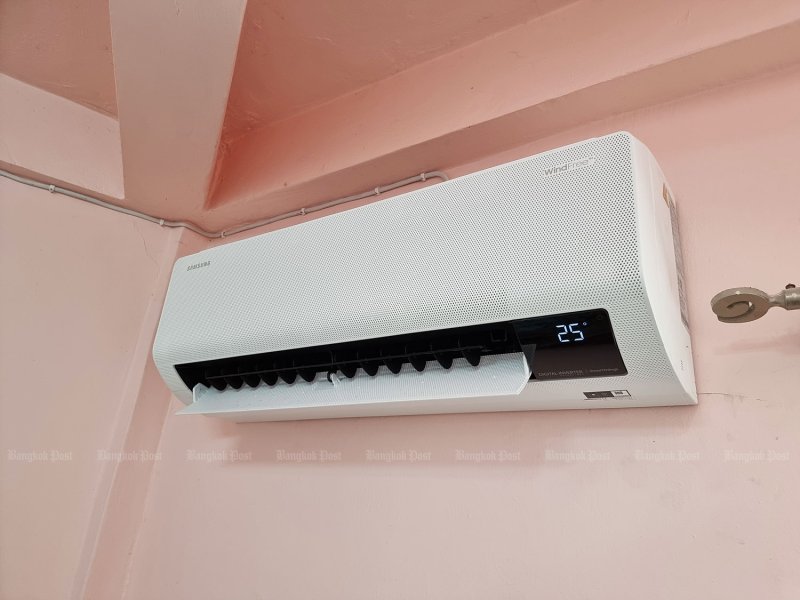
Hot weather this year has increased air conditioner sales, and LG Electronics (Thailand) Co Ltd projects continued growth in the second half.
Air conditioner sales typically peak from mid-February to June, but this year the company anticipates prolonged high temperatures until September, though the heat may remain at usual levels.

This extended hot streak should expand the season for air conditioner sales, said Amnaj Singhachan, head of marketing at LG Electronics (Thailand).
For the first half of 2026, he estimated the company's air conditioner sales increased by 10% year-on-year, adding sales should grow by 15-20% in the second half.
In June, the El Niño climate pattern in the tropical Pacific weakened, according to the Thai Meteorological Department.
The department forecast from July to September, the country could see rainfall at or below seasonal averages, while temperatures are expected to exceed normal levels.
Nationwide average temperatures from July to September are projected to be 0.5-1°C greater than normal, with average highs ranging from 32°C to 34°C, and average lows from 24°C to 26°C.
Praphon Potivorakun, deputy managing director of Mitsubishi Electric Kang Yong Watana, said during the hot season the company's air conditioner sales grew by 10-20% year-on-year.
The company targets 10% growth in air conditioner sales this year, with a strategic focus on service and product quality rather than pricing.
He noted the economy remains sluggish, with weak consumer spending power.
The entry of lower-priced Chinese electrical appliance brands has changed the landscape of the Thai market, said Mr Praphon.
"Given weak spending power, customers are likely to buy cheaper products. This trend may result in better growth for Chinese brands compared with Japanese ones," he said.
TV MARKET
Mr Amnaj estimated LG Thailand's TV sales during the 2026 World Cup will be lower than usual, predicting single-digit growth.
In previous major football tournaments, TV sales increased by 20-100%, he noted, attributing this year's slower growth to inconvenient match times for Thai viewers -- late at night through early morning -- which also makes them less attractive to restaurant operators.