
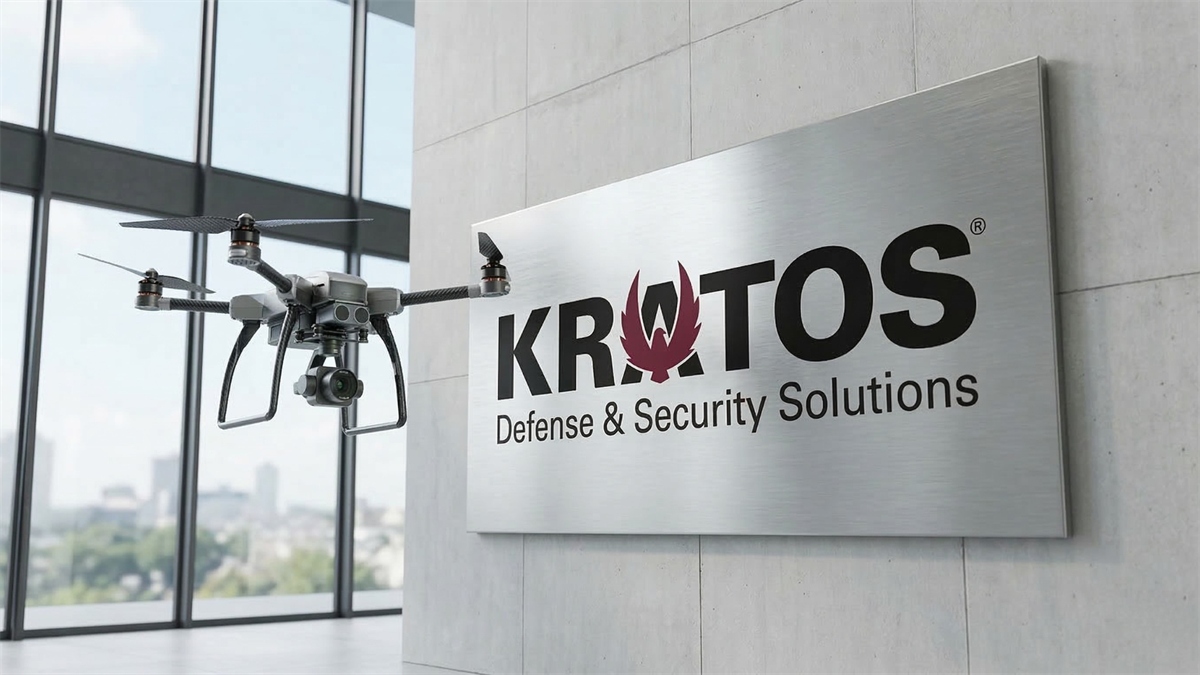
In a specialized facility in Manching, Germany, a pivotal shift in global defense strategy is taking shape. Two American-made Kratos (NASDAQ: KTOS) XQ-58A Valkyrie drones are being prepared for a landmark 2026 flight test equipped with a sovereign European artificial intelligence (AI)-driven mission system developed by Airbus (OTCMKTS: EADSY). This transatlantic collaboration is a technical exercise, but it is also a clear indicator that the long-promised future of autonomous, collaborative warfare is arriving faster than anticipated.

Kratos: From Disruptor to Global Power Player
The Airbus partnership is a major international endorsement for Kratos, significantly de-risking its investment case by opening a direct channel into the lucrative European defense market.
For investors, this validation is backed by a continuous stream of financial results and program wins that demonstrate a company has reached a major inflection point. The evidence suggests that Kratos’s strategy of building relevant, affordable systems now, rather than just designing concepts for later, is paying off.
Kratos's recent performance provides a clear picture of this momentum. The fourth quarter of 2025 saw organic revenue growth of approximately 20% year-over-year, an impressive figure for any company. More telling, however, is that Kratos also reported a 1.3-to-1 book-to-bill ratio for the quarter.
For investors, this is a critical metric; a ratio above 1-to-1 means a company is securing more in new orders than it is billing in revenue, indicating its backlog and future workload are actively growing. It is the clearest sign of accelerating demand.
Looking ahead, Kratos’s financial foundation appears robust, providing investors with significant visibility into future performance:
- A Secure Future: Kratos ended 2025 with a record backlog of $1.573 billion in secured future work, providing a stable revenue base.
- A Vast Horizon of Opportunity: Beyond confirmed orders, Kratos has identified a record $13.7 billion pipeline of opportunities, representing a vast pool of potential future contracts that could fuel growth for years to come.
This financial strength is directly tied to the success of its flagship platform, the Valkyrie. Before its selection for European tests, the drone was already validated in the United States, having been chosen for the U.S. Marine Corps' MUX TACAIR Collaborative Combat Aircraft (CCA) program, where Kratos is partnered with prime contractor Northrop Grumman. This dual-continent demand for the same core platform is a powerful testament to its capabilities. In response, Kratos has announced concrete plans to scale up production from approximately 8 Valkyries per year to 40 by the end of 2028.
Furthermore, Kratos is not solely dependent on a single program. Kratos is a key player in the rapidly expanding field of hypersonics, a top Pentagon priority, with involvement in major programs such as the Multi-Service Advanced Capability Hypersonic Test Bed (MACH-TB). With revenues from its hypersonic franchise projected to potentially double to around $400 million in 2026, Kratos has demonstrated it has multiple, powerful growth drivers. This diversification provides an additional layer of stability to its high-growth narrative and helps justify a valuation focused on the immense future potential of its contract pipeline.
Airbus: Winning the Future of Air Combat
For European aerospace titan Airbus, the partnership with Kratos is a shrewd and necessary strategic move. It showcases managerial agility, addresses challenges within its legacy programs, and positions Airbus to lead Europe's next-generation defense ecosystem.
This collaboration is being accelerated by well-publicized disagreements and delays that have hampered the Future Combat Air System (FCAS), Europe's ambitious next-generation fighter jet program.
Rather than waiting for these complex, multinational issues to resolve, Airbus is proactively securing a loyal wingman capability for its key customers now.
By partnering with Kratos, Airbus bypasses years of costly research and development. It gains immediate access to a proven, production-ready airframe, allowing it to offer a tangible solution to the German Air Force with a target in-service date of 2029, a timeline that would be impossible if starting from scratch.
This move is also aligned with a broader, continent-wide push among European nations to fast-track the development of low-cost, autonomous systems to bolster their collective security.
This deal also fundamentally shifts Airbus’s role from a simple hardware manufacturer to a high-value systems integrator. Airbus is responsible for equipping the Valkyrie with its proprietary MARS mission system, powered by MindShare AI software. In modern defense, the true value lies not just in the airframe, but in the intelligent network that commands it. By controlling this layer, Airbus positions itself to be the central nervous system for Europe's future combat cloud, connecting various manned and unmanned platforms. This is a more defensible and potentially more profitable position in the long run.
For investors in a large-cap industrial like Airbus, this venture represents a valuable entry into the high-growth defense tech sector. It diversifies Airbus’s portfolio beyond the cyclical commercial aviation market and hedges against risks and extended timelines associated with traditional manned fighter programs. This move adds a new, dynamic growth story and demonstrates a forward-thinking strategy to secure its relevance in the next generation of air warfare.
A Clear Approach Vector
The Kratos-Airbus partnership is one of the most tangible data points yet that the global shift to autonomous, attritable air power is happening now. This is no longer a future trend discussed in strategy documents; it is a present reality with significant budget allocations and hardware being prepared in Germany.
This collaboration solidifies Kratos's position as a premier growth vehicle in defense technology, validating its systems and opening the door to a massive new market. Simultaneously, it showcases Airbus's strategic foresight to secure its role as a key architect of Europe's future defense capabilities. For investors, this alliance signals that both companies are positioned on the right side of a multi-decade paradigm shift in global security, offering a compelling case for long-term value creation as the very definition of air power is rewritten.
Where Should You Invest $1,000 Right Now?
Before you make your next trade, you'll want to hear this.
MarketBeat keeps track of Wall Street's top-rated and best performing research analysts and the stocks they recommend to their clients on a daily basis.
Our team has identified the five stocks that top analysts are quietly whispering to their clients to buy now before the broader market catches on... and none of the big name stocks were on the list.
They believe these five stocks are the five best companies for investors to buy now...
The article "AI Wingman: Kratos & Airbus's Game-Changing Pact" first appeared on MarketBeat.