Get all your news in one place.
100’s of premium titles.
One app.
Start reading
TechRadar
TechRadar
Lance Ulanoff

AI Slop won in 2025 — fingerprinting real content might be the answer in 2026

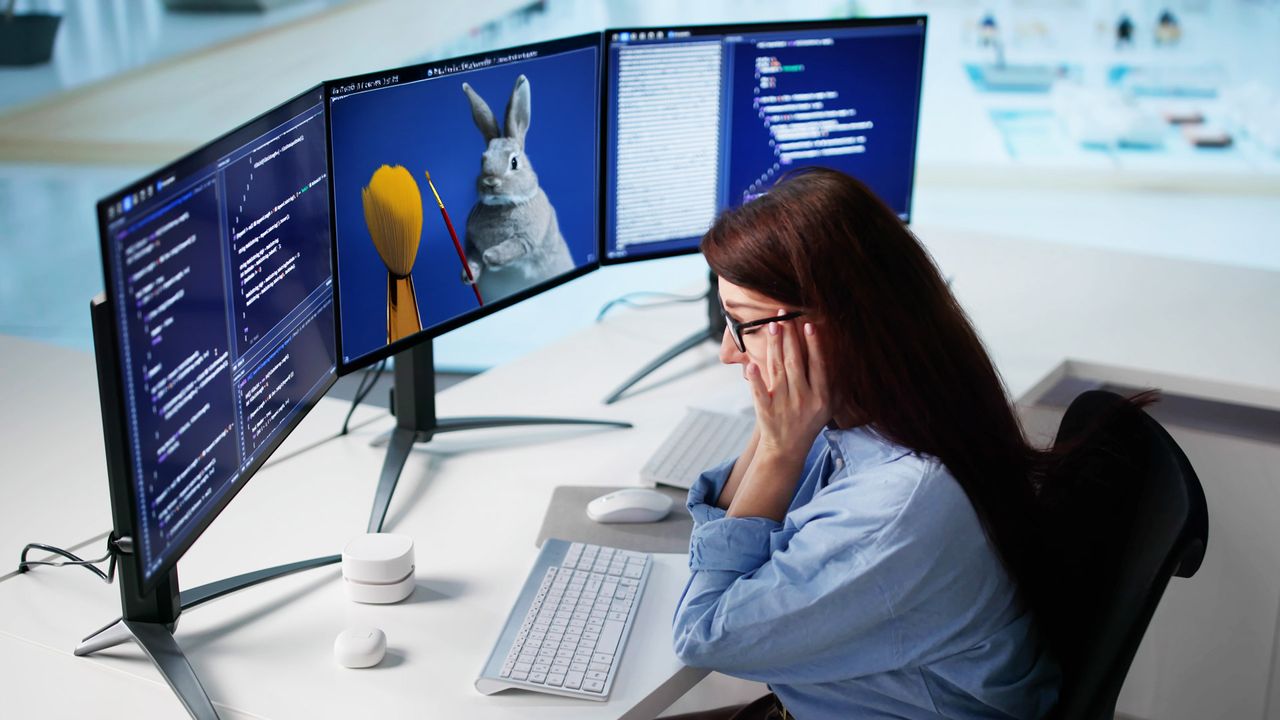
Getty office image with Adobe Firefly-generated AI painting bunny.

The battle against AI content is lost. Slop fills our feeds, and it's up to us to discern what is real. But what if 2026 represents the dawn of a new approach, a flipping of the script where we no longer chase identifying what's artificially created and instead fingerprint the real?

This is the not-necessarily-novel concept presented in a recent New Year's Threads post from Instagram CEO Adam Mosseri.
In it, he acknowledges that "authenticity is fast becoming a scarce resource," and that the bar is shifting from "'can you create?' to 'can you make something that only you could create?'"

Mosseri also writes about more creators shifting to unpolished content that flies in direct conflict with what camera manufacturers are pitching, a sort of idealized world with artificially created bokeh effects. He doesn't say it, but I think Mosseri is actually referring to smartphone companies that are making ever-smarter image processing pipelines that can make any image, object, animal, or person look unnaturally beautiful.

If Mosseri is right, not only do we want more authentic, unvarnished content in our feeds, but we'll also be using AI to help us create this aesthetic.

He writes, "We’ll go from the Midjourney realistic video game aesthetic and imitating Wes Anderson and Studio Ghibli films to being able to direct an AI to create any aesthetic you like, including an imperfect one that presents as authentic."

That, naturally, sounds awful, and Meta, Instagram's parent company, will be among those who provide those tools (along with OpenAI, Google Gemini, Perplexity, and others).

It's a nightmare scenario because the platforms where we will post and try to discern truth will be the same ones offering tools to create a more realistic world that will still be fake.

Let's focus on what's real

Perhaps that's why Mosseri is now pitching a different approach. "There is already a growing number of people who believe, as I do, that it will be more practical to fingerprint real media than fake media," he writes.

Instead of watermarking AI-generated content, which Mosser's platforms are still very much committed to doing, Instagram and other platforms might find ways to label real content before it appears online.

How, of course, is the big question.

Photos coming out of digital cameras and smartphones all get what's known as EXIF (Exchangeable Image Format) data, which can describe the camera, lenses, and settings used, as well as available location and date data. It's not something that can easily bee faked. Video content has similar XMP data.

I'm not certain about how we might fingerprint human-written content or real audio recordings.

Mosseri, though, talks about using some old-school authenticity markers, like checking on the author and what other content they've posted. I don't know if that's something Instagram and others could easily automate, or if that's a job best left to individuals.

Still, I like the intention, especially because the war on fake content is already all but lost.

Recently, I came across an X post from one of my favorite bird photographers. Carl Bovis presented four images and asked which one was AI-generated. I think I accurately identified the too-polished feathers and almost metallic-looking beak of the sparrow eating a red berry, but I honestly couldn't be sure. What I really needed was confirmation that the other three images were, in fact, real.

Having followed Bovis for years, I've done my own form of fingerprinting with the pro photographer. I've seen hundreds of his photos, I know his background, and I trust that what he posts is coming directly from one of his many long-lensed SLRs.

A broader fingerprint effort, like the one proposed by Mosseri, will fail or be largely ineffectual if only one platform adopts it. We need a standard for content IDs that allows any platform to offer us one-touch filters to see only human-generated posts. That right there would be transformative.

Here's hoping 2026 is truly the year of authentic content and fingerprinting real people's posts – it might almost make social media fun and useful again.

Follow TechRadar on Google News and add us as a preferred source to get our expert news, reviews, and opinion in your feeds. Make sure to click the Follow button!

And of course you can also follow TechRadar on TikTok for news, reviews, unboxings in video form, and get regular updates from us on WhatsApp too.

Sign up to read this article
Read news from 100’s of titles, curated specifically for you.
Already a member? Sign in here
Related Stories
Top stories on inkl right now
One subscription that gives you access to news from hundreds of sites
Already a member? Sign in here
Our Picks
Fourteen days free
Download the app
One app. One membership.
100+ trusted global sources.