Get all your news in one place.
100’s of premium titles.
One app.
Start reading
Kiplinger
Kiplinger
Business
David Abraham

AI-Powered Investing in 2026: How Algorithms Will Shape Your Portfolio

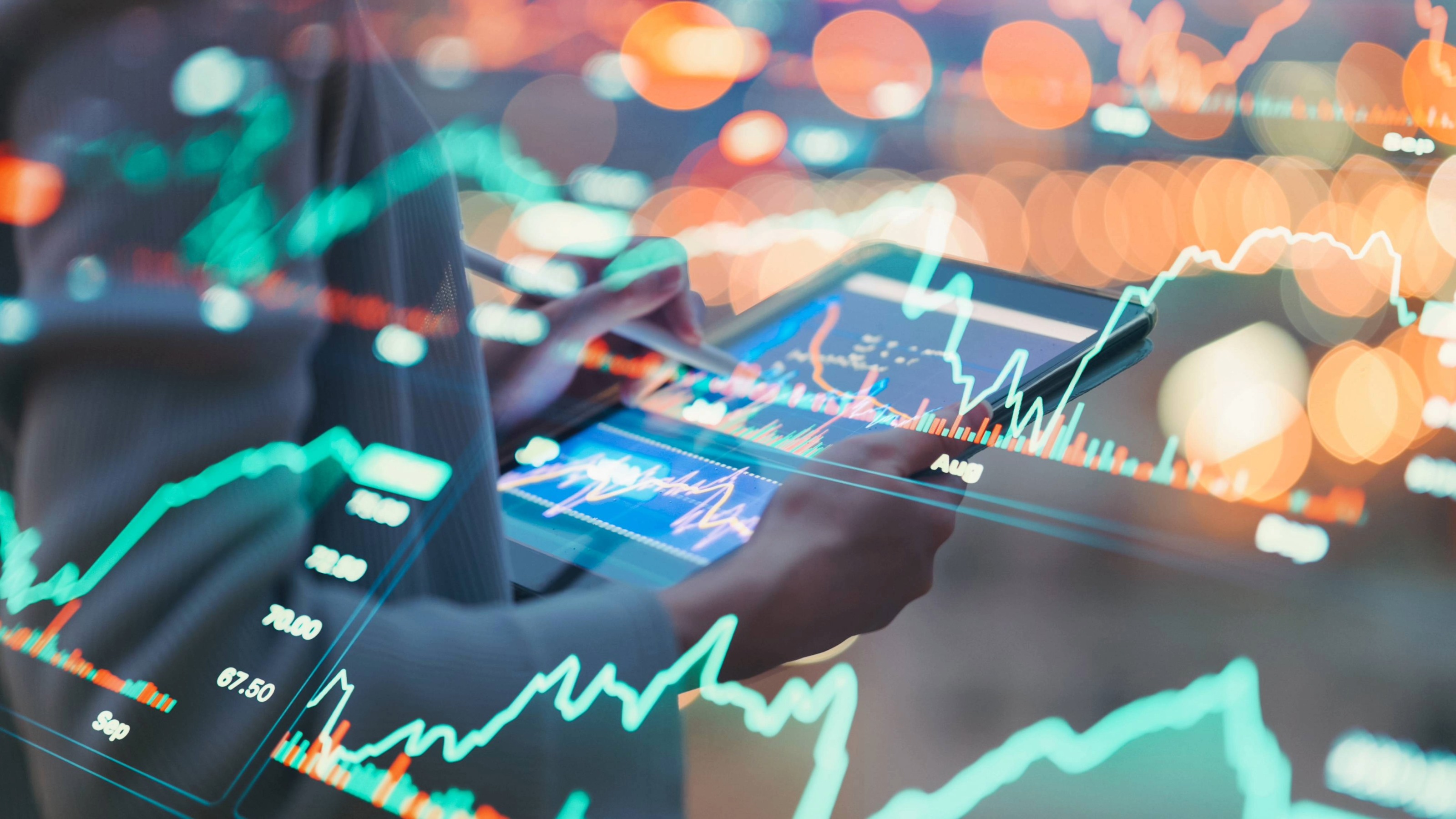
(Image credit: Getty Images)

If it feels as if investing changed overnight, you're not imagining it. In a few years, "AI" moved from a buzzword to a building block in how money is managed.

Since 2023, we've seen models digest earnings calls and scan price data in microseconds. They suggest trades that adapt as conditions shift.

The pitch isn't just speed; it's a smarter and more personalized portfolio. It's day-to-day decisions that use more information than any human team could review on its own.

That doesn't mean everyone needs a robot stock picker. Whether you invest on your own or with an adviser, algorithms increasingly sit under the hood (think: risk flagging and opportunity scoring).

What AI-powered investing actually means

AI investing uses machine learning and related techniques to analyze financial data, build and manage portfolios and automate parts of the investment process.

Traditional investing leans on human analysts, standard ratios and well-worn models. AI systems add models that learn from data over time, spot nonobvious relationships and update as new information comes in.

Under the umbrella of AI, you'll see:

  • Machine learning can help identify patterns of return and risk as well as micro and macro trends in financial data.
  • Deep neural networks can be used to develop advanced classification techniques and improve accuracy of predictions.
  • Natural language processing (NLP) can help machine-learning systems understand news articles, social media posts, blogposts and other types of web-based content.
  • Reinforcement learning can test and adjust trading strategies based on real-time market feedback.

When used effectively, AI is capable of improving decision-making (i.e., better investment decisions) as well as risk management. It enables us to reach areas that were previously not feasible through diversified portfolios.

AI is also a component of many different types of applications currently available including:

  • Robo-advisers. Assist everyday investors with constructing and rebalancing their portfolios.
  • Sentiment analysis. Analyze the sentiment contained within corporate call transcripts and news headlines.
  • Risk models. Monitor a company's exposure on a continuous basis and make adjustments to allocations when there is an increase in market volatility.
  • Tax-aware tools. Provide the ability to identify tax-loss harvesting opportunities in real time.

Learn from Joern Meissner, founder and chairman of Manhattan Review. He has recently ventured into AI-powered investing to boost his finances from his online review business.

Meissner says, "AI algorithms excel at identifying patterns in market data that human analysts might miss. Machine-learning models can process millions of data points simultaneously, creating portfolios that adapt to market conditions in real-time."

How AI will shape your investment portfolio in 2026

Even as technology transforms the finance sector, the fundamentals haven't changed. This investment advice still pays off: Time in the market beats timing the market.

However, AI's real impact in 2026 is helping investors apply that discipline more consistently through smarter allocation and risk management.

Algorithms working in practice

Different problems call for different models:

  • Supervised learning predicts outcomes such as earnings surprises or credit downgrades using labeled data.
  • Unsupervised learning clusters assets with similar behavior to improve diversification or to detect anomalies.
  • Deep learning handles high-dimensional, nonlinear relationships across prices and fundamentals.
  • NLP converts unstructured text into signals, such as topic tags and sentiment scores.
  • Reinforcement learning tests trading or rebalancing rules in simulated environments, optimizing for reward while managing risk.

AI changing investment strategies

AI is bending the lines between "active" and "passive." Index tracking can now be paired with active overlays that manage risk and harvest losses.

Quantitative research that used to be limited to big institutions is showing up in retail tools. Meanwhile, fundamental analysts use AI to summarize filings and test narratives against data.

You'll see this in:

  • Robo-advisers that craft baseline allocations, then automatically apply tax-aware rebalancing
  • Algorithmic trading that executes orders in smaller slices to reduce costs and market impact
  • Direct indexing that mirrors a benchmark but customizes around taxes and/or values
  • Hybrid strategies in which humans set the thesis and guardrails while models do the heavy lifting

Building an investment portfolio

Enter portfolio building, now striking a balance between AI and your portfolio.

It used to revolve around a few inputs (such as expected return, volatility and correlation) fed into mean-variance optimization or a risk-parity framework. AI doesn't replace that; it enriches it.

Models estimate return drivers more frequently and refine their views of correlations across regimes. These incorporate frictions such as taxes and trading costs. In practice, that looks like:

  • Smarter asset selection. Surfacing overlooked factors that fit your risk budget
  • Dynamic resource allocation. Tilting weights when inflation or rates change
  • Constraint-aware optimization. Honoring rules you care about, like sector caps or ESG screens
  • Continuous investment monitoring. Adjusting positions when model confidence falls or risk concentrates

Investors making it personal

Personalization is when AI quietly changes the investor experience. Instead of lumping people into broad risk buckets, models can evaluate your:

  • Time horizon
  • Cash-flow needs
  • Existing holdings
  • Tax situation
  • Reaction to volatility

Then they tailor portfolios to those realities, not just your age and a questionnaire score.

Behavior-aware systems can also spot patterns: Do you panic-sell at the wrong time or chase hot stocks?

Gentle nudges and guardrails can help you stick to your plan, whether you're choosing alternative investments or optimizing your current portfolio. That kind of support once lived only in high-end private banks.

The bottom line

AI isn't a silver bullet, but it's becoming a standard tool. It helps sift noise and personalizes portfolios. Likewise, it manages risk in ways that used to require huge teams.

If you use an AI-powered platform or work with an adviser who does, ask how the models work and for what they optimize. Make sure there's human oversight to ensure the approach fits your goals and your comfort with risk.

Ultimately, decide where AI can help you most, whether that's hands-off portfolio management or better tax management.

AI technology will keep changing. Your best move is to stay informed and use the tools that help you stick to your plan.

Related Content

This article was written by and presents the views of our contributing adviser, not the Kiplinger editorial staff. You can check adviser records with the SEC or with FINRA.

Sign up to read this article
Read news from 100’s of titles, curated specifically for you.
Already a member? Sign in here
Related Stories
Top stories on inkl right now
One subscription that gives you access to news from hundreds of sites
Already a member? Sign in here
Our Picks
Fourteen days free
Download the app
One app. One membership.
100+ trusted global sources.