Get all your news in one place.
100's of premium titles.
One app.
Start reading
International Business Times UK
Technology
Stephanie Cruz

AI Layoffs Backfire as 32% of Bosses Rehire Roles They Thought Robots Could Do

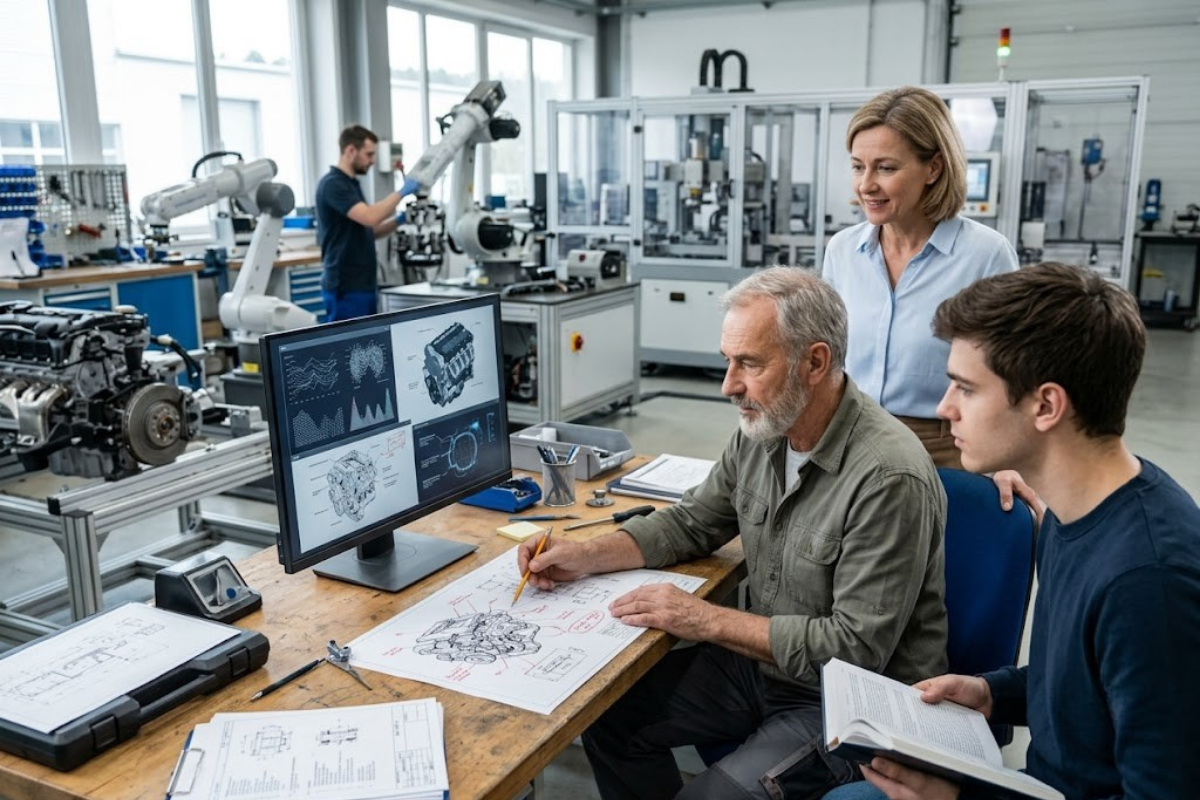
Beyond the binary: The irreplaceable edge of human judgment in high-stakes engineering. (Credit: Google Gemini image)

Nearly a third of American hiring managers who cut a job because of artificial intelligence have since rehired someone for the same or a similar role, new data from staffing firm Robert Half shows.

Finance led that reversal. Of the managers surveyed, 44 per cent in finance said they had rehired for a position eliminated over AI, the highest share of any sector, ahead of human resources at 35 per cent and technology at 32 per cent. Across all industries, 32 per cent said they had scrapped a role primarily because of AI, only to bring the work back soon after. The survey covered nearly 2,000 US hiring managers.

The pattern is not confined to one report. Workforce analytics firm Orgvue found that 39 per cent of business leaders made staff redundant specifically because of AI, and 55 per cent of them later admitted the decision was a mistake.

Inconsistent AI output often forces companies to bring human oversight back in, said Jessica Zhang, senior vice president for the Asia-Pacific region at HR services firm ADP. 'This can lead to duplicated effort, slower decision-making and diminished productivity gains,' she said.

Ford Rehires 350 Engineers After AI Fell Short

Ford has hired, promoted or rehired 350 veteran engineers over the past three years, a group it calls its 'gray beard' engineers, to mentor younger staff and fix quality problems that automated systems could not solve.

'Artificial intelligence is a fantastic tool, but it's only as good as the information you use to train it,' said Charles Poon, Ford's vice president of vehicle hardware engineering. 'Over prior years, we didn't pay as much attention as we should have to the experience of our most knowledgeable engineers who have been with us through many product cycles.'

The move has paid off. Ford ranked first among mainstream brands in the JD Power Initial Quality Study released on 25 June, its best result in 16 years. Chief executive Jim Farley said lower warranty and recall costs were 'contributing to literally hundreds and hundreds of millions of dollars of a tailwind for Ford on cost.' The company is targeting $1 billion (£755 million) in savings this year.

IBM and CBA Reverse Course on AI Cuts

Commonwealth Bank of Australia made a similar retreat. The lender cut 45 customer service roles in July 2025 after rolling out an AI voice bot it said had reduced call volumes by 2,000 a week. The Finance Sector Union disputed the claim, saying call volumes were climbing and staff were being drafted for overtime.

CBA reversed the redundancies on 21 August 2025. 'CBA's initial assessment that the 45 roles in our Customer Service Direct business were not required did not adequately consider all relevant business considerations, and this error meant the roles were not redundant,' a bank spokesperson said. Union national secretary Julia Angrisano called it 'a massive win for workers.'

IBM hit a narrower version of the problem. Its AskHR assistant resolves 94 per cent of routine human resources queries, but the remaining 6 per cent, including cases that call for ethical judgment, still need a person, the company said. IBM now plans to triple entry-level hiring across its US business in 2026.

'If we don't continue to invest in entry-level hires, what happens in three to five years?' said IBM chief human resources officer Nickle LaMoreaux. 'There's no pipeline. The well simply dries up.'

The AI Rehiring Trend Is Set to Widen

Research firm Gartner expects the shift to accelerate. By 2027, it forecasts, half of the companies that blamed headcount cuts on AI will rehire people for similar work, often under new job titles. 'While AI-driven layoffs have captured attention, the reality is more complex,' said Kathy Ross, a senior director analyst at Gartner. 'Most recent workforce reductions were influenced by broader economic conditions rather than automation alone.'

The reversals point to a common approach across the companies involved: pairing AI with experienced staff on work that requires judgment, rather than replacing employees outright.

Sign up to read this article
Read news from 100's of titles, curated specifically for you.
Already a member? Sign in here
Related Stories
Top stories on inkl right now
One subscription that gives you access to news from hundreds of sites
Already a member? Sign in here
Our Picks
Fourteen days free
Download the app
One app. One membership.
100+ trusted global sources.