Get all your news in one place.
100’s of premium titles.
One app.
Start reading
GamesRadar
GamesRadar
Technology
Austin Wood

AI has an "unbelievable ability to create a lot of slop," says ex-Nexon boss who signed Arc Raiders, predicting the industry will "triple" in size in 7 years due to players "rejecting slop and bad product"

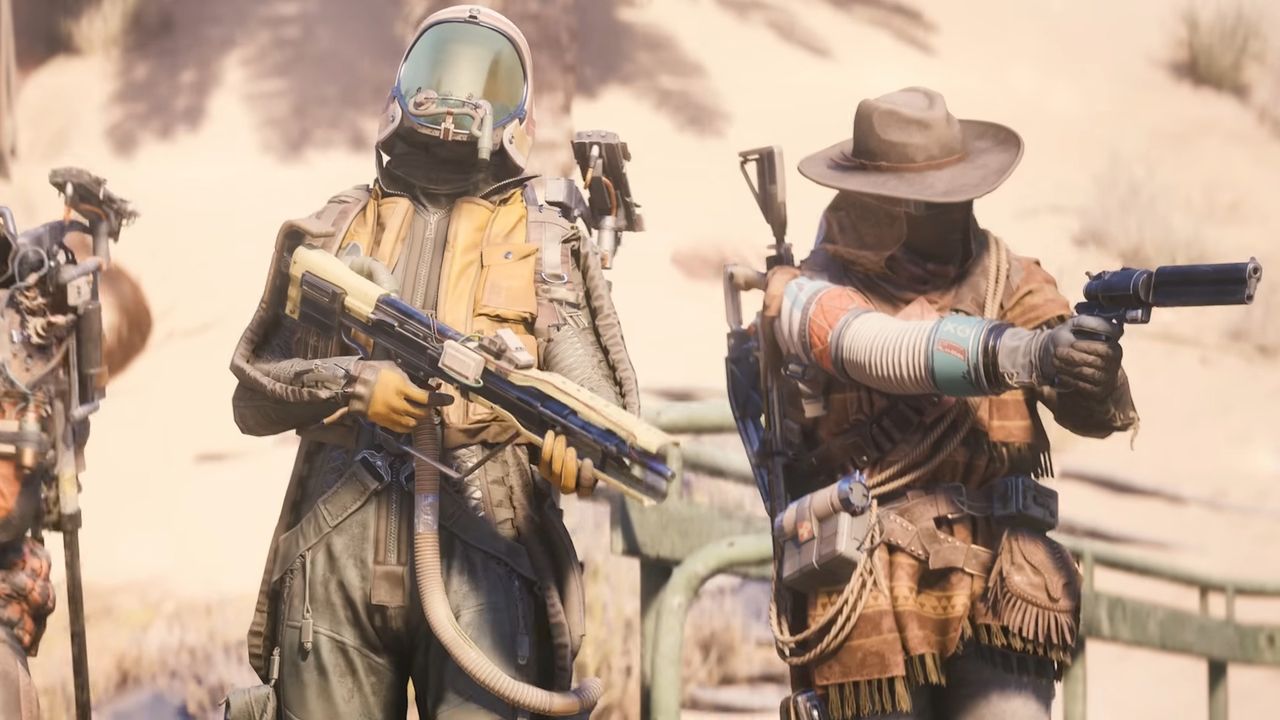
Arc Raiders characters with shotgun and revolver.

During his 10-year run as Nexon CEO, Owen Mahoney jumped to sign Arc Raiders, which has become one of 2025's biggest releases. The game's developer, Embark Studios, has defended its use of AI voices and championed the tech as a way for the studio to punch above its weight. Mahoney, who criticizes executives for pushing AI as a miracle cost-cutting measure, seems to have similar thoughts on the technology, calling it a tool that could empower creatives.

Speaking with The Game Business, Mahoney is quick to check the wave of AI fever percolating in the industry, recently described by Rockstar cofounder Dan Houser as akin to "mad cow disease."

"I'm annoyed when I see executives talk about it as a massive cost-saver, and isn't that great?" Mahoney says. "And I'm especially annoyed with them as a customer when I see slop in games, especially AI-generated slop, and everybody's worried about the vast multiplication of AI-generated slop. I wouldn't disagree with those. I wouldn't fight those in any way." Certainly, many game developers ardently oppose surrendering creative decisions and tasks to AI – outsourcing your own thinking and identity.

However, Mahoney reckons AI goes "way beyond being a tool." Much like Valve boss Gabe Newell, he likens it to the dawn of the internet – a major technological shift that could transform production methods. "Creating better creative," as he puts it. "I think it will change the nature of the types of games that we are even able to conceive of," he says.

"AI has that opportunity" to enable creatives to work at scale and focus more on making games and doing less managing of people or tedious tasks, Mahoney suggests. He highlights "massive diseconomies of scale" in game development, particularly at the AAA level, where complexity and costs increase exponentially, outstripping gains or opportunities within the games themselves.

"Managerial complexity has essentially squeezed out all the creativity in the games business, and we all know that this has been happening," he reckons, and in his view the right application of AI could help mitigate this deleterious effect.

More to the point, Mahoney continues, "I believe that the industry will probably triple in the next five to seven years," with AI a driving factor behind this prophesied growth. It's notably unclear exactly how we're measuring the tripling of an industry that's already famously saturated and mature – by sales or players or employees or units or what-have-you – and looking for ways to engage younger generations as the core audience ages up, and it's a lot to ask of AI.

However, AI "also has an unbelievable ability to create a lot of slop," he says. Mahoney rightly points out that – as evidenced by the contagious and overwhelmingly negative reactions we see whenever people learn that a game is full of gen AI junk, or even when AI art infests a game's community – people won't accept slop.

"I think the market will do what it’s already been doing, which is rejecting slop and bad product and only demanding good product," he concludes.

Fortnite Chapter 7 kicks off with artist defending their work from AI allegations, probably not helped by Epic CEO's recent prediction that "AI will be involved in nearly all future production" of games.

Sign up to read this article
Read news from 100’s of titles, curated specifically for you.
Already a member? Sign in here
Related Stories
Top stories on inkl right now
One subscription that gives you access to news from hundreds of sites
Already a member? Sign in here
Our Picks
Fourteen days free
Download the app
One app. One membership.
100+ trusted global sources.