
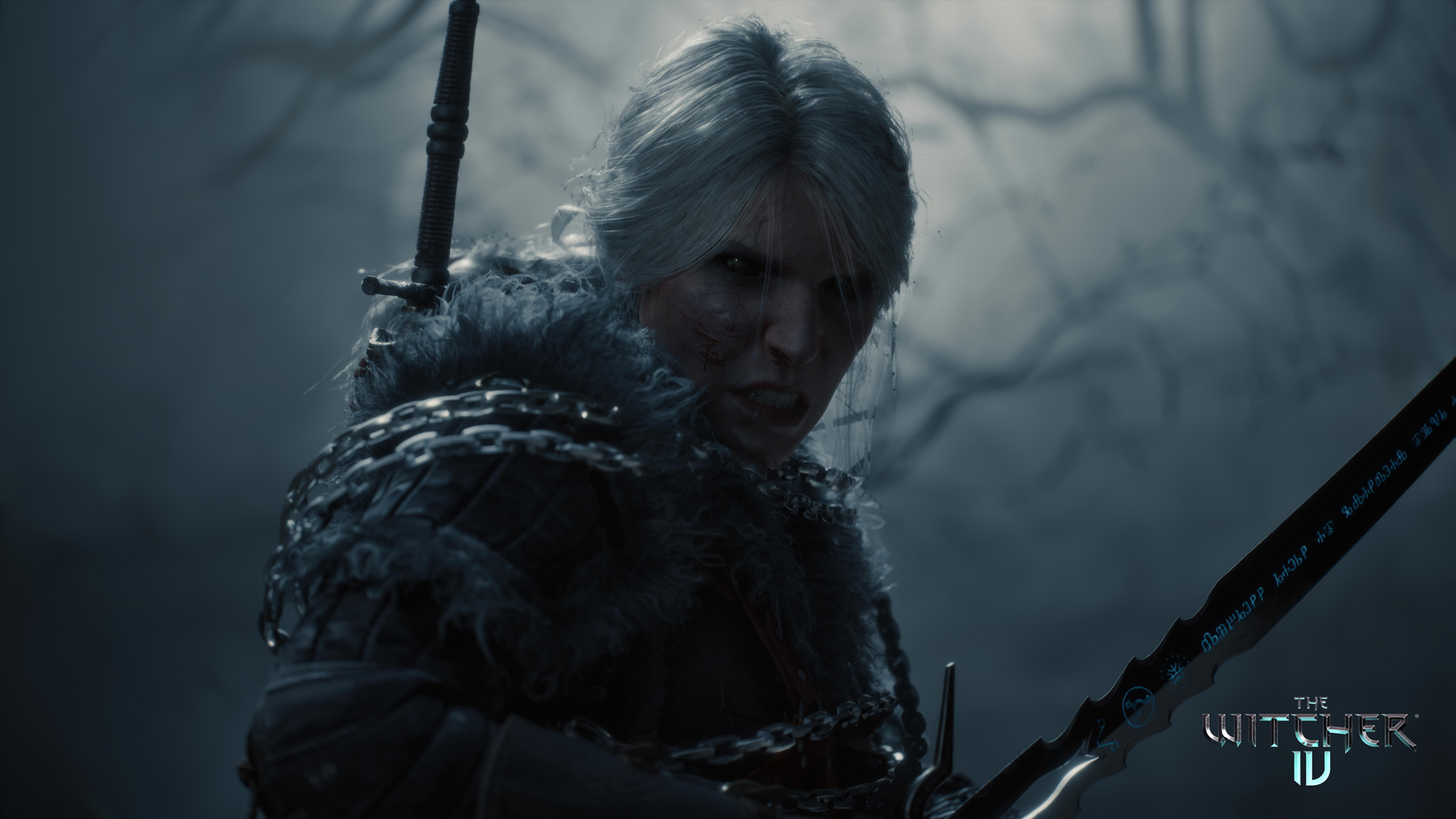
Ciri stumbles hurriedly through a cave on the outskirts of Stromford, boots crunching through the remnants of ritualistic sacrifice. Her vision obscured by thick plumes of volumetric fog; pre-rendered in Unreal Engine 5, powered by a next-generation Nvidia Geforce RTX GPU. The scene is mesmerizing. She sips a potion, and as the poison courses through the mutated monster hunter's veins she is granted clarity of sight and sound – the Bauk no longer speaking in whispers but sharp shrieks as its flailing limbs meet the blade of Zireael, a legendary sword passed down through generations of Witchers. Ciri dances between strikes and lashes a silver chain around the creature's neck, diverting a rush of flickering flames along its length until flesh sears. A monster has fallen, but Ciri learns that evil wears many faces back at the village. We've embodied the role of The Witcher before, but never like this.
"If you're asking me whether we want to raise the bar again, the answer is yes," laughs Małgorzata Mitręga, and the CD Projekt RED executive producer has every right to feel bullish. The Witcher 4 has been unveiled, a new single-player RPG from the studio responsible for revolutionizing open world game design in both the fantasy and science-fiction genres. CDPR says that it's aiming to deliver "the most immersive and ambitious open-world Witcher game to date" as it shifts focus away from Geralt of Rivia and towards Ciri, his adopted daughter only just beginning to chart her Path across a world where the old order is crumbling and dark forces are seizing their chance to rise.












