Get all your news in one place.
100's of premium titles.
One app.
Start reading
The Times of India
The Times of India
World
TOI World Desk

After losing his savings in the Great Depression, Japanese immigrant George Masa kept hiking the Smokies with a homemade measuring wheel; his photographs helped build support for a national park

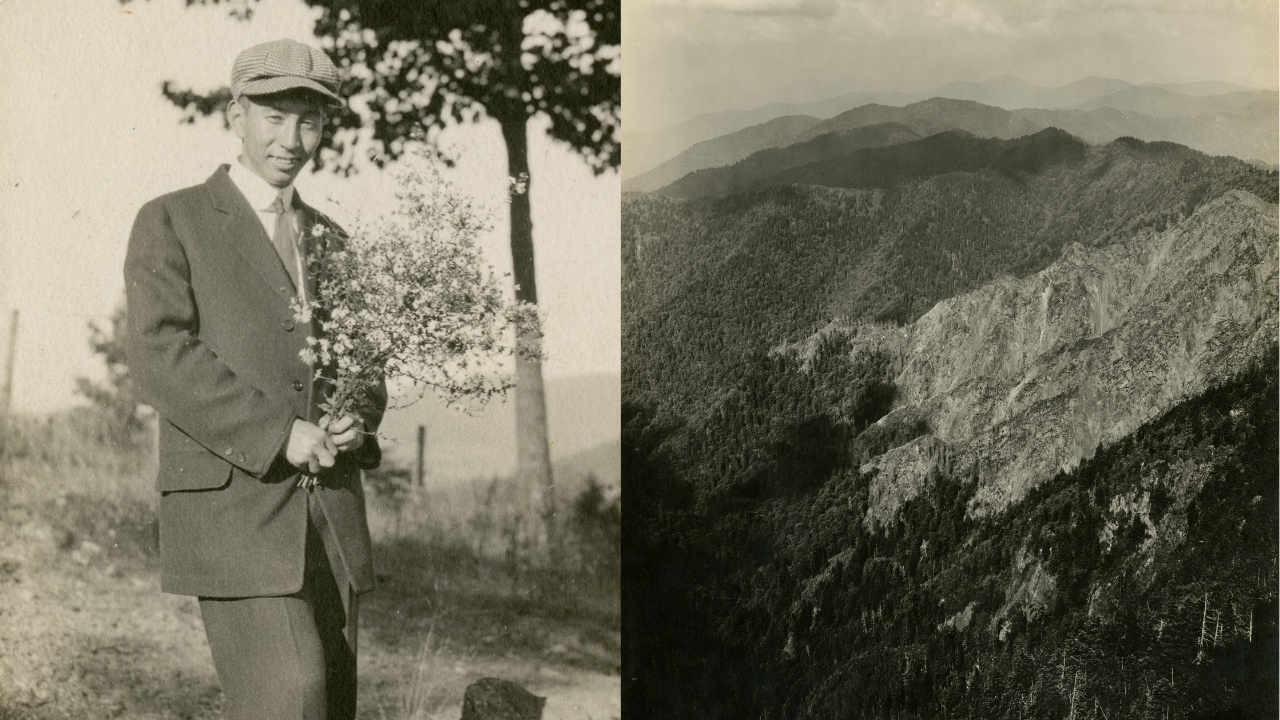
George Masa never held elected office, owned vast tracts of land, or led a government agency. Yet one of America’s most visited national parks might look very different without him. After the stock market crash and the collapse of Asheville’s banks during the Great Depression erased his life savings, the Japanese immigrant continued trekking through the rugged Smoky Mountains with a homemade measuring wheel fashioned from the front half of a broken bicycle. Pushing the device mile after mile over remote ridges while carrying bulky camera equipment, he carefully measured trails, mapped peaks, and captured photographs that revealed the region’s beauty to people who had never seen it. According to the Appalachian Mountain Club , those images reached influential figures, including former First Lady Grace Coolidge and philanthropist John D. Rockefeller Jr., helping build support for preserving the mountains before widespread logging permanently changed the landscape.

Get breaking news anytime, anywhere. Download the TOI app now!
A photographer who measured mountains one step at a time

Born in Japan as Masahara Iizuka, George Masa settled in Asheville, North Carolina, in 1915 after arriving in the United States in search of new opportunities. He first worked at the Grove Park Inn before discovering that photography offered both a livelihood and a way to document the mountains that increasingly captivated him. As he spent more time exploring the southern Appalachians, Masa developed an unusual system for recording the landscape. Rather than relying solely on existing maps, he built his own odometer by attaching a measuring device to the front wheel of a discarded bicycle. He pushed it along mountain trails to calculate distances while keeping meticulous notes about streams, ridges and summits. Working closely with author and conservation advocate Horace Kephart, Masa also consulted local residents and Cherokee place names to improve the accuracy of maps that would later guide planners of the proposed Great Smoky Mountains National Park. According to the North Carolina Department of Natural and Cultural Resources , his firsthand surveys made him one of the most trusted authorities on the region’s trails and geography.

The Depression took his savings, but not his mission

When the Great Depression struck in 1929, Asheville’s banks failed, and Masa lost virtually everything he had saved. Friends recalled that the financial disaster did little to slow his work. He continued spending days and sometimes weeks in the backcountry, hauling heavy glass-plate cameras, tripods, and his homemade measuring wheel across steep mountain terrain. The photographs he produced were far more than scenic postcards. They became persuasive evidence in the campaign to establish a national park, showing policymakers and donors what stood to be lost if industrial logging continued unchecked. Masa assembled albums of his work and shared them with prominent supporters of conservation. Among those moved by the images was John D. Rockefeller Jr., whose $5 million donation became instrumental in purchasing land for what would become the Great Smoky Mountains National Park, as documented by PBS . Historians have argued that the campaign might have unfolded very differently without the visual record Masa created and the painstaking maps he prepared alongside Kephart.

A legacy he never lived to see

The outcome Masa had worked toward arrived too late for him to witness. Horace Kephart died in a car accident in 1931, and Masa, weakened by illness and unable to afford adequate medical care after losing his savings, died in 1933 at a county hospital in Asheville. Great Smoky Mountains National Park was officially established the following year, preserving hundreds of thousands of acres of forest that had inspired his life’s work. His influence extended beyond the park itself. Masa also helped survey and map portions of the Appalachian Trail, contributed to naming geographic features throughout the Smokies and documented landscapes that have since become iconic symbols of the southern Appalachians. Decades later, conservationists ensured his contributions would not be forgotten by naming Masa Knob in his honor and recognizing his role in protecting one of America’s greatest natural treasures. Today, millions of visitors hike the same mountains he once crossed with a bicycle wheel, a notebook, and an unwavering belief that their beauty deserved to endure.

Sign up to read this article
Read news from 100's of titles, curated specifically for you.
Already a member? Sign in here
Related Stories
Top stories on inkl right now
One subscription that gives you access to news from hundreds of sites
Already a member? Sign in here
Our Picks
Fourteen days free
Download the app
One app. One membership.
100+ trusted global sources.