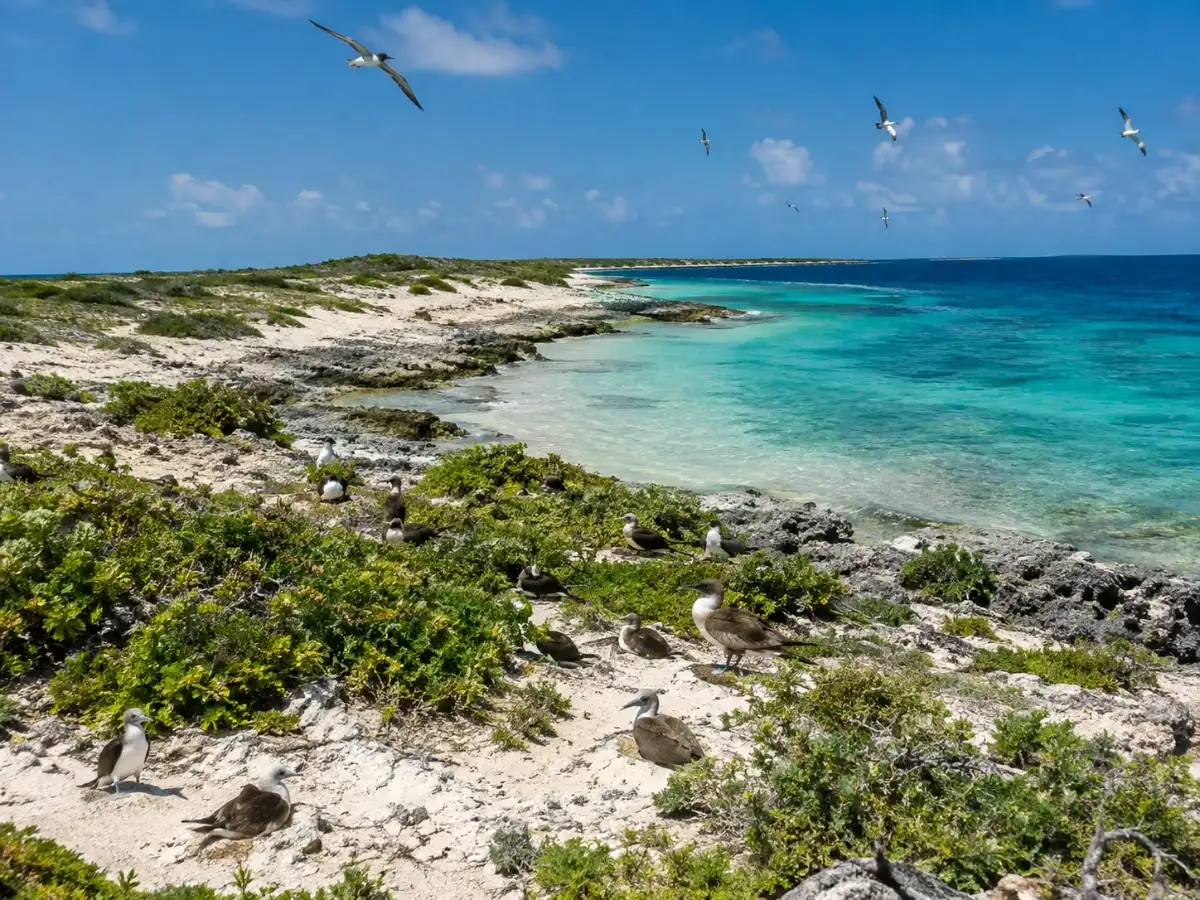
There's a speck of land barely bigger than New York's Central Park baking in the southern Caribbean sun with a shipwreck rusting on its reef and a lighthouse fit for a postcard. For decades, this islet barely had any birds on it. Then humans took away exactly two things: goats and cats, and it became one of the busiest seabird nurseries in the region.
According to a 2023 study titled “A case study of sea and shorebird breeding recovery following goat and cat eradication on Klein Curaçao, southern Caribbean,” by Debrot et al., published in the Journal of Field Ornithology, the island of Klein Curaçao went from hosting a maximum of 140 breeding pairs of a single species in 2002 to roughly 650 nesting pairs of multiple species by 2022. For a generation raised on grim headlines about collapsing ecosystems, this is the kind of study that reads like a conservation underdog tale, and it's worth knowing how it happened.