North Melbourne against Brisbane, take three. Over 116 matches of AFLW in 2025, the competition has delivered the same grand finalists for the third straight year. And few, apart from Melbourne fans, would disagree that Saturday night’s sold-out clash is a fitting conclusion to the 10th season of elite women’s footy.
But the consistent brilliance of the Lions and Kangaroos has also highlighted a lack of ambition from other AFLW clubs, whose failure to even spend what they are allowed to on coaches is an open secret in the competition.

The Kangaroos enter their third straight grand final on Saturday and are unbeaten in two years. The side overcame Melbourne in the preliminary final thanks to a fourth-quarter surge, but until last weekend’s nail-biting contest the closest any opposition had come to victory against Darren Crocker’s side this season was a margin of 29 points.
That came in round five against the Lions, who are the Kangaroos’ opponents in this weekend’s grand final. It will be the same match-up for the decider, continuing a rivalry that has defined the end of the competition’s first decade.
“What we’re doing at North Melbourne and Brisbane is setting the standard,” the Kangaroos defender Emma Kearney said this week.
“I’m happy being up the top for now, we’ll keep trying to get better, it’s now up to the other teams to work out how to get to our level.”
Few in the intimate footy industry wish to point fingers at other clubs, but multiple officials have told the Guardian this season some programs are not spending the full amount they are entitled to under the league’s rules.
Kearney said there were “a lot of reasons” for the success of the Kangaroos and Lions including how the clubs embrace their women’s operations, the quality of their high-performance programs, the standard of coaching and a commitment to fitness.
But she said “the way the clubs resource their programs” was most important.
Last year, the AFL tweaked allowances around AFLW staff expenditure, known as the soft cap. The 2025 budget was increased to $1.175m, and a further increase of $100,000 in 2026 and 2027 was also scheduled.
However, significant financial returns from clubs’ AFLW operations are still some way off, and the economic engine room remains their men’s programs. Money saved on AFLW operations can be spent elsewhere.
The Kangaroos winger Tess Craven said she had heard some clubs were not spending their full soft cap: “It’s disappointing I guess, but I think that’s maybe something the AFL could prohibit from happening.”
Although clubs are required to offer basic standards by way of medical care, equipment and coaching, there is no minimum spend mandated by the AFL. AFLW coaches and conditioning staff at some clubs face low wages, leading to high turnover.
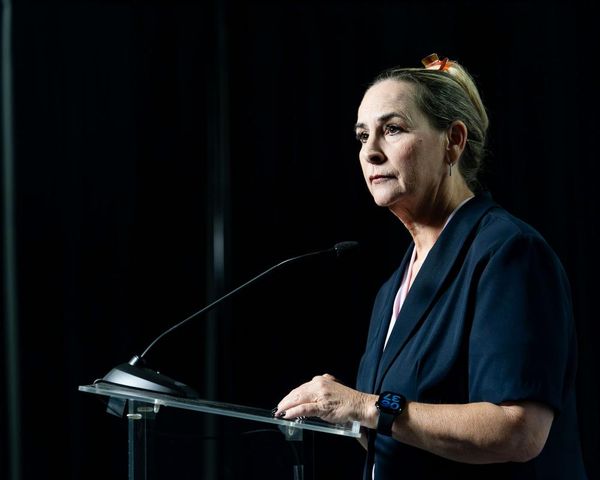
The general manager of AFLW, Emma Moore, declined to comment on the allegation that clubs were not spending what they could. She said that since she arrived in the role last year, clubs had shown a desire to learn from the likes of North Melbourne.
“It’s very clear that they all want to succeed in this space, none of the clubs are about not succeeding when it comes to ‘W’ because they’re highly competitive beasts and what they’re there to do is to win,” Moore said.
While the competition’s disparity remains a long-term headache for administrators, players at Brisbane and North Melbourne are preparing for the more immediate challenge of the decider at Ikon Park on Saturday evening.
The Lions overcame a slow start this season to return to the grand final for a fourth consecutive season. They have now won nine games in a row since their round five defeat against the Kangaroos.
The Lions forward Ruby Svarc suggested her side may be better prepared for a tight game. “As much as North has been winning, which is incredible, they probably haven’t been tested as much, so it’ll be really interesting to see how we go on the weekend.”
Kearney said the Kangaroos had noticed the Lions’ switch from a direct to a more patient approach this season, but felt like her side would be ready for the challenge.
“They used to be quite a take-it-forward territory team, now they’re trying to possess the footy a little bit more,” she said. “We took a lot of learnings from them from that game, just how to defend that a little bit better.”
Svarc said last year’s grand final, when the Lions kicked just one goal in a 30-point defeat, had spurred improvement in a side that had missed just two AFLW grand finals in 10 years of the competition.
“[The loss] drives everything, it’s caused us to rethink our gameplan, rethink everything that we do, so that we tackle the next year and come back and win it,” she said.