
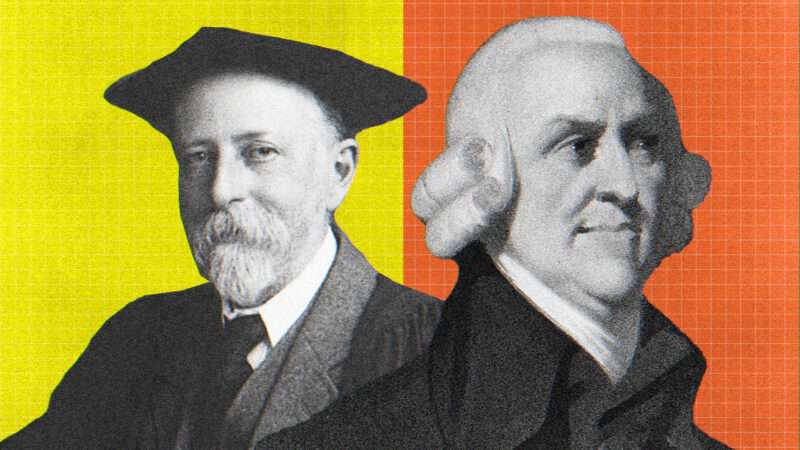
In 1926, the 150th anniversary of The Wealth of Nations, British economist Edwin Cannan delivered a lecture titled "Adam Smith as Economist" at the London School of Economics. The lecture was published in Economica in June of that year and in 1928 in Cannan's An Economist's Protest. (It was there that Cannan added the subtitle "The Gospel of Mutual Service.") What follows is excerpted from the lecture. – Daniel Klein
Adam Smith may fairly claim to be the father, not of economics generally—that would be absurd—but of what in modern times has been called, with opprobrious intention, "bourgeois economics," that is, the economics of those economists who look with favor on working and trading and investing for personal gain. We are apt to forget that the idea that a wage-earner, a trader, or an investor may be, and indeed generally is, a very respectable person is very modern. From Homer we learn that the people whom Odysseus visited on his travels thought it all the same whether he was a trader or a piratical murderous marauder. Primitive people are said to have regarded exchange as a kind of robbery rather than as a mutual giving. Greek philosophers thought wage-earners incapable of virtue, and money-lenders have been objects of antipathy throughout the ages. In Smith's own time Dr. [Samuel] Johnson and [Malachy] Postlethwayt very seriously considered whether a trader could be a gentleman.












