Get all your news in one place.
100's of premium titles.
One app.
Start reading
Sports Illustrated
Sports Illustrated
Sport
Chris Mannix

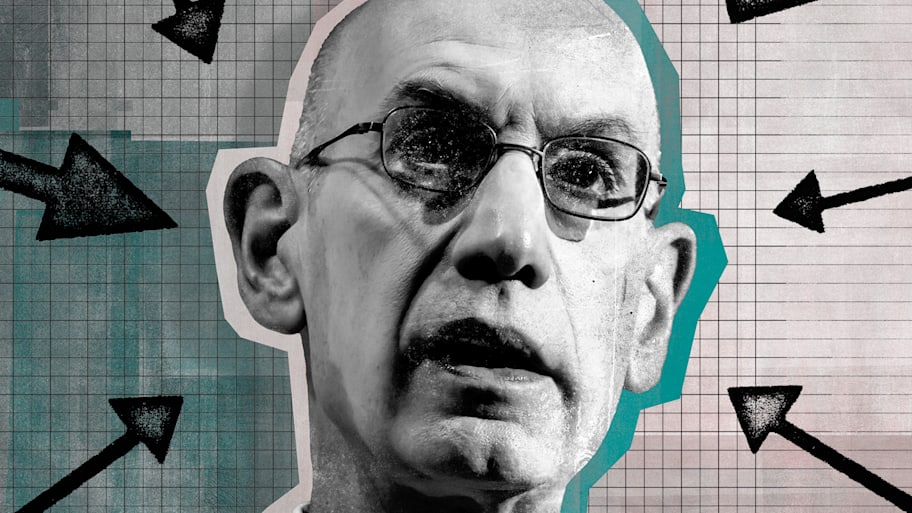
Adam Silver Faces a Critical Stretch for the NBA’s Future

In February, Adam Silver made his way to a podium inside the Intuit Dome, sporting a jet-black suit and a stoic look. Generally, the NBA commissioner’s All-Star weekend press conferences are largely anticlimactic. A few factoids about the league’s growth, updates on big-picture ventures, a midseason reminder that the NBA, if you didn’t know, is a truly global league. Silver then usually bats around a few benign topics—expansion, broadcast rights agreements and the latest with NBA Europe are old chestnuts—before ducking out to enjoy the rest of the festivities. Yet as Silver walked across the room, he likely knew this session would go a little different.  

The commissioner is in crisis, or at least these days he is facing crises, more than any Silver has confronted during his dozen years running the NBA. There’s the cap circumvention scandal that has put him at odds with one of the NBA’s most popular owners (Steve Ballmer), who also happens to be one of the world’s richest men. There’s the tanking epidemic, a problem significant enough for the NBA to slap two teams (the Jazz and the Pacers) with six-figure fines before the All-Star break for sitting healthy players. There’s a federal investigation into illegal sports gambling that has ensnared a current coach and a player (Portland’s Chauncey Billups and former Miami guard Terry Rozier, both of whom have pleaded not guilty). There’s the rise in injuries, apathy toward the in-season tournament, accusations that a team owner’s business is producing critical hardware that has been used by the Russian military … you get the idea. 

Silver has navigated turbulent waters before. In 2014, after tapes surfaced of then Clippers owner Donald Sterling making racist comments, Silver, less than three months into his tenure as commissioner, banned Sterling for life. In 2020, the NBA was the first major sports league to shut down operations during the COVID-19 pandemic … and the first Big Four league to find a way back, re-opening in the Florida bubble in July. He has negotiated two labor agreements, dealt swiftly with threats to game integrity and signed the most lucrative broadcast agreement in NBA history. Says one longtime team executive, “Adam is one of the best commissioners in history. Not basketball history. Sports history.” 

NBA commissioner Adam Silver
Michael Nagle/Bloomberg/Getty Images

The next few months could test that opinion. Silver must find tweaks for a draft lottery system that has failed to discourage tanking. He must adjudicate a Clippers investigation that has rivals screaming for blood. And he must find a solution to injury issues that have plagued the regular season. It is, says one high-ranking team executive, “an opportunity.” While the ink is still wet on the 11-year, $77 billion broadcast rights deal that kicked in this season, it’s never too early to think about the next one. “Getting this stuff right is his legacy,” says the exec. Adds another, “This summer Adam is going to be very busy.” 


In March, Warriors coach Steve Kerr reiterated a long-standing position: The NBA’s schedule is too long. “I know this will not be a popular opinion in the league office,” Kerr said. “But I will continue to say it because it’s obvious. We need to play fewer games.” Other coaches echoed Kerr’s assessment. “The season is so demanding,” says Bulls coach Billy Donovan. “You have got to build up this callous to be able to endure 82 games [with] very limited practice time.”

While the NBA might deny that there is an injury problem—according to data provided by the NBA in March, the league was tracking to have fewer injuries to starter-level players than last season and less games lost to “stars” in any of the last four years—there is no disputing that concern over soft tissue injuries is on the rise.

During the 2025 playoffs, three All-Stars—Jayson Tatum, Tyrese Haliburton and Damian Lillard—ruptured their Achilles tendons. This season calf strains have led to extended layoffs for Victor Wembanyama, Giannis Antetokounmpo and Anthony Davis. 

A spate of injuries to stars like Tyrese Haliburton late in an arduous season has been an issue for the NBA.
A spate of injuries to stars like Tyrese Haliburton late in an arduous season has been an issue for the NBA. | Justin Ford/Getty Images

The speed of the game, which has increased in recent years, has reached a breakneck pace. Ten years ago, two teams averaged more than 100 possessions per game. At the All-Star break this season, there were 18. By March, players had combined to cover 37.1 miles per game at an average speed of 4.29 mph, the longest average distance and fastest average speed since player tracking began in the 2013–14 season. Kerr, among others, believes slicing 10 games off the schedule will make a significant difference. “What I know about the league and coaching and how hard it is to play with the pace and the space,” he said. “It would be a more competitive and healthier league if we played fewer games.”

Privately, NBA officials won’t argue against the merits of a shorter season. They will note—quickly—how much money would have to be forfeited to allow for it. Fewer games played means less revenue—roughly 20% by some estimates. The broadcast deals would need to be adjusted. All of it would have to be collectively bargained (the players and the league have a mutual opt-out in 2028). There is a long-term gain in shortening the season: Fewer games, theoretically, would make for a better product, making the league more valuable—if everyone is willing to absorb some short-term pain along the way.  

That matters, given how teams are treating the regular season. In February, in front of a packed room at MIT’s annual Sloan Sports Analytics Conference, Silver vowed to act decisively to curb tanking. “We are going to make substantial changes for next year,” said Silver. “I’m not ruling anything out.” Despite years of efforts to disincentivize the practice—which included flattening the lottery odds for the bottom three teams and creating the play-in tournament—the race to the bottom was more crowded than ever this season, with nearly a third of NBA teams exiting the All-Star break with no interest in winning. Said Silver, “We have to address it.” 

How is the question. Silver, by his own admission, is “an incrementalist,” so forget grand ideas like eliminating the draft. Internally, league officials have discussed more modest solutions, like eliminating draft-pick protections (which would prevent situations like Utah and Indiana, two teams that nose-dived this season to hang on to picks) and banning teams from drafting in the top four for two years in a row.

Utah’s dismal play earned the team a $500,000 fine for sitting healthy players during its third straight 50-loss season.
Utah’s dismal play earned the team a $500,000 fine for sitting healthy players during its third straight 50-loss season. | Soobum Im/Getty Images

Some think the league can go further. Flattening the lottery odds was a good idea … until teams with small odds started winning it. Last spring, Dallas, with a 1.8% chance to land the top overall pick, saw its Ping-Pong ball combination come up. San Antonio, with a 26.3% chance of finishing in the top four, grabbed the second pick. Instead of chasing play-in spots, teams have grown increasingly comfortable rolling the dice from the back of the lottery pack, leading to calls to eliminate the lottery altogether. “We have to make sure the worst teams are getting the best players,” says a league official with Silver’s ear. “You are never going to stop a small number of teams from tanking. The best you can do is make sure those teams have a pathway to get better.” 

Getting organizations to play by the rules is the most pressing issue. Accusations that the Clippers used a team sponsor to circumvent the salary cap with Kawhi Leonard landed in the league office like a grenade. Cap circumvention is a “cardinal sin” says a team executive, citing the efforts the NBA has made in Silver’s tenure to level the playing field. Months of follow-up reporting from investigative journalist Pablo Torre (nine YouTube episodes and counting) have dashed any hope that the story would go away, laying bare a pile of emails, bank records and testimony for all to see. 

In 2014, Ballmer helped Silver end one scandal when he bought the Clippers from Sterling. Now, Silver is faced with having to punish Ballmer to end another. 

Clippers owner Steve Ballmer’s alleged salary cap circumvention is one of the key issues the league has to deal with.
Clippers owner Steve Ballmer’s alleged salary cap circumvention is one of the key issues the league has to deal with. | Kevork Djansezian/Getty Images

It’s not all dark clouds. Financially, the league is healthier than it’s ever been. After years of flirting with European expansion, the NBA is poised to establish a league that will give it a firm foothold in the Eastern Hemisphere. Silver is pressing ahead with plans to add two new teams—Las Vegas and Seattle are the front-runners—that are expected to generate expansion fees in the neighborhood of $10 billion apiece. The NBA is strong, league and team officials will argue. Addressing these big issues will make it stronger. 

Silver has already resolved one. At February’s press conference, Silver recalled a recent conversation with Bob Cousy. The Hall of Fame guard—97 and still kicking—marveled at how global the NBA has become. In the 1950–51 season, Cousy’s first, the league had two international players. Today, the number is 135. It’s among the reasons Silver believed a new All-Star format—dubbed USA vs. the World—could work. The result was the most competitive game in years. So, check that one off what is becoming a very long list.   


More NBA From Sports Illustrated

Listen to SI’s NBA podcast, Open Floor, below or on Apple and Spotify. Watch the show on SI’s YouTube channel.


This article was originally published on www.si.com as Adam Silver Faces a Critical Stretch for the NBA’s Future.

Sign up to read this article
Read news from 100's of titles, curated specifically for you.
Already a member? Sign in here
Related Stories
Top stories on inkl right now
One subscription that gives you access to news from hundreds of sites
Already a member? Sign in here
Our Picks
Fourteen days free
Download the app
One app. One membership.
100+ trusted global sources.