Get all your news in one place.
100's of premium titles.
One app.
Start reading
The Times of India
The Times of India
World
TOI World Desk

A Washington fisherman was arrested over 50 times for fishing on his ancestral river; his struggle made tribes legal co-managers and protectors of salmon

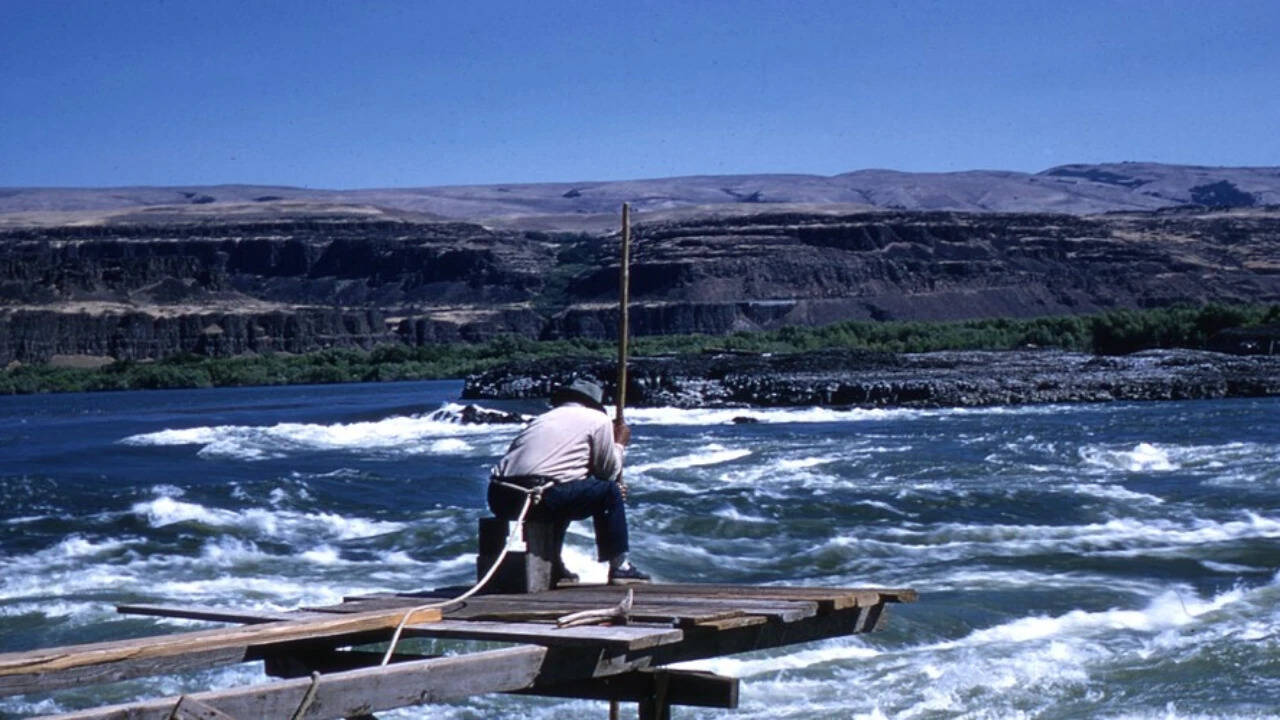
In 1945, a 14-year-old boy named Billy Frank Jr. walked down to the edge of the Nisqually River in Washington State to fish for salmon, the same way his family had for generations. Game wardens arrested him the next morning. That arrest launched a lifetime of activism that eventually helped force the federal government to recognise Native tribes as legal co-managers of the rivers they had fished for centuries.

Get breaking news anytime, anywhere. Download the TOI app now!

According to a Library of Congress blog post detailing his activism, Frank was a citizen of the Nisqually Tribe, one of several tribes that signed the 1854 Medicine Creek Treaty with the United States. The treaty ceded Nisqually land, but the tribe insisted on retaining fishing, hunting, and gathering rights across its traditional territory. Frank's father, Willie Frank Sr., had fought for those same rights decades earlier, winning a court injunction against state harassment that lasted from 1937 to 1944, ending just one year before Billy's first arrest at age 14. Despite the treaty's clear language, Washington State passed increasingly aggressive fishing laws throughout the mid-20th century, even as commercial licensing changes allowed non-native commercial fishing to grow sevenfold during the same period.

Fifty arrests and a fight that turned violent

Frank's activism grew throughout the 1960s alongside a broader movement of tribal fishers demanding that the state honour their treaty rights. According to the Library of Congress account, organised fish-ins drew thousands of supporters. A 1964 demonstration in Olympia brought out 2,000 protesters and drew celebrity support from actor Marlon Brando, who joined a protest fishing boat at the Frank family property known as Frank's Landing. The conflict grew violent. On September 9, 1970, police raided a fishing camp on the nearby Puyallup River, arresting 55 adults and five children using tear gas and clubs. According to Arts WA , Frank himself was arrested more than 50 times over the course of his activism, detained repeatedly simply for fishing in waters his family had used for generations. State officials justified the arrests as conservation enforcement, but Frank and other tribal fishers argued that Indigenous fishers were taking less than 5 per cent of the total catch, a small fraction compared with sport and commercial fishing operations.

A federal judge sides with the tribes

The conflict finally reached federal court in 1970, when the U.S. government sued the state of Washington on behalf of 14 treaty tribes, including the Nisqually, Puyallup, Muckleshoot and Yakama nations. Frank testified in the case, alongside his own 95-year-old father. On February 12, 1974, Judge George Boldt ruled decisively in the tribes' favour, finding that treaty tribes were entitled to fully half of the harvestable salmon catch and reaffirming their right to fish in their usual and accustomed locations. Frank later described what made the ruling different from decades of rejection before it. He said the judge listened, letting tribal members tell their own stories in federal court before making his decision. The ruling was difficult to enforce at first: Washington's state attorney general publicly advised residents that they did not need to comply while the state pursued further appeals, but the Boldt Decision ultimately held.

From courtroom battle to formal co-management

The U.S. Supreme Court upheld the Boldt Decision in 1979, cementing its impact nationally. The ruling established Washington's treaty tribes as formal co-managers of the salmon resource alongside the state. It also helped lead to the creation of the Northwest Indian Fisheries Commission in 1974, an organisation Frank chaired for decades afterwards. After the ruling, Frank spent much of his later life pushing for cooperative management between tribes and the state, arguing that protecting salmon required partnership rather than conflict.

Frank died in 2014 at the age of 83. In 2015, the Nisqually National Wildlife Refuge was renamed in his honour, a permanent tribute to a man once arrested more than fifty times for fishing on his ancestral river. His persistence ultimately reshaped how the region manages one of its most important natural resources.

Sign up to read this article
Read news from 100's of titles, curated specifically for you.
Already a member? Sign in here
Related Stories
Top stories on inkl right now
One subscription that gives you access to news from hundreds of sites
Already a member? Sign in here
Our Picks
Fourteen days free
Download the app
One app. One membership.
100+ trusted global sources.