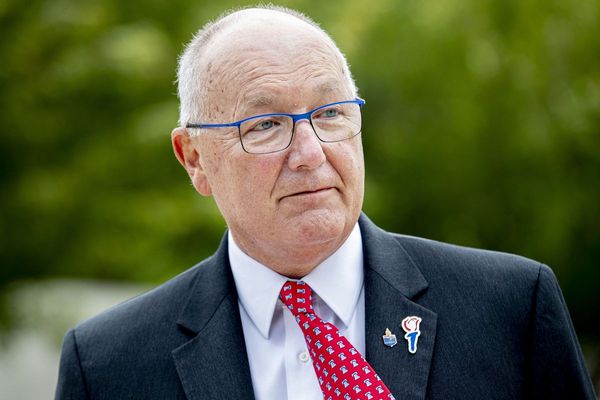
Detective Superintendent Greg Williams, the director of the National Organised Crime Group, reckons we need to move on from blaming 501s for where we’re at with methamphetamine.
It’s true, they had a huge influence on how New Zealanders accessed and consumed meth, and more recently cocaine. But now that their gangs are ingrained in our society, they’ve made New Zealand a stopover point in a global web of drug-related crime groups, and Greg says it’s those international links we now need to address.
In 2014, when Australia amended Section 501 of its Migration Act in 2014, it started sending back a lot more of its New Zealand-born criminals, gang members and even gang associates. Many of the 501s had left New Zealand with their families as kids and had become criminals in Australia (where the underworld had much more business acumen and was routinely much more ruthless).
Greg Williams says Australia had a right to deport Kiwi criminals, but adds: “I suppose our perspective, and I think the government’s perspective and the conversation with the Australian government’s been, yes, but two-year-olds? Really? You’re deporting people who’ve lived in your country since they were two years old? Because they’re really formed in Australia, right?”
Once back in New Zealand, some of the 501s set up branches of outlaw motorcycle gangs such as the Comancheros, Bandidos, Mongols, Rebels and Finks. Some also started applying the tried-and-true systems they used in Australia for importing industrial volumes of methamphetamine and supplying them to an increasingly meth-hungry New Zealand public.
Now here’s another perspective, from a 501 called David Obeda.
In Melbourne, David Obeda was a member of the notoriously violent prison gang G-Fam. But he now helps 501s reintegrate into New Zealand society and hosts his own podcast interviewing them.
He says, “When you get deported, your pōwhiri into New Zealand is hand-cuffs, a DNA test, a police interview. That’s your welcome, that’s your pōwhiri back into New Zealand as a deportee.”
David suggests one simple act could bring about a profound change for a lot of 501s. “Instead of that, maybe just, ‘Hey, welcome home.’ You know, sometimes it’s the small things that can make a big difference.”
Because, he says, these New Zealanders are being sent home with major problems. They are often drug addicted, broke and broken, vulnerable to being lured back into a gangster or criminal lifestyle. Hell, some of them don’t even need to be lured; they just want to carry on where they left off. He believes many are also suffering post-traumatic stress disorder, or PTSD, from the very act of being deported back to a place they thought they’d left behind.
David himself was a self-described full-blown drug addict when he arrived in Auckland. Fortunately for him, a spiritual epiphany helped him get clean.
For Mark Talanoa, another 501, it was prescribed medication he had to come off when he arrived in Christchurch. He’d been on anti-psychotics for his last year in prison because his chronic drug use had led to two major psychotic episodes. During the first one, as a young man in Sydney, he felt his gang were threatening his family, so he went on a gun rampage, shooting up the gang president’s home. The second episode was in prison, where his behaviour was so alarming he was put in segregation and then into the mental health high-dependency unit for six weeks. When they settled on a medication, he went from being high as a kite and never sleeping to a zombie that slept 12 hours a day.
But Mark was lucky because his partner Desiree, an Australian, moved over to New Zealand to be with him, and she stuck beside him as he went ‘cold turkey’ on the anti-psychotics. She has supported him every step, and stumble, of the way. And these days, like David Obeda, Mark and Desiree help 501s reintegrate into New Zealand society.
Yet the planes full of angry and vulnerable offenders keep arriving. I guess when I think about what we should be doing with 501s, I come back to David Obeda’s podcast, TFS (sometimes with the subheadings The Felon Show or The Fresh Start). Mostly in New Zealand we’ve chosen, sometimes with good reason, to portray 501s as ‘The Felon Show’. But now we know the outcomes of both approaches, I think we should be pushing ‘The Fresh Start’ alternative as strongly as possible.
If someone gives me a date and a time for the next planeload of 501s, I’ll be down at the airport waving and saying, “Welcome home. How can we help?”
The other way hasn’t worked.
A mildly abbreviated excerpt taken with kind permission from the newly published 501s: The Reluctant Returnees by Angus Gillies (Upstart Press, $39.99), available in bookstores nationwide.