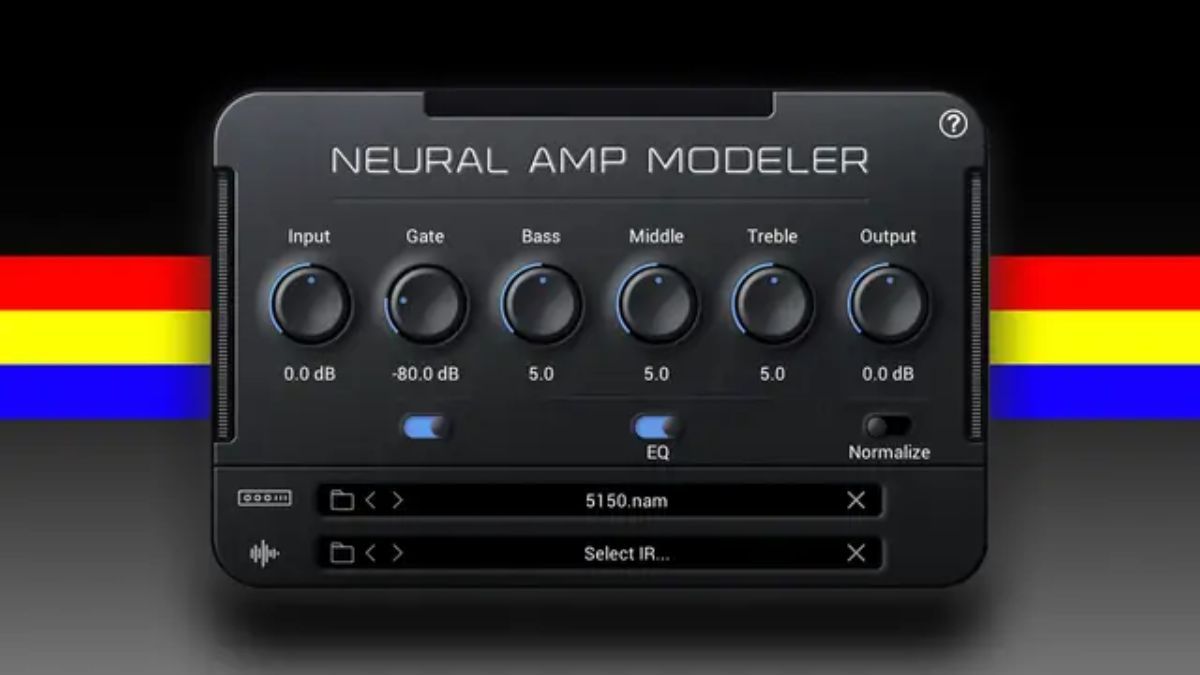
TONE3000 has unveiled the next generation of its open-source, free-to-use amp modeling technology, and it could represent a watershed moment for the digital modeling market.
The Neural Amp Modeler (NAM) Architecture 2 was built in partnership between TONE3000 and NAM creator Steve Atkinson. The company says, is the “most accurate and best sounding amp modeling technology in history”, yet curiously it runs a humble “$3 chip.”
It’s generally thought that top-level modeling tech – like what we get with the Line 6 Helix Stadium , Neural DSP Quad Cortex, and Fractal AxeFx – requires a top-dollar outlay. So how can the free-to-use A2 outstrip the competition?
Well, there are three important factors. Firstly, it’s open source, meaning any hardware or software maker can support A2 in their product, with a ton of resources freely available online to help players dive into capturing their gear, or pull from a massive library of pre-made captures.
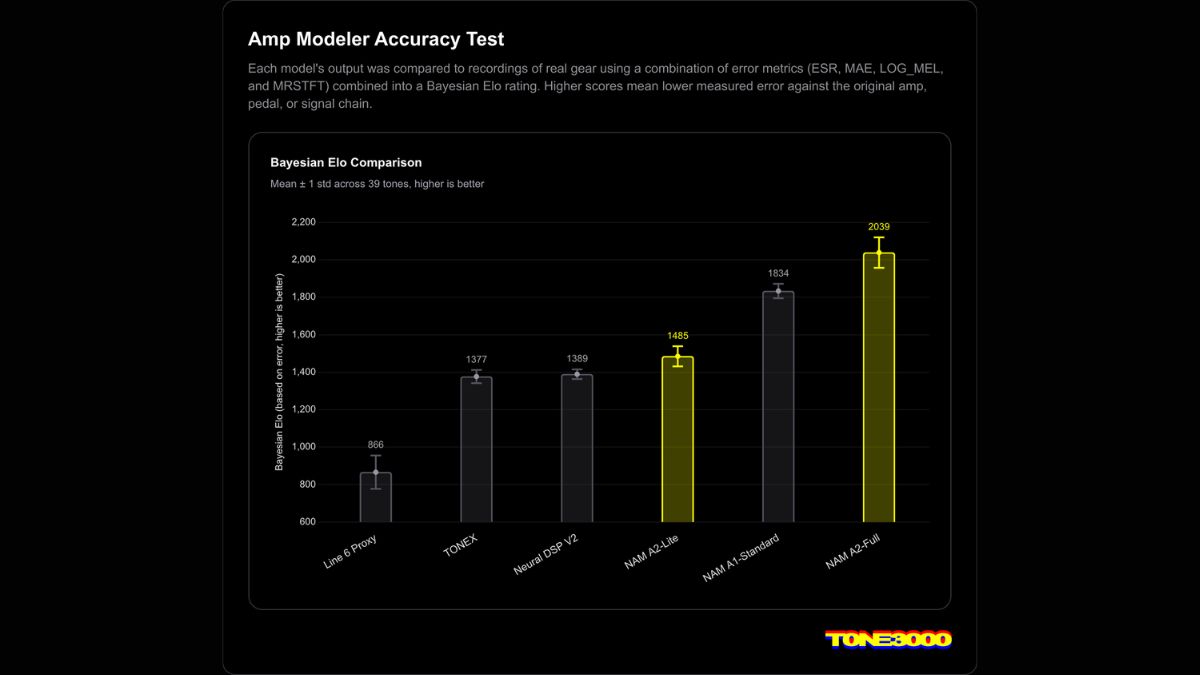
Next, there are the results of “quantitative and blind listening tests” to consider. TONE3000 says in its A2 tests saw Neural DSP, Line 6, and IK Multimedia lose out “by a wide margin.”
Quantitative testing pitted A2 models against leading modelers and the real amps, pedals, and signal chains they were born to mimic. A total of 39 tones were covered, using bass and guitar amplifiers across a range of permutations involving different pedals, cabs, and signal chains, with a cranked Mesa/Boogie Dual Rectifier and a vintage Neve 1073 mentioned here.
Blind tests were large-scale and used the MUSHRA methodology, which TONE3000 describes as “the audio industry’s gold standard for evaluating perceived sound quality.” The BBC is among its advocates.
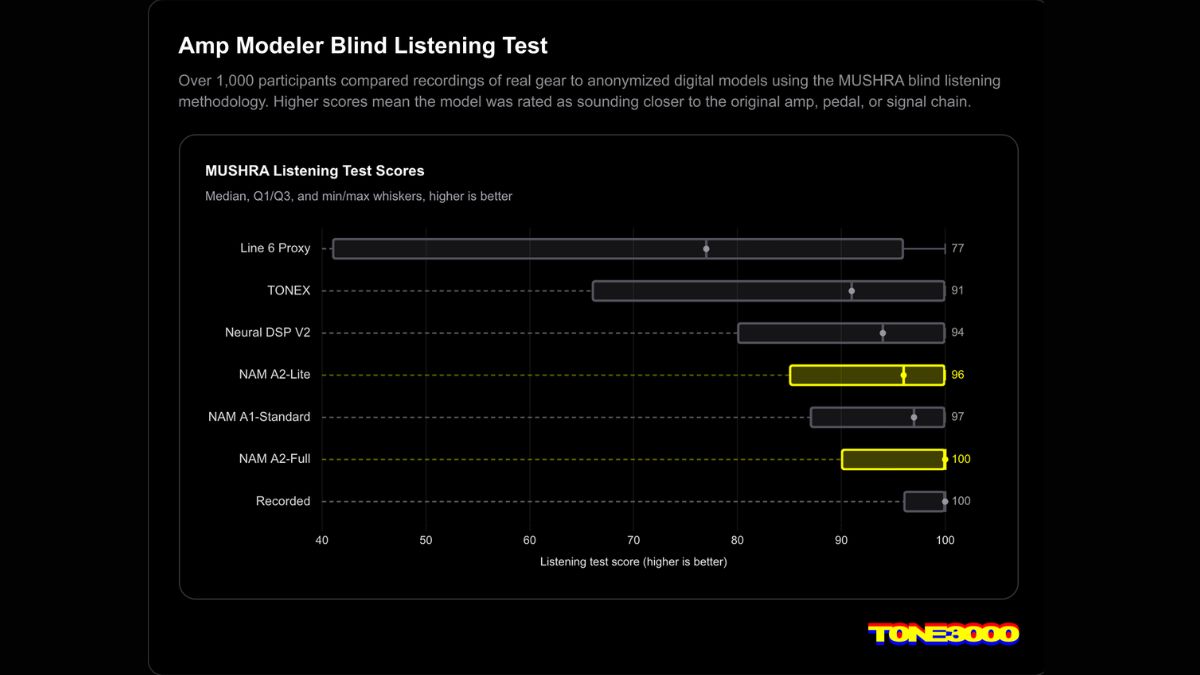
During these tests, over 1,000 participants listened to recordings of 37 different tonal combinations of real and modeled gear. With 100 being the best possible score. A2 Full clocked in at 100. By comparison, TONEX (91) and Neural DSP V2 (94) followed behind. Line 6 Proxy ranked with 77.
You can read the full results in TONE3000's blog post.
The third trump card is the growing list of products that support NAM, which currently includes Blackstar’s Beam Mini and offerings from Darkglass and Lava Music, right down to budget modelers accommodating the captures. That can make even the cheapest units extremely powerful, especially given that its library currently boasts over 350,000 different tones.
Both versions of A2 – Full is built for pro audio and now runs on less than 30-40% less CPU, and Lite is built for multi-effects pedals – are being heralded by their creators as “a turning point for the industry.”
“A2 captures feel more satisfying to play and sound virtually indistinguishable from the analog original,” TONE3000 says. “The bloom of a tube amp pushed into breakup, the sag of a fuzz pedal under a heavy chord, the snap of a transient through an analog compressor: A2 captures it all.”
Crucially, NAM’s algorithms work by listening to real analog gear before its neural network creates a dynamic capture of that gear, including the various bits of gear it might be paired with, be that head going through a specific cab, or pushed by an overdrive pedal, and so on.
It being free also means that many players get access to gear models they could never otherwise dream of playing.
See TONE3000 for more.