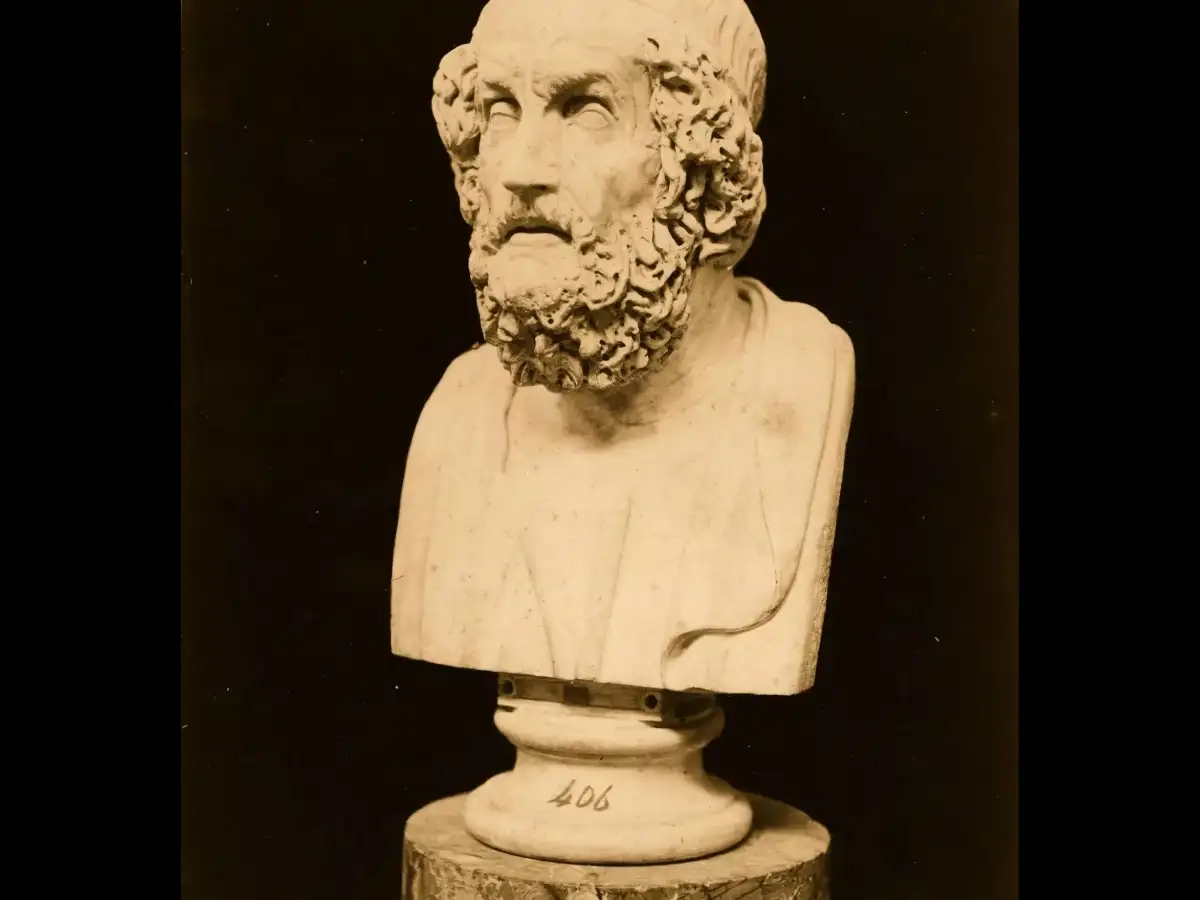
A routine research trip through a Dutch university library led to an extraordinary discovery: a tiny piece of “The Odyssey” that is believed to be about 1,700 years old.
Mark de Kreij, a Greek literature expert and professor, was studying ancient Egyptian and Greek texts at Utrecht University when he came across a small piece of parchment tucked inside a collection of early Christian manuscripts.

At first glance, the fragment did not look particularly remarkable. It measured just 2.6 by 3 inches, roughly the size of a playing card, and showed signs of age including water stains and discoloration.
But the tiny lines of writing caught de Kreij's attention. He recognized the passage as coming from Homer's ancient epic, “The Odyssey.”
What does the ancient ‘Odyssey’ fragment say?
The fragment contains a dramatic episode from the story of Odysseus, the Greek hero whose long journey home forms the central plot of Homer's epic.
The passage concerns Helios, the Greek sun god, and his sacred cattle.
Earlier in the story, the sorceress Circe warns Odysseus and his crew not to harm the animals belonging to Helios. The warning is eventually ignored.