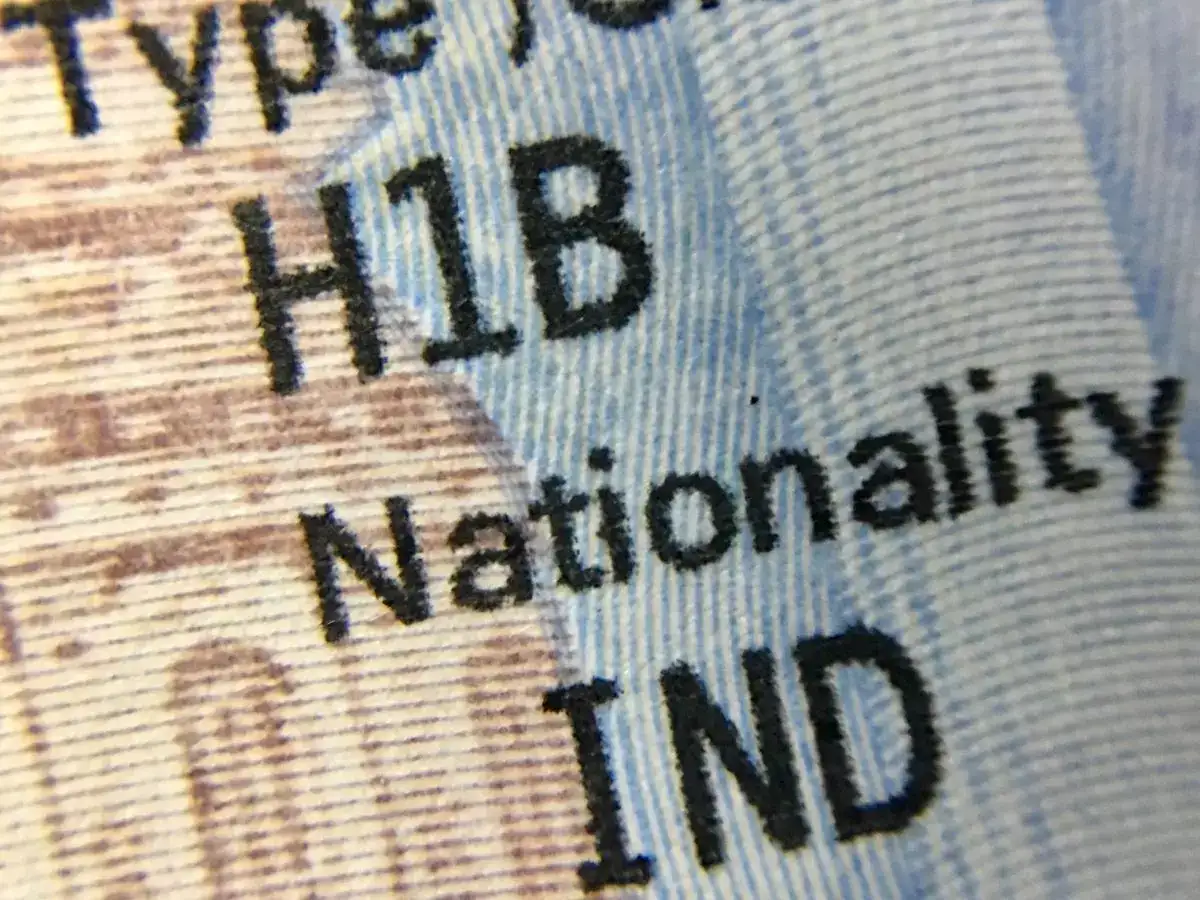
Trump administration's attempt to impose a $100,000 fee on certain H-1B visa petitions now rests on a question that goes beyond immigration policy: Can a US president effectively levy a tax without Congress?
The issue has moved to the centre of a legal battle after the Department of Homeland Security (DHS) asked the US Court of Appeals for the First Circuit to revive the fee, arguing that a lower court's order blocking it is causing "irreparable damage" to the government's immigration enforcement efforts.
The fee was introduced through a presidential proclamation signed by Donald Trump on September 19, 2025. The administration said the measure was necessary because abuse of the H-1B programme had led to the "large-scale replacement of American workers", suppressed wages and undermined economic and national security.
But on June 8, US District Judge Leo Sorokin struck down the policy, ruling that the administration exceeded its authority. In a summary judgment, Sorokin concluded that the $100,000 payment amounted to a tax and that the President lacked the authority to impose it without congressional approval. He also found that the policy violated the Administrative Procedure Act.
"The Court finds that the Policy imposes a tax on H-1B petitions without the requisite delegation by Congress," Sorokin wrote.
The ruling marked a major setback for one of the most aggressive measures in Trump's broader effort to reshape the H-1B system.
Not just a visa fight
The administration argues that the case is not about taxation at all.
In court filings seeking a stay of the ruling, DHS said the payment is a lawful immigration restriction imposed under presidential powers and not a tax. The department has also argued that abuse of the H-1B programme raises labour market and national security concerns.
The dispute has effectively become a test of how far presidential authority extends under the Immigration and Nationality Act.
Judge Sorokin disagreed with the administration's interpretation, finding that while the President may restrict entry of foreign nationals under certain circumstances, that authority does not include imposing taxes. Multiple legal analyses of the ruling noted that the court viewed the payment as an unconstitutional tax rather than a regulatory fee or penalty.
The decision applies nationwide unless a higher court intervenes.
Can the White House tax talent?
The legal battle comes at a time when the H-1B programme is already undergoing significant changes.
US Citizenship and Immigration Services (USCIS) data show that H-1B registrations have fallen sharply over the past three cap seasons. Total registrations declined from 780,884 for FY2024 to 479,953 for FY2025 and further to 358,737 for FY2026. Eligible registrations fell from 758,994 in FY2024 to 470,342 in FY2025 and 343,981 in FY2026.
The decline followed anti-fraud measures and a beneficiary-centric selection process designed to reduce multiple registrations for the same worker.
At the same time, the Trump administration has moved to tighten the programme through other channels. DHS has announced a weighted selection system for the FY2027 H-1B cap season that would prioritise higher-paid and higher-skilled applicants instead of relying solely on a lottery.
The administration says such measures are aimed at protecting American workers and ensuring that employers use the programme only for highly skilled talent. Critics argue that repeated restrictions risk making it harder for US employers, universities and healthcare institutions to recruit specialised workers.
For Indian professionals, who historically account for the overwhelming majority of approved H-1B beneficiaries, the outcome of the appeal could have consequences far beyond a single fee. The case may ultimately determine whether future administrations can use executive authority to reshape skilled immigration programmes without going back to Congress.
At its core, the dispute is no longer about a visa charge. It is about where presidential power ends and Congress's taxing power begins.