
Get all your news in one place.
100's of premium titles.
One app.
Start reading
Guitar World
Guitar World
Entertainment
Daryl Robertson

"A superbly built, affordable reverb pedal that rivals pricier competitors": Klowra Limbo reverb review

Klowra Limbo.

What is it?

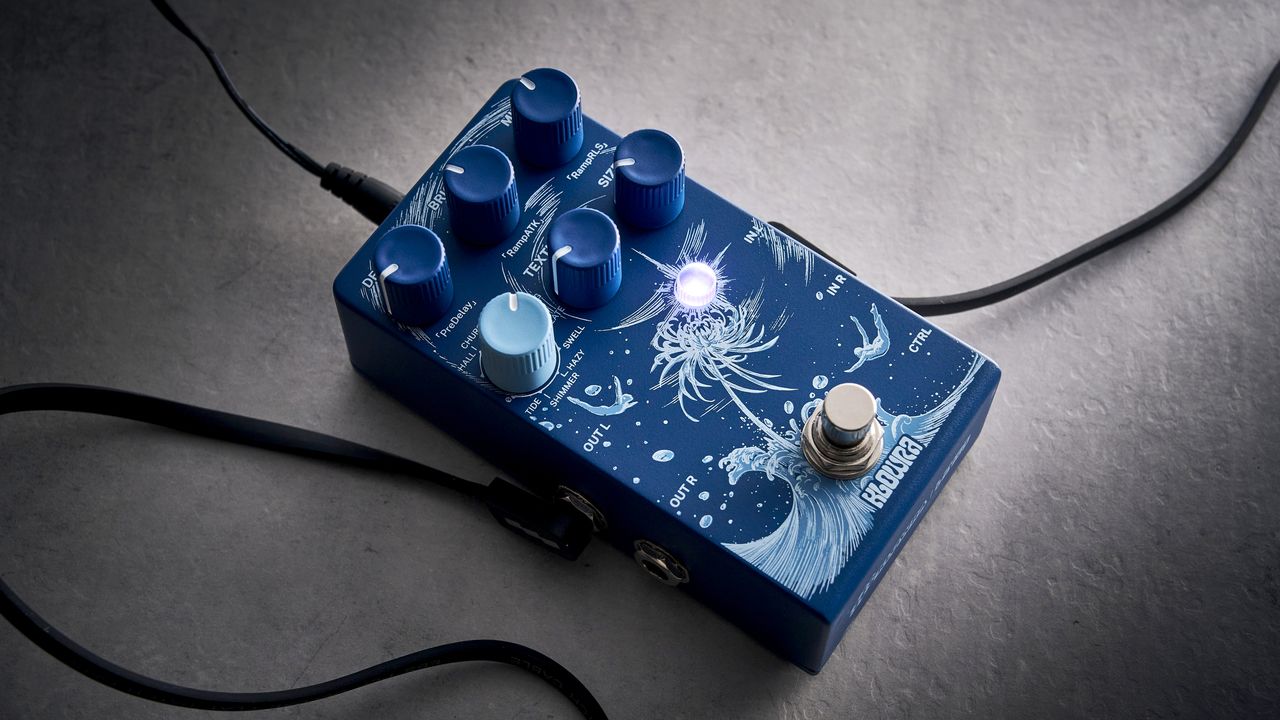
Only launching in 2025, Klowra is the new kid on the pedal block, but right out of the gate, it's had an impressive start, exploding onto as many Instagram and YouTube demo videos as humanly possible. Arguably the most talked-about pedal of its relatively modest product line is the competitively priced and feature-rich Limbo, a compact stereo reverb pedal with a selection of nine studio-grade reverb algorithms.

As you'd expect, the unit comes loaded with algorithms for realistic physical spaces like a hall, church, and room as well as atmospheric textures like Swell, Hazy, Shimmer, and Tide. Of course, there’s the obligatory Spring and Plate settings too, rounding out a comprehensive clutch of reverb modes.

​But that’s not all that’s on offer. There’s a Ramp function that lets you smoothly fade and morph between your live front-panel knob settings and a saved secondary preset, creating unique dynamic effects. There’s also Freeze and Infinity modes, which, as you’d expect, let you sustain notes or ambient textures indefinitely without the reverb decaying away.

As for connectivity, you get both left and right ins and outs, meaning this can be a fully stereo reverb if you’re so inclined. There’s also an input for connecting an expression pedal or external footswitch, unlocking extra control over the pedal’s parameters on the fly. Finally, the Limbo is powered via a standard 9V DC supply, center-negative, 250mA minimum.

Specs

(Image credit: Klowra)
  • Launch price: $129.99 | £111 | €129
  • Type: Reverb pedal
  • Controls: Decay, Bright, Mix, Texture, Size, Mode selection, Pre-delay, Ramp Attack, and Ramp Release
  • Features: Nine built-in studio-grade algorithms: Hall, Church, Room, Spring, Plate, Swell, Hazy, Shimmer, and Tide
  • Connectivity: Inputs: 2 x 1/4" TS instrument inputs (Left/Mono, Right), outputs: 2 x 1/4" TS instrument outputs (Left, Right), external control: 1 x 1/4" CTRL/EXP jack (for TRS expression pedals or TS/TRS momentary footswitches)
  • Bypass: True or buffered
  • Power: 9V DC, center-negative barrel connector (minimum 250mA current draw required; battery power not supported)
  • Dimensions: 54.7mm H x 124.8mm D x 69.2mm W (2.0" H x 4.9" D x 2.7" W)
  • Weight: 0.45 Kg
  • Contact: Klowra

Build quality

(Image credit: Future)

Build quality rating: ★★★★½

In recent years, I’ve seen a real boom in ultra-affordable pedals that are so packed with features that they are taking aim squarely at the heavy-hitters like Strymon. But while it’s all well and good being dense with algorithms and extras, it doesn’t mean squat if it comes shipped in a subpar, cheaply made enclosure.

Thankfully, that’s not the case with the Limbo. All told, this is a neatly presented and well-constructed little pedal. It’s a good size, too. Coming in a little larger than a Boss compact, it won’t take up too much prime pedalboard real estate, but it’s large enough to tweak comfortably.

Like every good pedal, the controls feel exceptionally smooth and responsive, making it easy to dial in precise settings without any wobble or play. The footswitch has a reassuring, soft click, and I’d say with confidence that it’s solid enough to trust for live performance. I also appreciate the thoughtful placement of the inputs and outputs, which are spaced well and logically arranged along the sides. This not only helps with tidy cable management but also makes setup on a crowded board nice and straightforward.

The white-on-blue ethereal graphics are pleasing but do make the control names less clear to read at a glance than they could have been. But despite its tiny price tag, the Limbo has a somewhat premium sheen to it overall, and it certainly makes me excited to plug it in and see what it can do.

Usability and features

(Image credit: Future)

Usability and features rating: ★★★★½

For the most part, it’s intuitive, but some of the deeper editing is a little convoluted and does require me to poke my nose in the manual

There’s a lot going on with this pedal. For the most part, it’s intuitive, but some of the deeper editing is a little convoluted and does require me to poke my nose in the manual. Let’s start with the easy stuff.

So, selecting a reverb mode is a piece of cake. The light blue selector switches through the nine algorithms. Like all the dials, these are all well labeled, albeit in a pretty small font that can get lost in the graphic a little.

I think the order of the reverbs could be improved. It starts on Hall, then Church, Room, Spring, and Plate. For me, it would make more sense to go from smallest to largest in terms of space, but admittedly it is a small gripe.

As you’d expect, there’s the standard array of reverb controls such as Decay, Bright, Mix and Size, with a Texture dial that, as Klowra says, “Adjusts the texture of the reverb reflections. Turning the control to the right softens the early reflections and produces a smooth onset of the reverb.” It proves a useful control to fine-tune these sounds to taste and need.

(Image credit: Future)

The three dials at the top also have secondary modes: Pre-Delay, Ramp Attack, and Ramp Release, which relate to the Ramp mode.

To access the Ramp or Freeze modes, you simply press and hold the footswitch. You need to press the indicator LED to switch between the modes. These are helpfully color-coded, with white indicating the Freeze/Infinity function is selected, blue showing the Freeze/Infinity is actively being triggered, while orange lets you know the Ramp function is selected and purple shows the Ramp is actively being triggered. So far so good, it’s all pretty accessible stuff.

If you want to save a setting, you can press and hold the LED button, and it will save the current parameter settings as what Klora calls a Snap-Set.

To access the deeper pedal functions, you need to press and hold the footswitch while powering on the Limbo. Through a combination of button presses, you can tweak things like the bypass of the unit, whether trails continue after you turn the pedal off, and even the brightness of the LED.

I recommend you have the manual handy if you plan to play around with these settings; it’s not something you can really do on the fly, but it does show how much thought has gone into this pedal. It’s so impressive that I need to keep reminding myself this pedal retails for a little over $100!

Sounds

(Image credit: Future)

Sounds rating: ★★★★★

When it comes to reverb pedals, versatility and character are everything, and the Limbo delivers both in spades. Its bread-and-butter algorithms, like Hall, Church and Room, cover all the familiar territory you’d expect from a modern stompbox, but what’s remarkable is how polished and musical they sound.

For testing, I’m using a Fender ‘68 reissue Telecaster into a super clean Fender Twin, with the reverb turned all the way off, obviously.

The Limbo holds its own against the best in the business

Starting on the Hall mode, this setting can take you from realistic concert venues to bright present reverb. Church, meanwhile, offers a grand, cathedral-style resonance that’s lush and immersive, with enough parameter control to really dial it in so it doesn’t totally wash you out.

The spring setting is pretty nice too. Klowra says this “uses physical modeling tech with three virtual springs to emulate classic spring tank circuits.” Twisting the texture knob adjusts both reverb tail modulation and spring drive, which creates some fun surf-rock results.

Now, these are all pretty common and standard reverb pedal staples, but I’d say across these modes, the Limbo holds its own against the best in the business. There’s nice depth, clarity, and presence that rivals industry stalwarts like Strymon or Eventide.

(Image credit: Future)

I think these experimental modes encourage you to push boundaries, explore new sonic territory, and discover tones you won’t find anywhere else

That said, I think the Limbo really earns its keep with the experimental modes. Swell transforms your playing into dreamy pads with faded attack and gradual volume swells, ideal for shoegazy ambient textures – especially when I stomp on the Big Muff to fuzz things up.

Klowra says that the Hazy setting “lets you drift between serene morning mist and raging sandstorms.” Pretty visual suggestions there, but it’s a fun setting nonetheless. It’s almost synthy in the way the reverb reacts and blooms.

Next we have Shimmer. As someone who did almost 10 years in a guitar store, shimmer verbs can feel a little played out at this point for me, but I must say this one sounds fantastic. You can hear that classic octave-up sound, but tweaking the Texture dial lets you really shape the character.

Lastly, we have the Tide setting, which is perhaps the most unique mode. Adding what I’d describe as softly pulsing white noise under your playing, it mimics the sound of crashing waves on a beach – and it’s weirdly relaxing to play through. Personally, I probably don’t have a musical use for this sound, but if you’re into creating dream-like soundscapes and instant atmosphere, then you’ll get a lot out of the setting.

I think these experimental modes encourage you to push boundaries, explore new sonic territory, and discover tones you won’t find anywhere else. Add in the ability to freeze your reverb trail, and things get even more inspiring. For players who crave both classic reverb and adventurous effects, the Limbo more than delivers on all of these fronts for sure.

Verdict

(Image credit: Future)

Sound-wise, the Limbo covers all the expected bases and then some

I think the Klowra Limbo isn’t just another affordable reverb pedal gunning for a slice of the market. It’s a genuinely impressive entry that manages to punch way above its weight class. Klowra, as a brand, may be new on the scene, but the Limbo is proof that it's paid close attention to what modern players want and need, and have delivered it in a package that’s both accessible and inspiring.

I’d say the Limbo is more than just a budget reverb option; it’s a versatile tool for both traditional and adventurous players alike

For starters, the Limbo’s build quality is rock-solid. And better yet, sound-wise, the Limbo covers all the expected bases and then some. The classic Hall, Church, Room, Spring, and Plate algorithms are actually excellent, with a musicality and depth that rivals some of the more expensive and established competition.

But where this pedal truly sets itself apart is in the more experimental modes. Swell, Hazy, Shimmer, and especially Tide provide a sonic playground for curious guitarists who like their sounds a little less run-of-the-mill.

Oh, and I can’t forget the price. For a little over $100, you get a true stereo, feature-rich reverb pedal that feels thought out and lovingly built. That’s almost unheard of. I’d say the Limbo is more than just a budget reverb option; it’s a versatile tool for both traditional and adventurous players alike.

Guitar World verdict: Klowra Limbo is a superbly built, affordable reverb pedal that rivals pricier competitors. With versatile algorithms from classic to experimental, a wealth of controls, and a bargain price, it’s an inspiring choice for both traditionalists and sonic explorers alike.

Ratings scorecard

Test

Results

Score

Build quality

The Klowra Limbo feels robust, premium, and thoughtfully designed, easily outshining its budget price tag, but it can be difficult to read the controls from a distance.

★★★★½

Usability and features

Most features are intuitive for everyday use, though deeper functions require some manual-diving and patience.

★★★★½

Sounds

Both classic and experimental reverb modes sound rich, musical, and genuinely inspiring, rivaling much pricier pedals.

★★★★★

Overall

Limbo is an affordable, versatile reverb pedal that impresses in quality, sound, and creative potential. For me, it offers outstanding value.

★★★★½

Also try

Hands-on videos

Klorwra

Perry Frank

  • Best reverb pedals : from spring to shimmer, these are our top picks for your pedalboard
Sign up to read this article
Read news from 100's of titles, curated specifically for you.
Already a member? Sign in here
Related Stories
Top stories on inkl right now
One subscription that gives you access to news from hundreds of sites
Already a member? Sign in here
Our Picks
Fourteen days free
Download the app
One app. One membership.
100+ trusted global sources.