
Get all your news in one place.
100’s of premium titles.
One app.
Start reading
PC Gamer
PC Gamer
Nick Evanson

A stupid Windows 11 requirement makes Asus' simple new Wi-Fi motherboard feature a winner

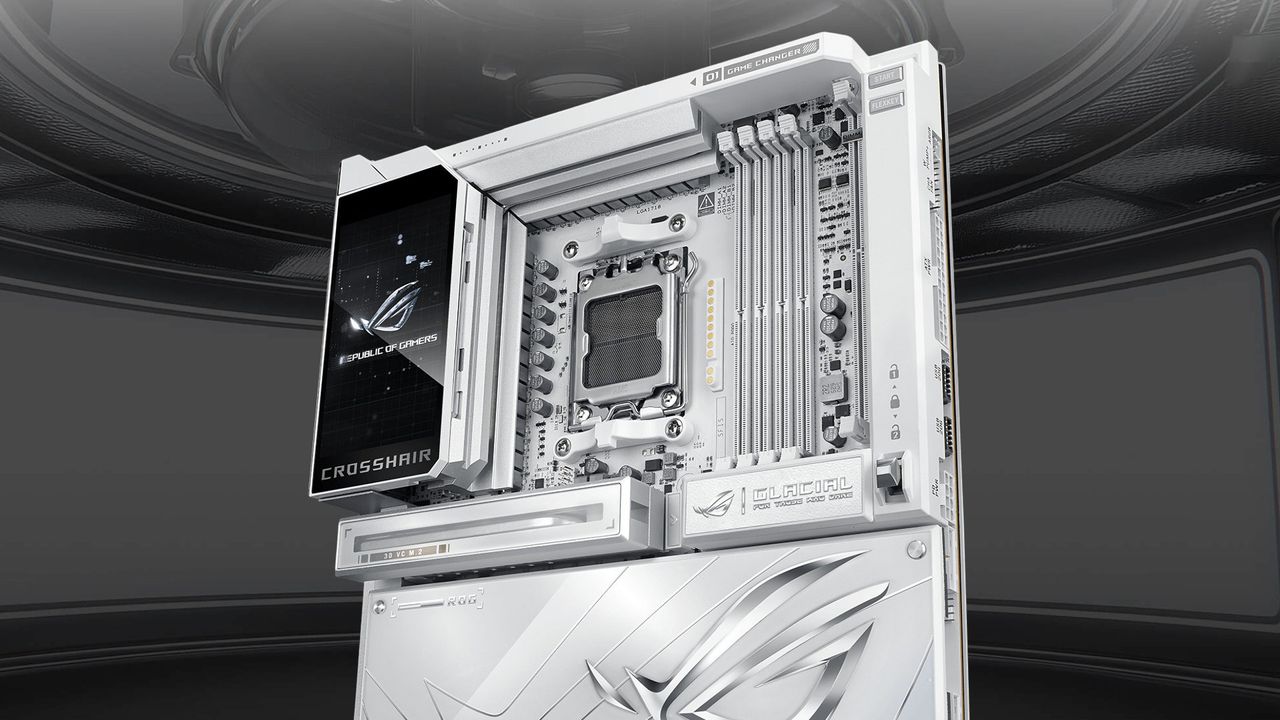
A promotional image of an Asus ROG Crosshair X870E Glacial motherboard against a dark, stylized background.

As much as I like a good motherboard, reviewing them can often be a frustrating experience, especially if it has a brand-new chipset. Wonky BIOS files and awkward connectors are easy enough to deal with, but it's a whole different story when it comes to Wi-Fi drivers. That's why Asus' new ROG Crosshair X870E Glacial is noteworthy, because it comes with those drivers pre-installed on the board.

It's not the only spangly feature the X870E Glacial has; it's a high-end Asus model, after all. In fact, the mobo sports a veritable smorgasbord of gadgets, extras, and options, all designed to make it as user-friendly as possible. I also have to say that the whole thing really does look very nice.

However, one of the last Asus motherboards I reviewed, the TUF Gaming B860M-Plus WiFi, was anything but user-friendly. That's because Asus uses one of three different Wi-Fi modules for this particular model, and there's no way of telling which one you've got without ripping the whole thing apart.

That means you have to try three different Wi-Fi driver sets until you hit the right one. That's not much of a problem when you've already got Windows fully set up and running, but with Redmond making it increasingly harder to set up a local account, when you first install Windows, it's quite a hassle juggling drivers, USB sticks, and funky key shortcuts to get a wireless connection going, just so you can have an operating system on your PC.

So when I saw that the X870E Glacial has its Wi-Fi driver pre-installed on the board (they kick in when you're installing Windows), I was genuinely excited to see this feature.

It's not just Asus that has this problem with guess-the-vendor Wi-Fi drivers, as I know that some Gigabyte motherboards are like this, too. To be fair to both companies, it wouldn't really be an issue if Microsoft just let you quickly skip past the Internet requirement during Windows installation, though you would still be faced with guessing which set is the right one to use.

The automatic installation of drivers is something that's relatively new in the world of motherboards, but I'm glad it's here, as it really does help with the whole process of setting up a new build. That said, it only takes place once Windows is fully installed and even then, you're reliant on the board vendors having the latest drivers on their servers, and you still need a net connection to start with.

Sticking all of the key drivers into a bit of onboard memory on the motherboard seems to be the best solution, to my eyes at least. Unfortunately, it also adds to the cost of manufacturing the motherboard (not just the increase in the bill of materials but also the time it takes to package the product), so we may never see this filter down to the mainstream or budget sector.

There again, with DRAM set to be hugely expensive for at least another year, perhaps Asus and the like might just add it as an option to all their new motherboards as a means to keep people interested in buying a new mobo. It won't make building a PC as easy as sticking Lego bricks together, but every little helps.

Sign up to read this article
Read news from 100’s of titles, curated specifically for you.
Already a member? Sign in here
Related Stories
Top stories on inkl right now
One subscription that gives you access to news from hundreds of sites
Already a member? Sign in here
Our Picks
Fourteen days free
Download the app
One app. One membership.
100+ trusted global sources.