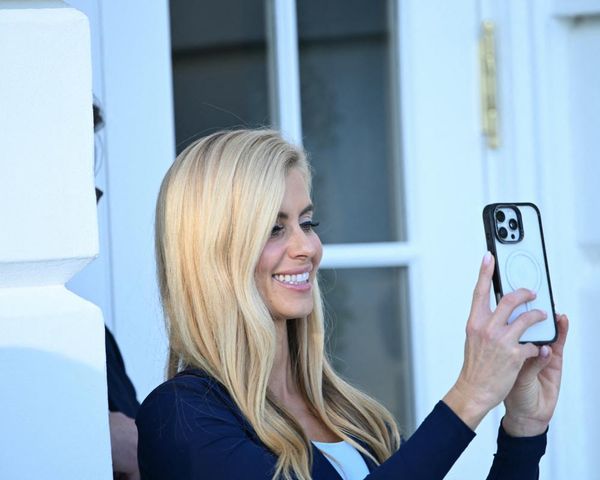
A 50-year-old woman told sleep specialists in Prague that she sometimes took pictures with her smartphone while sleepwalking. When they asked for evidence, she handed over 77 photos taken between August 2018 and February 2026.
Twenty-seven of the images were completely dark. The other 50 showed things such as a glowing power outlet switch, aquarium lighting, the sharp shadow of a plant, model cars behind cabinet glass, and a blurry, badly framed ceiling. In several frames, her own hand pointed at something in the room.

The case, published Aug. 6 in Nature and Science of Sleep by neurologists Jiri Nepozitek and Karel Sonka of Charles University and General University Hospital in Prague, is described by its authors as an apparently previously unreported form of goal-directed behavior during sleepwalking.
A Lifelong Sleepwalker Whose Nights Got Busier
The woman had sleepwalked since childhood, but her episodes worsened markedly at age 29, when she began working rotating shifts amid substantial job stress. Since then, episodes have occurred anywhere from about twice a week to almost every night.
During them, she has been reported to talk in her sleep, walk around her apartment, and try to interact with others sleeping in the home. Occasionally, she leaped out of bed. Once, she left the apartment and regained awareness in the elevator.
She had no professional or recreational interest in photography and took no regular medication. She sometimes recalled fragments of dreams tied to the episodes, typically confused work situations, worries about her relatives' safety, or fears that the ceiling might collapse or that something dangerous was leaking through it.
Sleepwalking is one of the disorders of arousal, a group of non-REM parasomnias in which a person partially wakes from deep sleep and carries out complex actions with reduced awareness. According to StatPearls, an NIH-hosted medical reference, sleepwalking usually arises from deep non-REM sleep during the earlier third of the night.
What the Time Stamps and the Sleep Lab Showed
The photos' embedded time stamps clustered between about 2 a.m. and 3:30 a.m. Because she usually went to bed at midnight, the authors wrote, that timing fits the typical pattern of non-REM parasomnias. Several photos were taken in quick bursts over a few minutes, and some came from daytime sleep after night shifts.
An overnight video sleep study recorded 11 awakenings from N3, the deepest stage of non-REM sleep, supporting the diagnosis. A comprehensive neurological exam, including an EEG, was normal, and the sleep study revealed no specific cause for her disorder.
For most photos, she could recall at least fragments of related dream imagery. She often described dreams about the ceiling collapsing, and one photo was a blurry, poorly framed shot of the ceiling. A picture of a blanket folded into a triangle lined up with a dream fragment about inspecting the room for tidiness.
The researchers noticed that many identifiable images featured light sources or sharp contrasts between light and shadow. One possible interpretation, which they called speculative, is that such ambiguous visual cues were woven into her dreams and drew her attention during partial arousal. That idea echoes a 2025 review in the Journal of Sleep Research, cited by the authors, describing how elements of the real environment can be perceived, misinterpreted, or folded into dream imagery during these episodes.
Dream content during sleepwalking is not unheard of. The Prague team also cited a 2009 study in the journal Sleep on dreamlike mental activity reported by adults with sleepwalking and sleep terrors.
Why a Phone Camera May Slip into Sleepwalking
Taking a photo requires grabbing a phone, unlocking it, opening the camera app, aiming, and pressing the shutter. The authors argue that for many people, those steps have become so thoroughly rehearsed through daily use that they may surface during incomplete arousal.
In their view, what may matter most is not photography itself but how deeply automated a motor routine has become. The closest precedent they found for electronic-device use was a 2009 report of a patient who wrote emails while sleepwalking after a dose increase of the sleep drug zolpidem, although that case was medication-related.
The authors acknowledged important limits. The photo-taking was never captured during the sleep study, no one else witnessed it, and the archive was reviewed after the fact, so some photos may not have been kept. Her dream recall was self-reported. Still, they concluded that the nighttime timing, her clinical history, and the sleep study findings "strongly support" that the photos were taken during parasomnia episodes.
Treatment, Safety, and a Question for Doctors
The woman was first given clonazepam, 0.5 milligrams, which had only a limited effect on how often episodes occurred and left her bothersomely sedated in the mornings. Trazodone, at doses up to 100 milligrams, brought partial improvement.
She also received standard safety counseling: securing her home, reducing hazards, improving sleep habits, and limiting triggers such as sleep deprivation and irregular shift work. Shift work and stress are recognized triggers because they destabilize sleep through sleep loss, circadian disruption, and increased deep-sleep pressure, the authors wrote.
Their broader message is for clinicians. Nighttime interactions with smartphones and other devices may be an underrecognized feature of modern non-REM parasomnias and deserve specific questions during history-taking and safety counseling. Whether such behavior is truly rare or simply overlooked remains unknown.
People who find unexplained photos, messages, or other activity on their devices after sleep, especially alongside other signs of sleepwalking, may want to raise it with a sleep specialist. StatPearls also lists practical precautions for sleepwalkers, such as locking windows and outside doors and removing breakable objects.
Key Questions Answered
What did the woman's photos show?
Of 77 images, 27 were completely dark. The rest showed light sources, shadows, decorative objects, a poorly framed ceiling, and, in several, her own pointing hand.
How do doctors know the photos were taken during sleepwalking?
They cannot be certain. The time stamps, her history, and a sleep study showing repeated awakenings from deep sleep strongly support it, but the behavior was never directly recorded.
Why would someone use a phone while asleep?
The researchers suggest that highly practiced routines, such as unlocking a phone and taking a picture, may be automatic enough to emerge during partial arousal from deep sleep.
What can trigger adult sleepwalking?
Sleep deprivation, irregular schedules, shift work, psychological stress, and other sleep disorders can make episodes more likely.
How was she treated?
Clonazepam helped little and caused morning sedation, while trazodone brought partial improvement. She also received home safety and sleep habit counseling.