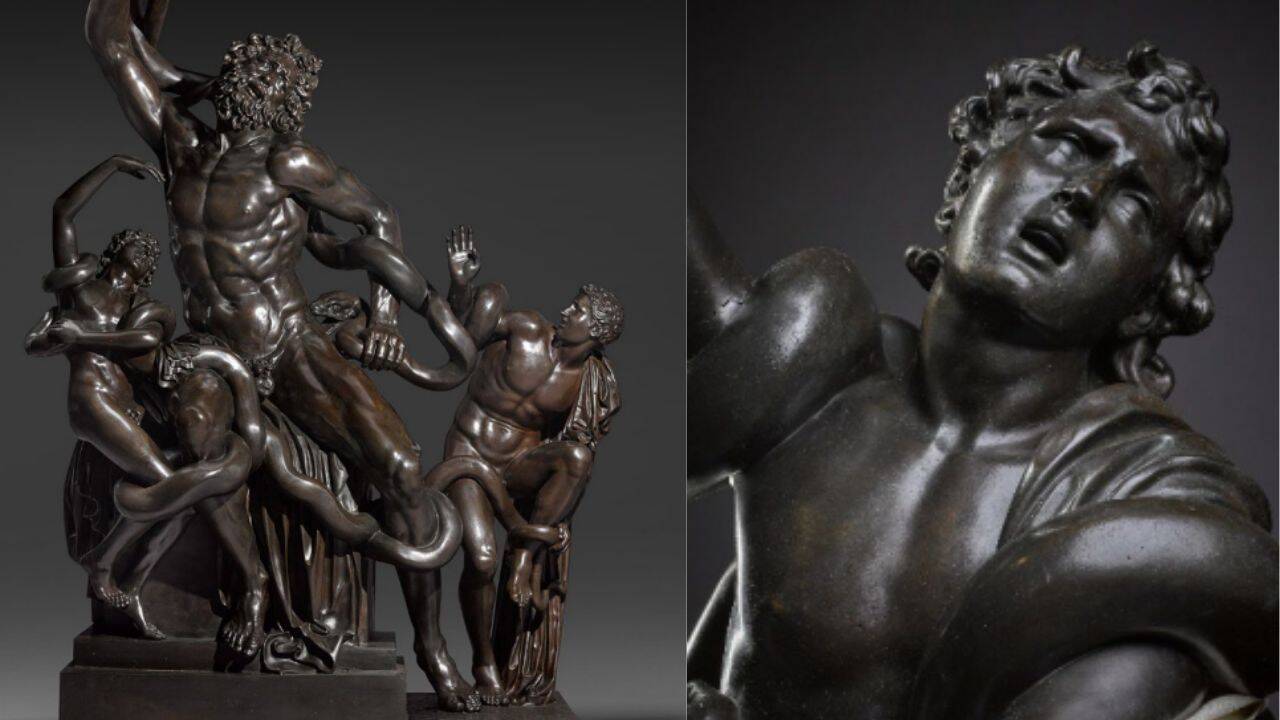
A bronze sculpture with roots stretching back to classical antiquity has rewritten the auction record books in London. The life-sized Hamilton Laocoön, a rare 19th-century bronze interpretation of one of the ancient world's most celebrated marble masterpieces, sold at Sotheby's for £13.6 million ($18.1 million), comfortably surpassing expectations before the sale. Its price established a new benchmark for a Neoclassical sculpture at auction and reflected the unusual combination of rarity, craftsmanship and documented ownership attached to the work. While collectors often compete fiercely for exceptional paintings, sculptures of this scale and historical importance appear on the market only rarely, making the sale a standout moment in this season's auctions.
Get breaking news anytime, anywhere. Download the TOI app now!

Laocoön bronze sells for record £13.6 million at Sotheby's auction
When bidding opened, the sculpture carried an estimate of between £2 million and £3 million. Interest quickly moved beyond that range as several collectors competed for the work before a buyer entering the Old Masters market secured it.
The final hammer price, combined with buyer's premium, lifted the total to £13.6 million. That outcome not only exceeded the forecast several times over but also established the highest auction price ever achieved by a Neoclassical sculpture.
Sales involving monumental bronze works are uncommon, particularly those linked so closely to celebrated classical originals. The sculpture had not appeared at auction for around 150 years, adding another layer of scarcity to the offering.
The ancient masterpiece behind the bronze
The bronze is based on Laocoön and His Sons, the famous marble group showing the Trojan priest Laocoön and his two sons struggling against giant serpents. The original sculpture was unearthed in Rome in 1506 and quickly became one of the defining discoveries of Renaissance Europe, admired by artists and scholars for its dramatic composition and anatomical detail.
Its influence spread across centuries, inspiring painters, sculptors and collectors. Rather than copying the marble directly, later artists often produced casts and bronze versions that allowed the composition to reach royal collections, museums and wealthy patrons across Europe.
How a 1797 plaster cast preserved an ancient masterpiece in Bronze
The story of the bronze sold in London begins after the original marble had already become one of Europe's best-known antiquities. During the Napoleonic era, the ancient sculpture was taken to Paris under the Treaty of Tolentino, where a plaster cast was produced at the Musée Napoléon in 1797.
That cast later became the basis for a commission placed by British collector George Watson-Taylor. In 1817, French sculptor Auguste-Jean Marie Carbonneaux produced four monumental bronze versions using the Paris cast as his model.
Only a small number of those bronzes survive. One is housed in the French Parliament, another remains at Houghton Hall in England, while the Hamilton example followed a far more complicated path through private ownership.
How the rare bronze passed through generations before returning to auction
Watson-Taylor never managed to settle the costs of the commission, and the bronze entered the auction market just a few years after it had been completed. It was purchased by writer and collector William Beckford before passing into the collections of the Duke of Buckingham and Chandos and later the Duke of Hamilton.
Its journey continued in 1882 when it formed part of the Duke of Hamilton's celebrated estate sale at Christie's, an event that stretched over 17 days. Industrialist Thomas Merthyr Guest acquired the sculpture there, and it remained with his family for generations.
That lengthy period in private hands meant the bronze was largely absent from public view and unavailable to collectors, making its return to auction especially significant.
Why this 19th-century bronze became Sotheby's biggest surprise
The Hamilton Laocoön was offered ahead of Sotheby's evening auction devoted to Old Master and 19th-century paintings and sculpture.
Among the other works was an early painting by Rembrandt, Let the Little Children Come Unto Me (1627). Recently restored, the work achieved £8 million after bidding finished, remaining within its pre-sale estimate. The sale also included works by artists such as Edwin Landseer, William Hodges and Sandro Botticelli, rounding out one of the auction house's major Old Masters events of the season.