
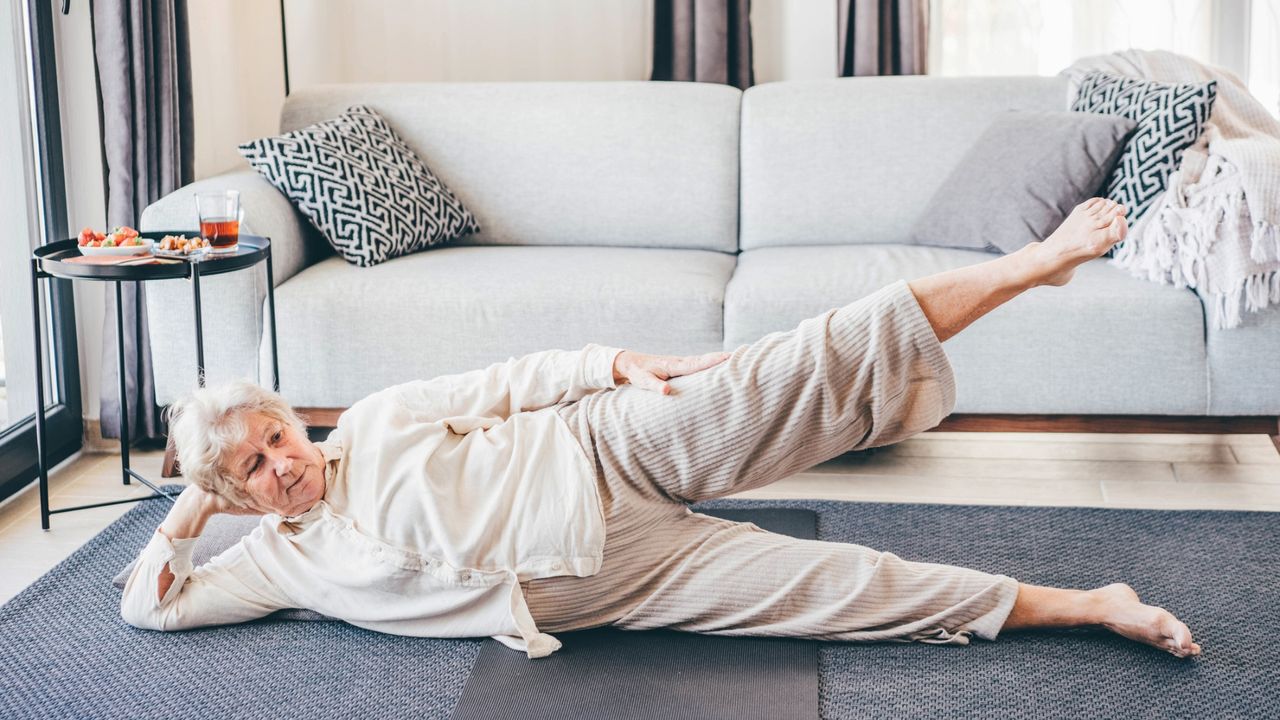
If hip strength is a focus for you this year, there’s one move that can help you achieve it more effectively than other moves, according to Pilates instructor Nina Popp at Life Time.
Popp says that the side-lying leg lift can strengthen your hips, thighs and abdominal muscles.
“By practicing this move, you can see benefits in not only your Pilates practice, but in your standing posture as well,” she says.
“You’ll also notice better hip control while walking, and even when doing higher-intensity exercises such as running, cycling or swimming.”
By strengthening the hip abductor muscles in your outer hips, the side-lying leg lift “promotes balance and teaches your legs how to work from the core,” says Popp.
Try adding this move into your workouts or doing it on its own a couple of times a week to see results.
How to do side-lying leg lift
Popp emphasises the importance of setting yourself up in the right position to perform the move correctly.
Reps: 5-10 each side
- Lie on your side, propped up on your elbow, forming a straight line through your elbow, ribs and hips.
- Position your legs at an obtuse angle, halfway between straight and 45°.
- Place your top hand in front of your chest for support.
- Ensure your shoulders, hips and ankles are stacked and your lower foot and ankle are flat on the floor.
- Raise your top leg to hip height, then kick it forward toward you, then back as far as you can.
- Work in a range of motion where you can keep your shoulders and hips stacked, and your chest lifted.
Make it easier: Reduce the range of motion by not lifting your top leg so high, just a few inches off the floor. You can also keep your big toe lightly brushing the floor as you slide it forward and back for extra support.
Make it harder: Place your top hand behind your head, elbow pointing up. This adds some instability, making it more challenging to balance.