Get all your news in one place.
100’s of premium titles.
One app.
Start reading
Fit & Well
Fit & Well
Health
Lou Mudge

A personal trainer says everyone is prone to weak hips, injury and immobility—here’s her solution

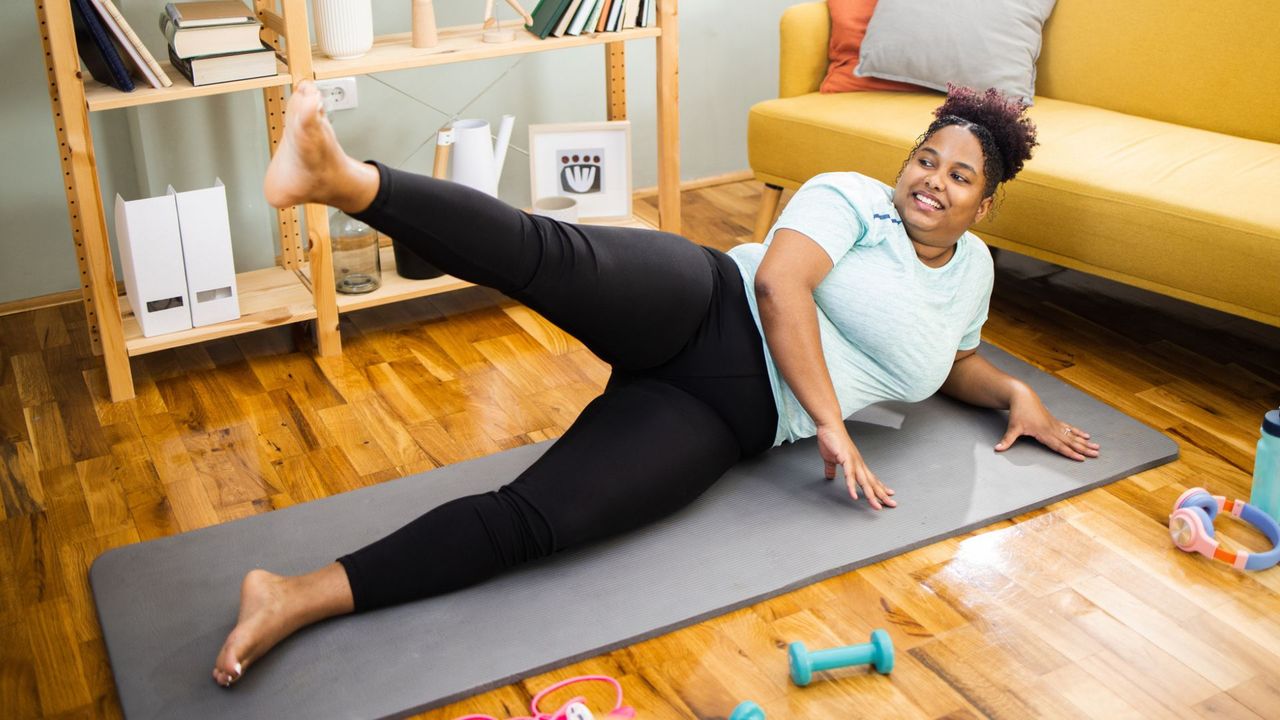
Woman on mat does a side leg lift.

If you think hip pain and immobility is reserved for certain groups of people—you would be wrong.

It could happen to anyone, according to personal trainer and registered dietitian Jordan Langhough. Absolutely everyone is at risk of developing weak hips, injury and immobility.

And for that reason, Langhough believes that we should all be working on our hip strength, not just for the sake of the pelvis, but for the knock-on impact it has on our other joints too.

“Everyone can benefit from doing hip-strengthening movements because your hips are like a central control hub for movement. Nearly everything you do depends on strong, aligned hips,” she says.

“Having proper hip strength can stabilize the pelvis and the spine, which can reduce strain on the lower back. It can improve balance and coordination, especially for single-leg movements.

“When hip strength is less than ideal, other muscles and joints compensate for the lack of strength. This overcompensation can lead to unwanted knee pain, lower back pain and overall tightness.”

While we’re all at risk of hip mobility issues, some groups are more likely to have specific musculoskeletal weaknesses to contend with.

“Pregnant and postpartum women often have weaker hips owing to hormonal changes, altered posture and pelvic shifts from pregnancy or breastfeeding, or both,” says Langhough.

And those who sit a lot, like desk workers and truck drivers, tend to have weak and tight hip flexor muscles.

“Without adequate strength in the hips, walkers, runners and joggers can develop overuse injuries in other areas of the body if the hips aren’t doing their share of the work.”

Even those who had strong hips before an exercise hiatus might discover hip weakness.

“Muscle and strength loss happens faster than people think and it’s likely to happen in the hips first owing to becoming more sedentary or immobile following an injury,” says Langhough.

If you are concerned about hip weakness, she recommends adding the following five exercises to your routine at least twice a week.

1. Glute bridge

Sets: 1-3 Reps: 10-15

This exercise works the glutes and trains hip extension.

  • Lie on your back with your knees bent and your feet hip-width apart.
  • Exhale and gently brace your core.
  • Press through your heels and lift your hips until your body forms a straight line from shoulders to knees.
  • Lower with control back to the start.

2. Seated band abduction

Sets: 1-3 Reps: 10-15

This exercise works the outer hips and helps improve pelvic stability.

Langhough recommends this set of five bands, which come in multiple colors, all for under $10.

  • Sit up straight on a chair or bench with your knees bent and your feet flat on the floor.
  • Place a resistance band just above your knees.
  • Press your knees outward against the band, keeping your feet flat on the floor.
  • Return slowly to the starting position.

3. Chair squat

Sets: 1-3 Reps: 10-15

This exercise targets the glutes and hips, and helps build overall functional strength. This exercise is great for any age and any level because it mirrors a movement we do daily.

  • Stand with a chair or box behind you.
  • Push your hips back and bend your knees to lower until your butt lightly touches the seat.
  • Push through your heels and stand back up.

4. Standing hip abduction

Sets: 1-3 Reps: 8-12 each side

This exercise primarily works the gluteus medius of the buttock, and improves hip stability.

  • Stand up straight with one hand resting on a wall or chair for support if needed.
  • Shift your weight onto one leg and slowly lift the opposite leg out to the side.
  • Keep your toes pointed forward and your torso upright.
  • Bring your leg back to the starting position with control.
  • Complete all the reps on one side and then swap sides.

5. Side-lying leg lift

Sets: 1-3 Reps: 8-12 each side

This exercise works the outer hips and focuses on improving pelvic control.

  • Lie on your side with your bottom knee bent and your top leg straight (it can also be done with both legs straight, as in the video above).
  • Lift your top leg slightly back and up, keeping it straight. Aim for a little more than a hip-width distance between your feet to begin with.
  • Lower your working leg slowly back to meet your bottom leg.
  • Complete all the reps on one side and then swap sides.
Sign up to read this article
Read news from 100’s of titles, curated specifically for you.
Already a member? Sign in here
Related Stories
Top stories on inkl right now
One subscription that gives you access to news from hundreds of sites
Already a member? Sign in here
Our Picks
Fourteen days free
Download the app
One app. One membership.
100+ trusted global sources.