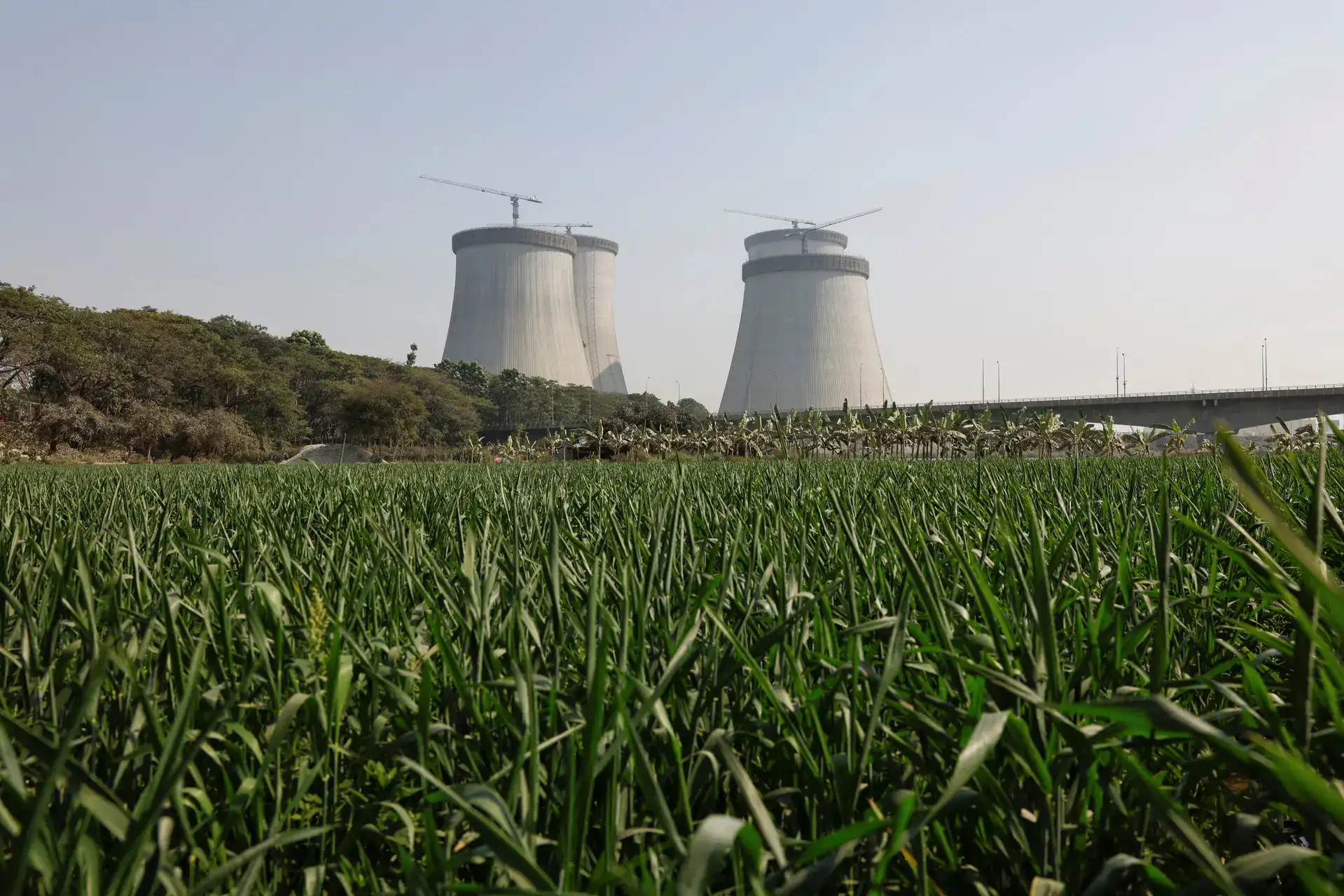
On the banks of the Padma river in western Bangladesh, local tourists are posing for selfies in front of the four massive, ivory-colored cooling towers at the country’s first nuclear power plant.
Once fully completed in 2028, the two Russian-designed reactors at the Rooppur facility will be able to supply as much as 15% of the country’s electricity. The project is an audacious bet that nuclear power can meet the needs of an industrializing economy without breaking the bank, and other developing nations across the world will be watching closely.
Atomic power has undergone a renaissance over the last few years. While safety risks and heavy cost overruns saw the world sour on nuclear, especially after the Fukushima disaster in Japan in 2011, those concerns are now being surpassed by the need to decarbonize and meet a surge in power demand from artificial intelligence and the electrification of transport fleets.
For developing nations like Bangladesh, atomic energy is less about data centers and more to do with weaning their economies off fossil fuels and reducing their vulnerability to external shocks like the Iran war. With oil and gas exports from the Persian Gulf upended by the conflict, long lines at filling stations became routine, homes in the countryside had to cope with hours of daily blackouts, and factory output suffered.
“The recent geopolitical conflicts — Iran and Russia-Ukraine — have shown that a scarcity of resources hurts poorer countries more than rich ones,” said R. Srikanth, who heads the energy, environment and climate change program at the National Institute of Advanced Studies in Bengaluru in India. “That strengthens the case for nuclear in emerging economies.”
The 2.4 gigawatt project has been more than a decade in the making, a period marked by a series of upheavals including the Covid-19 pandemic, the Russian invasion of Ukraine and the Iran war. Those events are an endorsement of Bangladesh’s strategy of reducing its heavy reliance on imported fossil fuels, but they’ve also pushed Rooppur beyond its original timeline of commissioning the first unit by 2023.