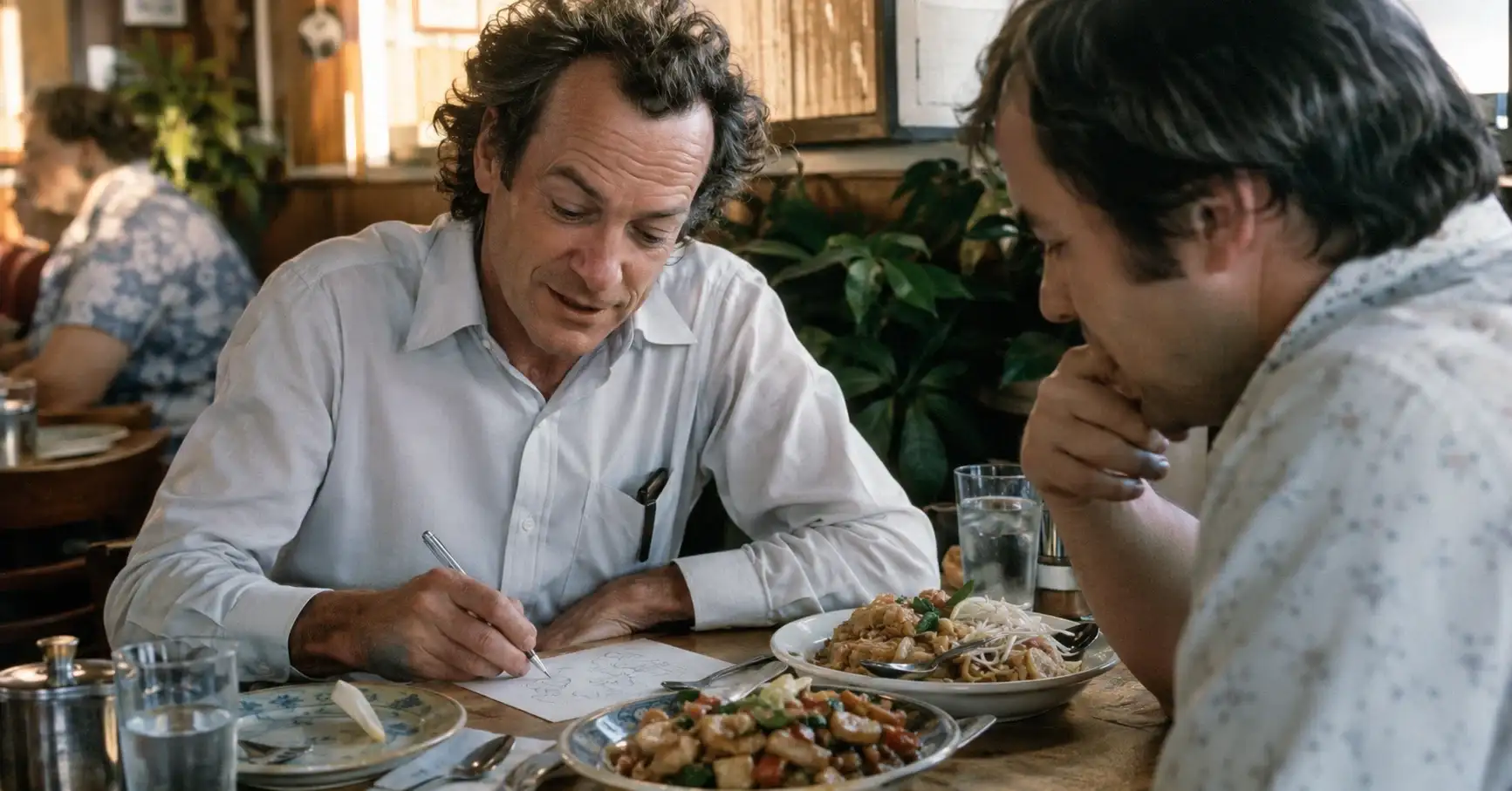
Richard Feynman’s restaurant meal math has uncovered a surprising lesson about decision-making, uncertainty, and everyday choices. Decades after the legendary physicist wrote his solution in private notes, researchers finally decoded the hidden calculation. The discovery shows that choosing a meal is not just about taste. It follows a deeper mathematical pattern known as the stopping problem.
Feynman’s restaurant meal math began with a simple lunch conversation in the 1970s. The Nobel Prize-winning physicist wondered whether people should trust a familiar favorite or search for something better. Instead of giving a casual answer, he transformed the dilemma into a mathematical challenge. His handwritten solution revealed a strategy that many people unknowingly use while making choices.
The newly studied notes show how Feynman approached uncertainty with logic rather than instinct. His work explains why humans often balance exploration and comfort. The research connects dining decisions with broader life choices, including investments, career moves, and opportunities.
Scientists studying Feynman’s restaurant meal math found that the method creates a changing threshold. Early choices require patience because better options may still appear. Later, when fewer chances remain, accepting a decent option becomes smarter. This simple idea explains many decisions people make every day.
How did Richard Feynman’s restaurant meal math solve the choice problem?
Richard Feynman’s restaurant meal math focused on a common human dilemma. People constantly decide whether to repeat success or search for improvement. The physicist turned this ordinary moment into a formal decision-making model.
Researchers later recognized the notes as a solution to stopping problems. These mathematical problems examine when someone should stop searching and commit to an option. Feynman’s answer showed that timing matters as much as quality.
The formula compares the best choice found so far with a moving standard. That standard changes depending on how much time remains. A person with many opportunities should keep exploring. Someone facing a final chance should choose wisely from available options. The restaurant example became a window into human behavior. It showed that good decisions are rarely about finding perfection. They are about knowing when continued searching stops being valuable.
The research team, including computational cognitive scientist Brian Christian, tested the idea with more than 2,500 participants. The findings showed that people did not calculate exact formulas. However, they often followed simple mental shortcuts that produced similar results.
Why does Feynman’s restaurant meal math matter beyond food choices?
Feynman’s restaurant meal math reveals a powerful truth about everyday decisions. The same thinking applies far beyond menus and restaurants. People use similar strategies when choosing jobs, homes, relationships, and financial opportunities. The concept is closely linked to opportunity costs. Every new option requires time, effort, or resources. Searching forever can become as damaging as choosing too quickly.
The study also highlights the importance of understanding conditions. Feynman assumed restaurants had balanced chances of being excellent or disappointing. Researchers found the strategy changes when most options are poor and only a few are exceptional.
This creates a valuable lesson for real-world choices. The best strategy depends on the environment. A person should not use the same decision rule everywhere. The discovery also shows the brilliance of Feynman’s thinking. He found structure inside an ordinary situation. His notes transformed a simple lunch question into a mathematical insight about human judgment.
Can Feynman’s restaurant meal math improve modern decision-making?
Feynman’s restaurant meal math offers a practical lesson about uncertainty. People often fear making the wrong choice, but perfect information rarely exists. The challenge is deciding when enough information has been collected.
Modern researchers describe this behavior as using heuristics. These shortcuts help humans make fast decisions without complex calculations. Surprisingly, many shortcuts work effectively in everyday situations. The study suggests that intuition is not always random. Human experience often builds hidden patterns. People may not know the equation, but they learn when to stop searching.
Feynman’s restaurant meal math remains valuable because it connects science with ordinary life. A restaurant decision becomes a reminder that every choice involves balance. Exploration creates possibilities, while commitment creates progress.
The physicist’s forgotten notes also reveal something deeper about curiosity. Feynman looked at a normal moment and asked a bigger question. His solution shows how mathematics can explain the small decisions shaping human lives.
FAQs:
Q1. What does Richard Feynman’s restaurant meal math reveal about decision-making?Richard Feynman’s restaurant meal math explains how people balance familiar choices with new opportunities. His stopping problem solution shows that smart decisions depend on timing, available options, and knowing when searching for something better is no longer useful.
Q2. How can Feynman’s restaurant meal math improve everyday choices?
Feynman’s restaurant meal math applies beyond food because it studies uncertainty and human judgment. The strategy helps people understand when to explore more options and when to commit, making decisions in careers, finance, and daily life more effective.