
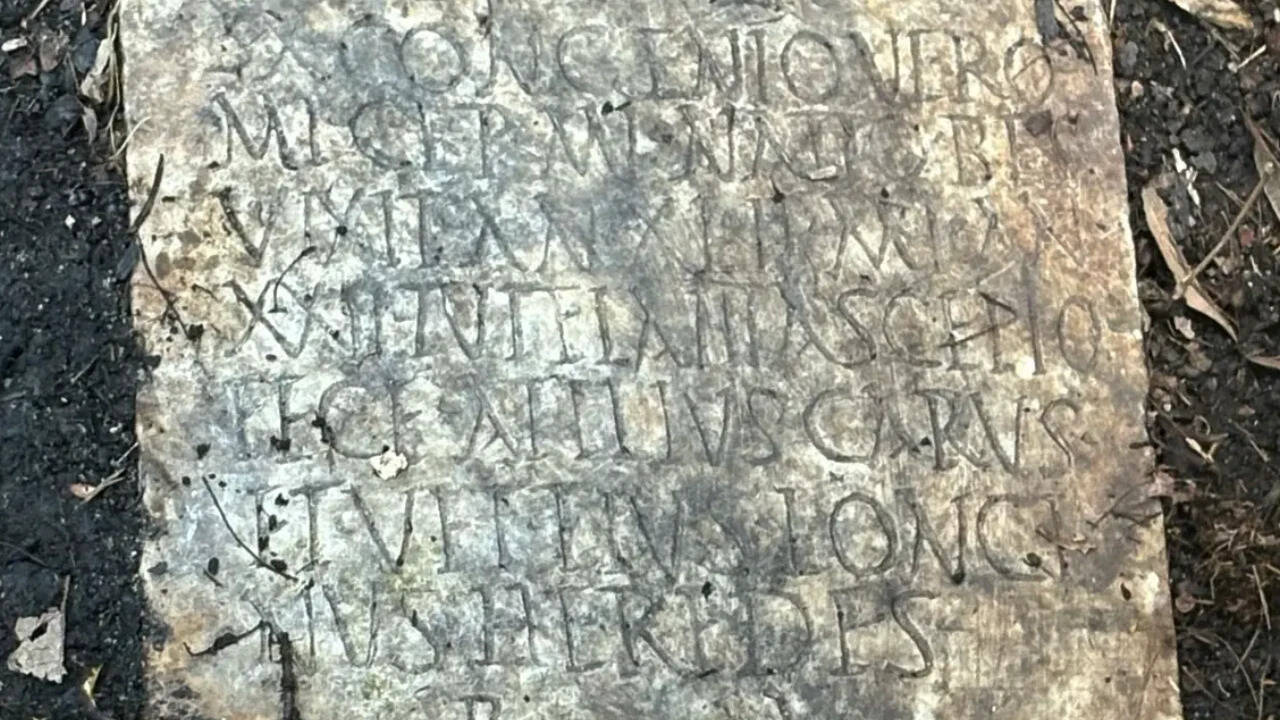
In early 2025, Daniella Santoro, an anthropologist at Tulane University, and her partner, Aaron Lorenz, were clearing weeds behind their home in New Orleans' historic Carrollton neighbourhood when they uncovered a marble slab covered in Latin writing. Santoro contacted D. Ryan Gray, an archaeologist at the University of New Orleans, who shared photographs of the stone with Harald Stadler, an archaeologist at the University of Innsbruck, and Susann Lusnia, a classical archaeologist at Tulane. Lusnia recognised the inscription as an ancient Roman funerary monument. The stone commemorated Sextus Congenius Verus, a 42-year-old sailor who had served for 22 years aboard a ship called the Asclepius . Further research established that the marble monument had once belonged to the collection of the National Archaeological Museum in Civitavecchia, Italy, where it had eventually been recorded as missing. Its discovery transformed an unremarkable garden stone into a nearly 2,000-year-old artefact with a traceable history. Researchers are now working with Italian authorities to determine how the ancient monument ended up thousands of miles from where it was last catalogued.
Get breaking news anytime, anywhere. Download the TOI app now!















