
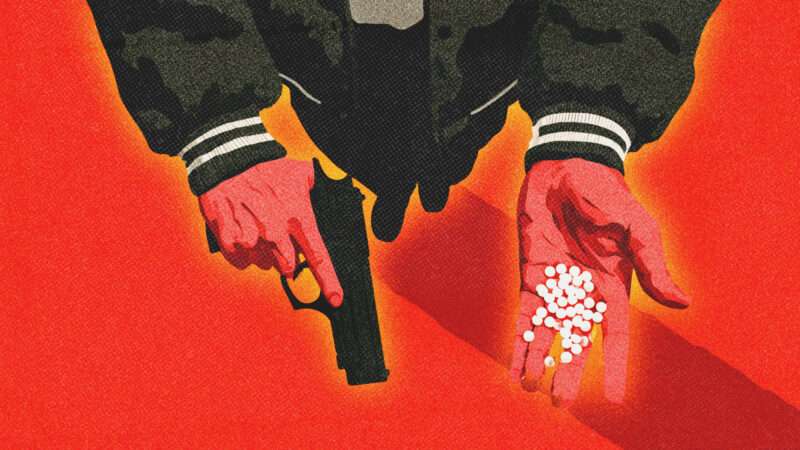
A New Jersey news outlet is asking a state appeals court to lift a judicial order censoring its coverage of an incident that led to a lockdown at New Brunswick High School on May 8. That extraordinary order, which New Jersey Superior Court Judge Thomas D. McCloskey issued on July 9, purports to bar New Brunswick Today and every other journalist in the United States from identifying the 16-year-old student who prompted the lockdown by bringing an airsoft pistol to school. It also prohibits them from sharing unexpurgated security camera video of the incident.
In a brief filed last week with the Superior Court's appellate division, New Brunswick Today's lawyers, C.J. Griffin and Bruce S. Rosen, note that such prior restraints on freedom of the press are presumptively unconstitutional. The Supreme Court, which has never upheld such an order, has said prior restraints can be justified only when they "further a state interest of the highest order," such as stopping the release of information that would "set in motion a nuclear holocaust" or "inevitably, directly, and immediately" imperil the safety of U.S. forces at sea. Griffin and Rosen say the state interest that McCloskey invoked, protecting the privacy of the student caught with an airsoft gun, does not come close to meeting that highly demanding standard.












