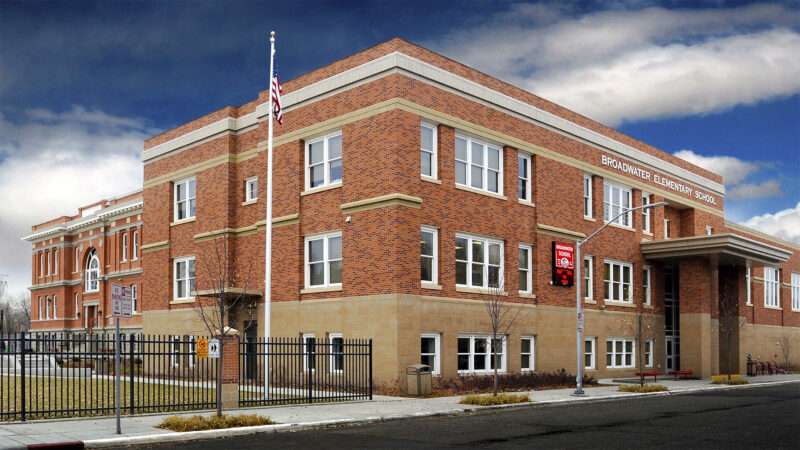
Last summer, Gabriel Metcalf alarmed passersby in Billings, Montana, by "pacing his front lawn holding a rifle." When local police approached him, Metcalf said he was protecting himself from a neighbor he thought was stalking him. The officers conceded that Metcalf was not violating any state laws but asked him to cut it out. Because Metcalf was not inclined to follow their advice, the federal Bureau of Alcohol, Tobacco, Firearms, and Explosives (ATF) got involved. Noting that Metcalf lived across the street from an elementary school and admitted walking on the sidewalk near his home with the rifle, the ATF charged him with violating the federal Gun-Free School Zones Act.
That law, 18 USC 922(q), makes it a felony, punishable by up to five years in prison, to possess a firearm within 1,000 feet of a school. Since schools are scattered throughout communities across the country, those gun-free zones cover a lot of territory—including the sidewalk outside Metcalf's home. But in seeking dismissal of Metcalf's indictment, his public defender, Russell Hart, argues that his conduct is not covered by the statute and, in any case, is protected by the Second Amendment. The latter argument seems promising in light of New York State Rifle & Pistol Association v. Bruen, the 2022 decision in which the U.S. Supreme Court upheld the right to publicly carry firearms for self-defense.