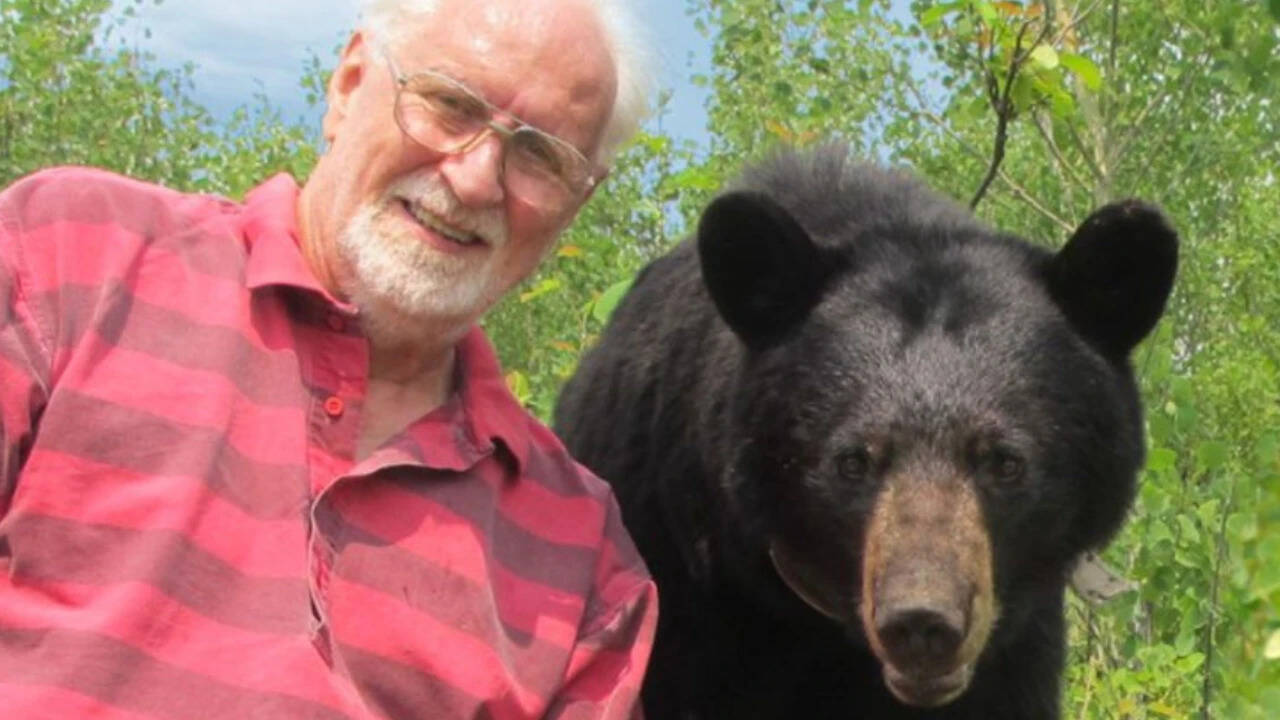
In the mid 1980s, Minnesota wildlife biologist Lynn Rogers began an unusual experiment in the forests of the Superior National Forest, attempting to habituate wild black bears to his presence closely enough that he could walk alongside them, unarmed, for hours at a time. Over decades of painstaking, repeated contact, several of Rogers's study bears grew comfortable enough to let him follow them through entire days, resting, foraging and even denning while he observed and recorded their behaviour from just a few feet away. The approach, which Rogers has said was directly inspired by Jane Goodall's trust-based methods for studying wild chimpanzees, produced an unusually detailed record of black bear behaviour, while also drawing sustained criticism from wildlife officials concerned about the risks of habituating wild bears to humans. Decades later, Rogers's work remains a rare case study in wildlife science, one that continues to spark debate over where the boundary should lie between gaining genuine scientific insight and preserving the natural wariness that keeps both bears and humans safe.
Get breaking news anytime, anywhere. Download the TOI app now!