Get all your news in one place.
100's of premium titles.
One app.
Start reading
The Economic Times
The Economic Times
Shreya Biswas

A massive crocodile lurked in Lucy’s world, and early human ancestors may have been its prey

For decades, Lucy has helped scientists understand what life looked like for some of humanity’s earliest ancestors. But a new discovery is shedding light on another resident of her world, one that may have made survival far more dangerous, as per a report.

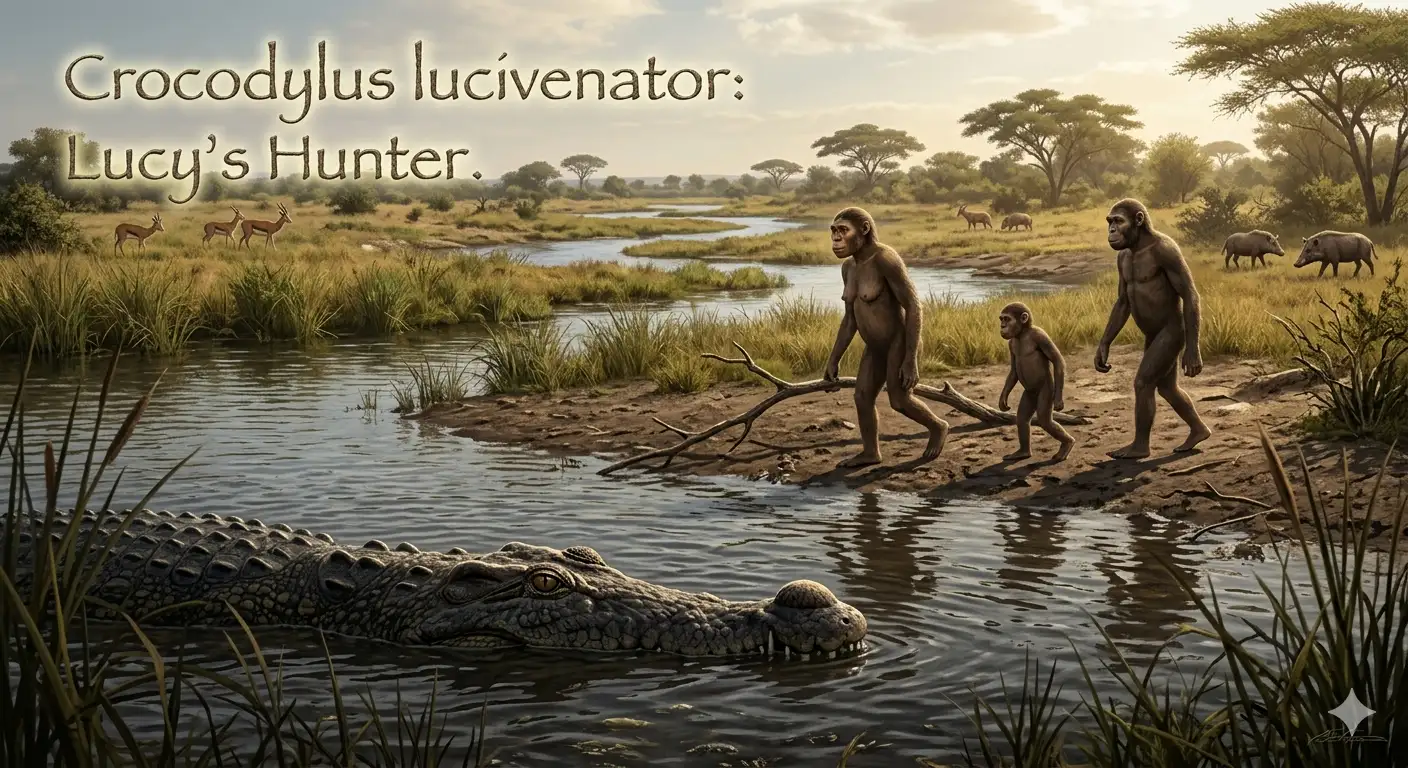
Researchers have identified a previously unknown crocodile species that lived in the same region of East Africa as Lucy between 3.4 million and 3 million years ago, as per a Science Daily report. The massive reptile has been named Crocodylus lucivenator, meaning “Lucy’s hunter.”

The name was chosen because the crocodile lived alongside Lucy’s species, Australopithecus afarensis, in what is now Ethiopia.

An Ancient Neighbor Hidden in the Water

Lucy’s environment was not just a landscape of early human ancestors. The Hadar region contained rivers, lakes, wetlands, shrublands, and tree-lined waterways that supported a wide variety of wildlife.

Among them was a crocodile unlike any previously identified from the area.

Scientists estimate the animal measured between 12 and 15 feet long and weighed between 600 and 1,300 pounds, as per the Science Daily report. It was the only known crocodile species in the Hadar ecosystem and likely spent much of its life concealed in the water.

Researchers believe it hunted by ambush, waiting for animals to come close before striking. According to the study team, it was the largest predator in the region.

READ ALSO: Quote of the day by John Ashbery: 'Most reckless things are beautiful in some way, and recklessness is what makes...' - inspiring lessons on art, beauty, creativity and why taking risks can lead to your greatest discoveries by Self-Portrait in a Convex Mirror poet

A Discovery Decades in the Making

The crocodile was formally identified after researchers examined 121 fossil remains recovered from Ethiopia’s Hadar Formation.

The fossils included skulls, teeth, and jaw fragments from numerous individuals. By studying these remains, scientists realized they were looking at a species that had never been described before.

Christopher Brochu, who has spent decades studying ancient crocodilians, first examined some of the fossils during a museum visit in Addis Ababa in 2016, as per the Science Daily report.

What caught his attention was an unusual combination of features that did not match other known crocodile species.

The Crocodile With a Hump on Its Snout

One of the most distinctive features of Crocodylus lucivenator was a noticeable hump in the middle of its snout.

Researchers note that similar structures are found in American crocodiles but not in Africa’s Nile crocodiles.

The hump may have been used during courtship displays. The crocodile also possessed a snout that extended farther beyond its nostrils than those of other crocodiles living at the time, giving it a different appearance from many of its relatives.

READ ALSO: Life lesson of the day by George Bernard Shaw: 'We don't stop playing because we grow old, we grow old because...' - Nobel Prize-winning writer of Pygmalion's quote on aging reveals one habit that keep people young at heart and mind

Fossils Reveal More Than Appearance

The fossil record also provided clues about the crocodile’s life.

One jaw specimen contained several partially healed injuries, suggesting the animal had survived a fight with another crocodile.

According to researcher Stephanie Drumheller, similar face-biting behavior is known throughout crocodile history and can be seen in both extinct and living species, as per the Science Daily report.

The healed injuries show that the animal lived long enough to recover from the encounter.

A Longtime Resident of Lucy’s Landscape

Researchers say that while other crocodile species lived farther south in the Eastern Rift Valley, Crocodylus lucivenator appears to have been the dominant crocodile in the Hadar region.

The area changed over time, containing forests, wetlands, shrublands, rivers, lakes, and grasslands. Yet this species persisted throughout those shifts.

Today, Hadar remains one of the world's most important sites for understanding human origins. It has yielded fossils of Lucy and other early hominins, along with evidence of the animals that shared their environment, as per the Science Daily report.

Among those animals was a massive crocodile that spent millions of years hidden in East Africa’s waterways, occupying the same landscape as some of humanity’s earliest known ancestors.

READ ALSO: What happens when ants get addicted to junk food as much as we do? The consequences could be serious

FAQs

Who was Lucy?

Lucy was an early human ancestor from the species Australopithecus afarensis.

What is Crocodylus lucivenator?

It is a newly identified crocodile species whose name means “Lucy’s hunter.”

Sign up to read this article
Read news from 100's of titles, curated specifically for you.
Already a member? Sign in here
Related Stories
Top stories on inkl right now
One subscription that gives you access to news from hundreds of sites
Already a member? Sign in here
Our Picks
Fourteen days free
Download the app
One app. One membership.
100+ trusted global sources.