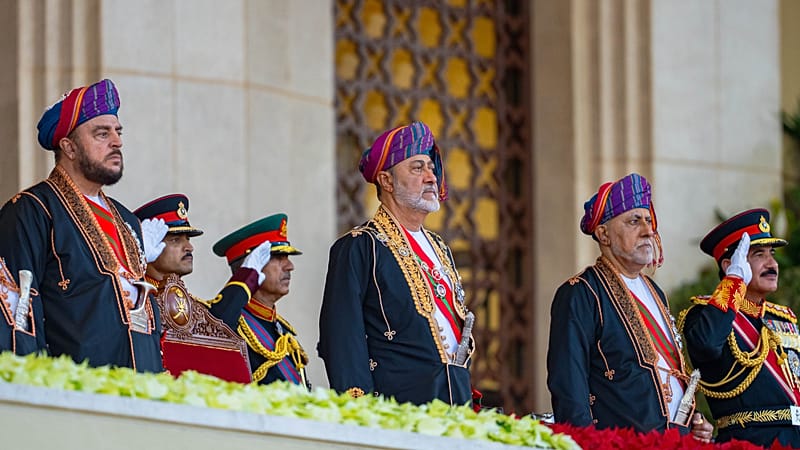
Oman celebrated its National Day on 20 November, with 21 November added this year as the first-ever extended holiday. The date honours the start of the Al-Busaidi dynasty in 1744 under Imam Ahmad bin Said, linking the celebrations to the country’s long history and heritage.
In an address earlier this year announcing the updated National Day dates, His Majesty Sultan Haitham bin Tarik, who has led Oman since 2020, said the change was more than a simple adjustment to the calendar.

He described it as a symbol of a renewed phase in the country’s development, connecting Oman’s historical achievements with its ambitions for the future.
Nationwide celebrations
Across Oman, citizens joined parades, student performances of the national anthem, traditional camel and horse races and fireworks. A grand military parade, held once every five years, added a ceremonial highlight.

Many Omanis travelled to their hometowns, making the long weekend festive and lively. Neighbouring countries also marked the occasion.
In the UAE, landmarks were lit in Omani colours, while Saudi Arabia sent official congratulations, reflecting the region’s deep cultural and historical ties.
Heritage meets progress
The celebrations coincided with Oman’s continued rollout of “Oman Vision 2040,” its long-term plan for sustainable growth, social development and economic diversification.
Under Sultan Haitham, Oman has focused on balanced foreign policy, responsible growth, investing in people and sustainability, alongside modernisation and infrastructure development.

Education continued to improve, with new schools opening across the country and Sultan Qaboos University rising in global rankings. Funding for research and innovation increased, strengthening higher education and supporting a knowledge-driven economy.
Services, environment and the economy
Healthcare also advanced, with new hospitals, upgraded facilities and international accreditations. Oman made progress in organ transplants and maintained high immunisation coverage.

Environmental efforts were strengthened, with lower pollution, expanded protected areas and international recognition for key nature reserves. The country now operates a wide network of air-quality and marine monitoring stations.
Economically, Oman showed positive signs thanks to diversification. Non-oil exports grew, the trade balance stayed in surplus and public debt fell.
Investments in free and economic zones also rose, with projects in green hydrogen, manufacturing, mining and logistics. Around 80,000 people work in these zones, over a third of them Omanis, highlighting the country’s focus on domestic workforce development.

Looking back and forward
This year’s National Day offered Oman a moment to reflect. Beyond the festivities, it symbolised a renewed national phase, with the country proud of its heritage, aware of its achievements and moving confidently toward the future.
The extended holiday gave citizens more time to travel home, celebrate with family and consider Oman’s identity, achievements and future plans.