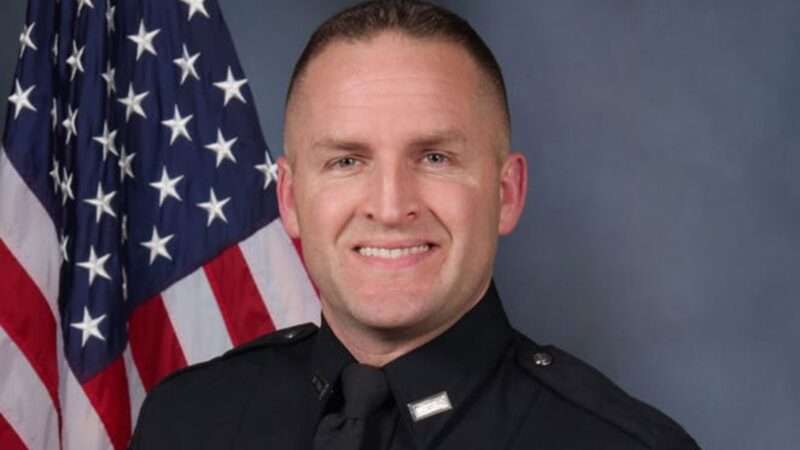
On the night that Louisville police killed Breonna Taylor, Detective Brett Hankison fired 10 rounds into the side of her apartment, shooting through a glass patio door and a bedroom window that were both covered by blinds. He did this while two of his colleagues, Detective Myles Cosgrove and Sgt. Jonathan Mattingly, were inside the apartment, firing 22 rounds down a dark hallway in response to a single round that Taylor's boyfriend, Kenneth Walker, had fired at the intruders, whom he mistook for violent criminals. Three of Hankison's bullets penetrated the wall separating Taylor's apartment from the neighboring unit, terrifying the people who lived there.
These facts alone are enough to show that Hankison acted recklessly, without regard to the risk that his panicked, indiscriminate response to the gunfire would injure or kill his fellow officers, Taylor, or her neighbors. Yet after deliberating for just three hours yesterday, a jury unanimously decided that Hankison was not guilty of wanton endangerment. That decision vividly illustrates how difficult it is to hold police officers accountable for using excessive force even in the rare cases where they face criminal charges. Despite some recent exceptions, jurors tend to give cops a pass even when their actions are patently outrageous, granting them absolution for conduct that would send ordinary citizens to prison.