Pollution prediction study : For nearly two decades, scientists collected rain and cloud water from the summit of Mount Washington in New Hampshire. At the time, the goal was to better understand pollution reaching one of the Northeast’s most extreme mountain environments.
What those samples eventually revealed was about how pollution travels and what determines how much of it arrives. By analyzing cloud and rainwater collected over 19 summers between 1996 and 2014, researchers discovered that the history of rainfall along an air mass’s journey can be just as important as where that air originated when it comes to predicting pollution levels, as per a report.
A Mountain With a Unique View of the Atmosphere
Mount Washington is the tallest peak in the Northeastern United States and is known for its harsh weather conditions.
Its remote location made it an ideal place for scientists to study pollution moving into the region. Over the years, researchers from the Appalachian Mountain Club collected rainwater and cloud water samples from the summit, creating a rare long-term record, as per a Phys Org report.
According to Lauren Richards, a climate and meteorology student at the University of Michigan and lead author of the study, the mountain provides a unique opportunity to observe how pollution enters the area, as per the Phys Org report.
For researchers, the collection became something unusual: a physical record of what was happening in the atmosphere over many years.
A Rare Collection of Cloud and Rain Samples
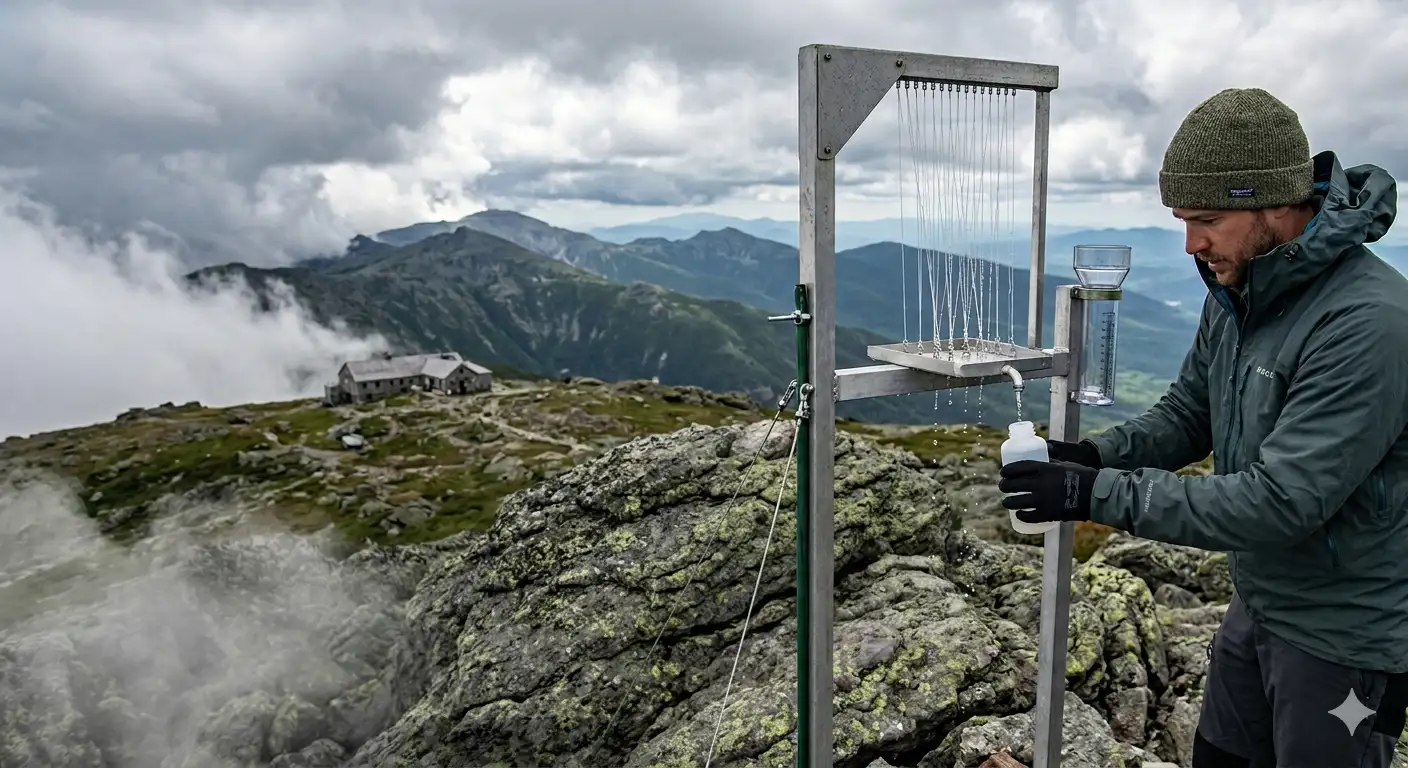
While collecting rainwater is relatively simple, gathering water directly from clouds requires specialized equipment.
At the Appalachian Mountain Club’s Lakes of the Clouds hut, cloud water was collected using a system of Teflon strings mounted on a swivel that turns with the wind. As clouds passed through, moisture condensed on the strings and drained into collection containers.
University of Michigan researcher Adriana Bailey described the long-term collection as a "gold mine" because physical samples like these are rarely available, as per the Phys Org report.
In many studies, scientists rely heavily on computer simulations to estimate how pollution moves through the atmosphere. These samples provided direct evidence of the air masses that reached Mount Washington and the pollutants they carried.
Looking for Clues Inside the Water
Before beginning their analysis, researchers first checked the samples for signs of evaporation, removing any that could affect the results.
They then focused on sulfate ions, a common indicator of atmospheric pollution. Sulfate provided the strongest pollution signal among the substances measured in the samples.
To understand how much rain had fallen before the air reached Mount Washington, the team examined heavier forms of hydrogen and oxygen found in water molecules.
Clouds that have already produced significant rainfall contain fewer of these heavier water molecules. By measuring them, researchers could estimate how much rainout had occurred before the air mass arrived.
Rainfall History Turned Out to Matter Just as Much as Pollution Sources
The team combined the water sample data with three-day wind models from NOAA to test whether knowing where an air mass originated was enough to explain pollution levels.
It was only part of the answer.
Knowing the geographic source of the air accounted for 40% of the variation in sulfate pollution levels measured in clouds and rain.
But when researchers also included information about how much rain had fallen along the air mass's path, the explanation improved significantly.
Together, air origin and rainfall history accounted for 55.6% of the observed pollution patterns.
The finding showed that rainfall along the way plays a major role in determining how much pollution ultimately reaches a location.
Why the Discovery Matters
The research provides meteorologists with a physical benchmark that can help improve pollution forecasting over complex landscapes.
It also highlights how pollution is deposited into sensitive mountain environments.
The Appalachian Mountain Club has since expanded its work by collecting river water samples alongside rain and cloud water. Because pollution carried in rain eventually flows into waterways, researchers hope to gain a broader understanding of how pollution affects both mountain ecosystems and downstream environments, as per the Phys Org report.
FAQs
Why is Mount Washington important for this research?Its remote location and extreme weather make it a valuable place to study pollution entering the region.
How long did the sample collection last?
The samples were collected over 19 summers, from 1996 to 2014.