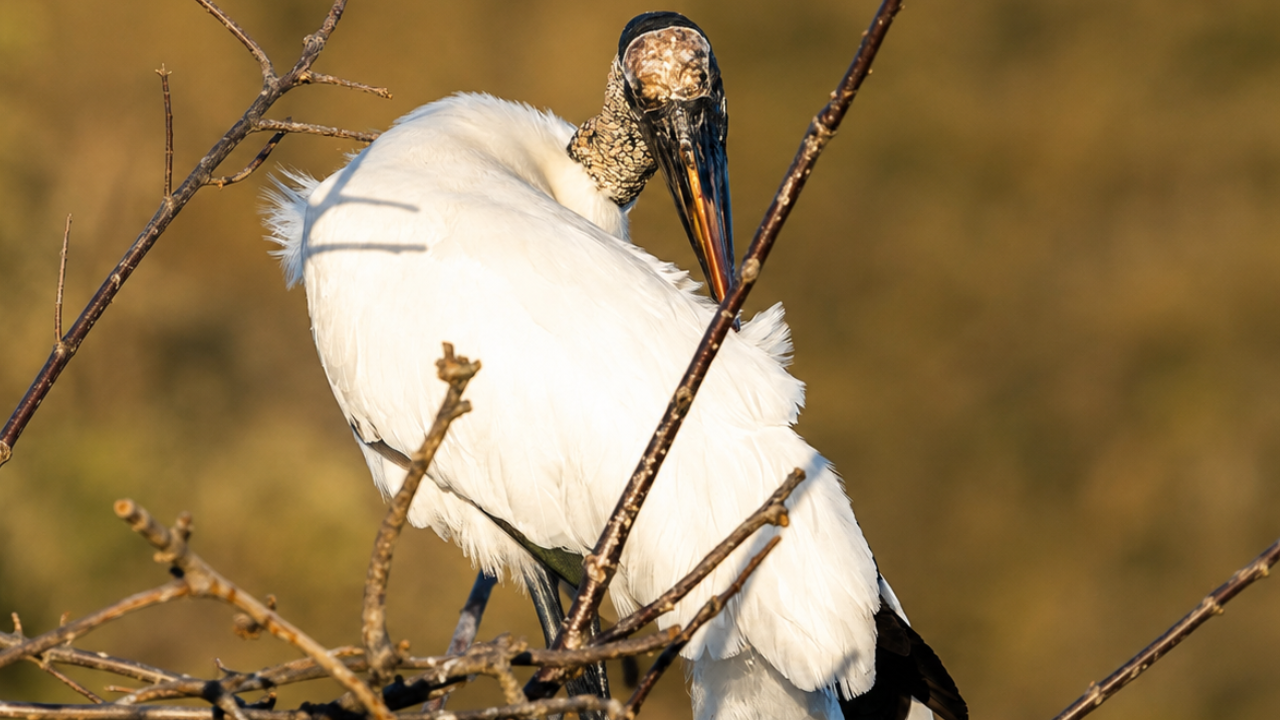
For years, a wildlife refuge on the Georgia coast hid one of America’s quietest conservation victories. According to a profile published by the U.S. Fish and Wildlife Service , biologist John Robinette spent 20 years at Harris Neck National Wildlife Refuge developing unusual ways to save a struggling bird. His biggest idea sounds almost too simple: if the trees keep dying, then make new ones out of wood and metal.
Get breaking news anytime, anywhere. Download the TOI app now!
A rookery with a big problem
In 1987, the refuge’s nesting pond, Woody Pond, hosted its first wood storks. That year, 18 nests produced 43 chicks, a hopeful beginning for a bird then listed as endangered. The celebration was short-lived. The following year, raccoons raided the colony when the water level in the pond dropped, giving the predators easy access to the nests.
Wood storks are choosy about their nesting sites. They like trees in deep water, because the flooded ground keeps raccoons and other land predators at bay. So the refuge raised the water level in Woody Pond six feet to save the birds. The decision solved one problem, but created another. Most trees can’t survive if they’re flooded all the time, and the trees in the pond began to die.
Making trees out of wood and rebar
That’s where Robinette’s idea came in. In the early 1990s, as the FWS profile describes, he suggested building artificial nesting structures to replace the trees that were dying in the flooded pond. At first some of his colleagues were sceptical. Wood storks are wild birds, not exactly known for their use of furniture made by humans.
Refuge staff went ahead anyway. They built six structures using wood, rebar and fencing, and planted cypress saplings nearby at the same time, since cypress, unlike the pond's original trees, is naturally adapted to standing water and can tolerate long-term flooding once established. The idea was that the young trees would eventually take over when they were tall enough to take the flooding.
The storks didn't seem to mind the substitute. The same FWS account notes that the number of nesting structures. While the new cypress trees grew slowly in the background, birds nested on the artificial platforms.
From a shaky experiment to a record season
The results came slowly, then all at once. By 2002, the fledging rate at Woody Pond was 20% higher than other nearby rookeries. Ten years later, in 2012, biologists counted 484 nests at the site, a huge increase from the initial 18.
This sort of turnaround wasn’t just a local success story. It was part of a wider recovery. Since its listing in 1984, the wood stork population has been increasing, and on June 30, 2014, the U.S. Fish and Wildlife Service formally downlisted the species from endangered to threatened. This downlisting marked real progress, but it did not end concerns about the species.
Why the water level was so important
The link between flooding and nest survival is not unique to Harris Neck. It is found throughout the species’ range. A separate U.S. Fish and Wildlife Service habitat report on the wood stork , compiled by biologist John C. Ogden, notes that flooding beneath a colony works mainly as a defence against mammal predators, and that studies of stork colonies in Georgia and Florida have recorded high rates of raccoon predation whenever sites dried out during the nesting season. When the water stays deep, predators are less likely to reach the nests. Let it fall, and the colony can lose most of its chicks in one bad season.
A family affair, not just a job
It took more than one person to see this project through. The nest platforms were built and installed with help from the Georgia Department of Natural Resources, with funding from Ducks Unlimited and the Service’s Southeast Regional Office, and the Orangeburg National Fish Hatchery provided fish to stock the ponds. Robinette called it a huge cooperative effort that was very rewarding, according to the FWS profile.
It took hours of patient watching to count nests, and Robinette's wife often joined him, sharing his interest in birds. Their youngest daughter spent hours observing storks snap their bills shut on fish, helping track how well the feeding ponds were doing. Later, a fellow Service biologist, Billy Brooks, simply called Robinette a biologist who got things done.
A small idea, a big impact
No one set out to create a perfect substitute for a cypress swamp. Robinette's crew only needed places to nest that wouldn't rot away under water, and they built them out of whatever materials they had available. Thirty years later, the record season at Woody Pond is a reminder that wildlife recovery doesn’t always require a grand plan. Sometimes it takes someone willing to pound rebar in a flooded pond and see if the birds show up.