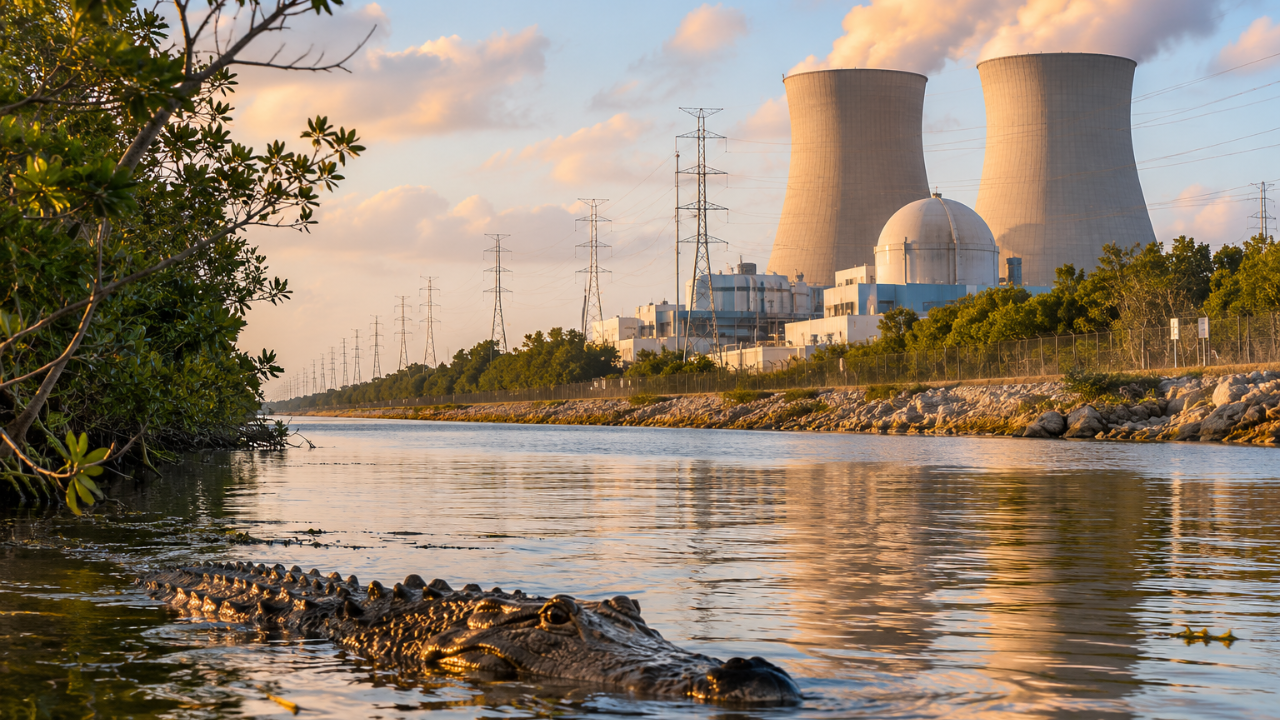
A nuclear power plant is hardly the first place that comes to mind when thinking about wildlife refuges. Yet around Turkey Point, south of Miami, American crocodiles have made themselves at home in a vast network of artificial canals built for the plant. The waterways have become an important habitat for a species that once came close to disappearing from the United States. In 2019, wildlife specialists working at the site rescued dozens of newly hatched crocodiles in a single week, and more were expected. The animals were measured, tagged and relocated as part of a conservation programme that had already been running for decades. The crocodiles living beside a nuclear facility is not only the most fascinating part of the story but its industrial landscape has become an important part of their recovery. The unlikely partnership between industry and wildlife at Turkey Point offers a striking example of how carefully managed human infrastructure can sometimes provide refuge for vulnerable species, even in landscapes originally built for entirely different purposes. The unlikely relationship between infrastructure and wildlife at Turkey Point demonstrates that carefully managed human-made environments can sometimes provide valuable refuge for threatened species, even when those landscapes were never designed with conservation in mind.
Get breaking news anytime, anywhere. Download the TOI app now!