Get all your news in one place.
100's of premium titles.
One app.
Start reading
The Times of India
The Times of India
World
TOI World Desk

A Florida diver, after more than 20,000 dives, built an underwater nursery that grew 25,000 threatened corals for dying reefs

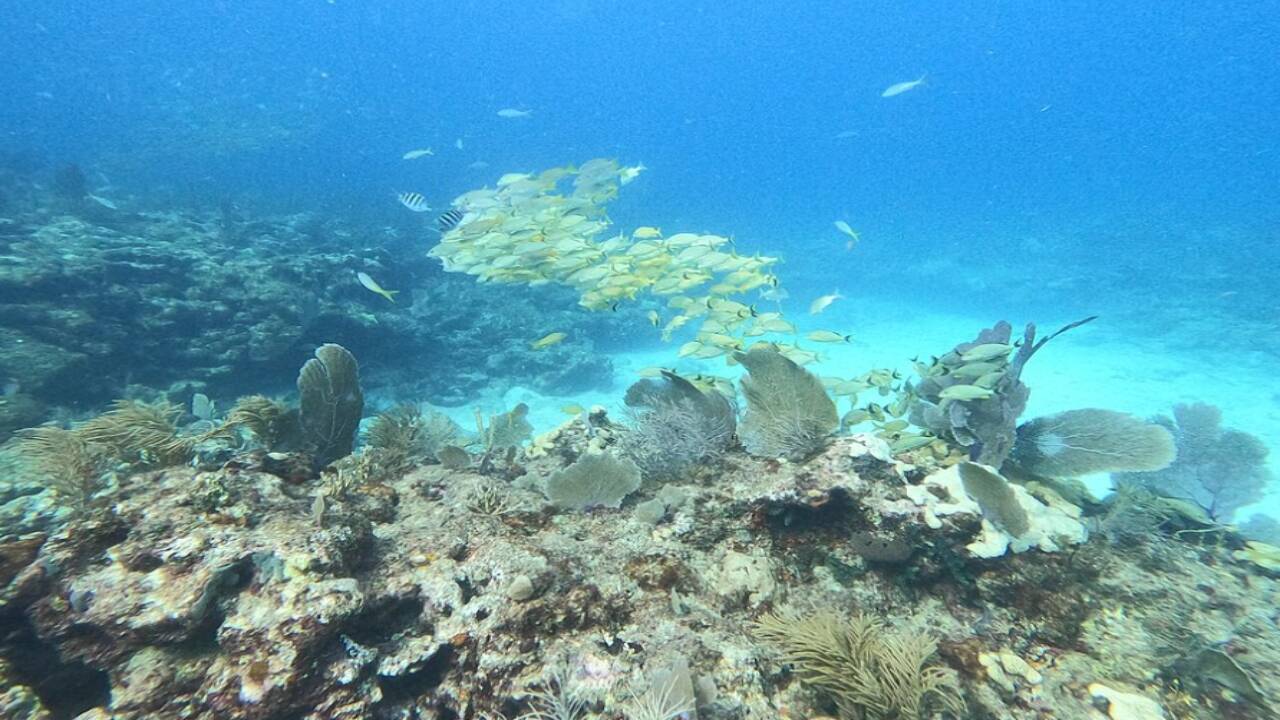
Along Florida’s barrier reef, the only living coral barrier reef in the United States and the third largest barrier reef system in the world, marine scientists and coastal communities have witnessed decades of severe ecological collapse. Widespread coral bleaching, rising sea surface temperatures, ocean acidification, and infectious conditions such as stony coral tissue loss disease have drastically reduced historic living coral cover across the Florida Keys. According to habitat data published by NOAA Fisheries , nearly 90 per cent of the live corals that once dominated these reefs have been lost. For years, conventional ocean conservation focused primarily on passive protection measures, such as establishing marine sanctuaries, while wild coral populations continued to decline.

Get breaking news anytime, anywhere. Download the TOI app now!

Recognising that natural coral regrowth was failing to keep pace with mortality rates, veteran diver Ken Nedimyer, who has logged over 20,000 career dives in regional waters, began developing active, low-cost propagation methods in the late 1990s. His early experiments helped lay the groundwork for large-scale reef restoration techniques now used across major conservation initiatives, including those supported by NOAA Fisheries and the Florida Keys National Marine Sanctuary .

The results of these midwater propagation systems advanced coral restoration science. By suspending branching staghorn (Acropora cervicornis) and elkhorn (Acropora palmata) coral fragments on floating PVC tree structures anchored to the ocean floor, growth rates accelerated significantly compared to fragments attached directly to degraded reef beds. Through organisations such as the Coral Restoration Foundation and Reef Renewal USA, restoration teams have cultivated and outplanted tens of thousands of nursery-raised coral colonies onto damaged reef sites, including Sombrero Reef and Carysfort Reef.

How floating trees accelerate coral growth

The system works by altering the physical and biological environment around growing corals. Traditional ocean floor nurseries leave young coral fragments vulnerable to benthic predators like fireworms and snails, competing macroalgae, and smothering sediment stirred up by storm events. By elevating the coral fragments several feet above the seabed, the floating tree design reduces these physical stressors.

The midwater placement also creates conditions that support rapid skeletal development. Suspended fragments experience constant water movement, which delivers plankton and dissolved nutrients while clearing metabolic waste products. Elevated structures also allow more sunlight to reach the corals, helping their symbiotic algae photosynthesise and support calcification. Field evaluations indicate that nursery-reared corals retain genetic diversity and maintain structural growth rates comparable to wild colonies once outplanted onto natural reef substrates using marine-grade epoxy. These performance metrics have helped make suspended tree structures a widely used coral propagation model across ocean restoration programmes.

Why the findings matter for ocean conservation

The success of midwater coral nurseries does not mean global warming or marine pollution challenges have been solved; instead, they can help keep reef-building species from disappearing locally while broader environmental pressures are addressed. Relying solely on natural recruitment is no longer sufficient to preserve degraded reef frameworks under current climate trajectories.

The findings suggest that active, community-driven restoration can help rebuild living coral cover on damaged marine ecosystems. As federal initiatives like Mission: Iconic Reefs work to restore seven key reef sites across the Florida Keys National Marine Sanctuary, combining low-cost engineering designs with high-throughput field cultivation offers a practical methodology for marine management. The research adds to a growing view in marine biology that maintaining ecosystem services requires active intervention alongside traditional habitat protection policies.

Sign up to read this article
Read news from 100's of titles, curated specifically for you.
Already a member? Sign in here
Related Stories
Top stories on inkl right now
Our Picks
Fourteen days free
Download the app
One app. One membership.
100+ trusted global sources.