Get all your news in one place.
100's of premium titles.
One app.
Start reading
The Economic Times
The Economic Times

A Florida couple bought a 45-acre swamp to save it from development; 15 years later, 275 wood storks were nesting there in a thriving wildlife haven

When Jim Stevenson and Tara Tanaka looked at a 45-acre cypress swamp beside their home in Tallahassee, Florida, they saw something far more valuable than land waiting to be developed. They saw a wildlife habitat worth protecting.

In 2007, the couple bought the adjoining swamp after becoming concerned that the wetland could be cleared. What began as a personal conservation effort gradually turned the property into a thriving wildlife sanctuary, complete with a large wood stork rookery.
Read more - Green Card holder who spent 30 years in US detained even after court case was terminated: Indian-origin grandma had no criminal record, & her daughter is an immigration lawyer

By 2022, the US Fish and Wildlife Service (USFWS) reported that 275 wood storks were nesting on the property, alongside herons, egrets, ducks, alligators, otters, beavers, foxes and several other species.

Why did the Florida couple buy a 45-acre swamp?

Stevenson and Tanaka had already been living on the edge of the wetlands for years when they became worried that the cypress swamp could eventually be cleared for development.

Rather than watch the habitat disappear, they decided to purchase the 45-acre property in 2007 and manage it as a wildlife sanctuary.

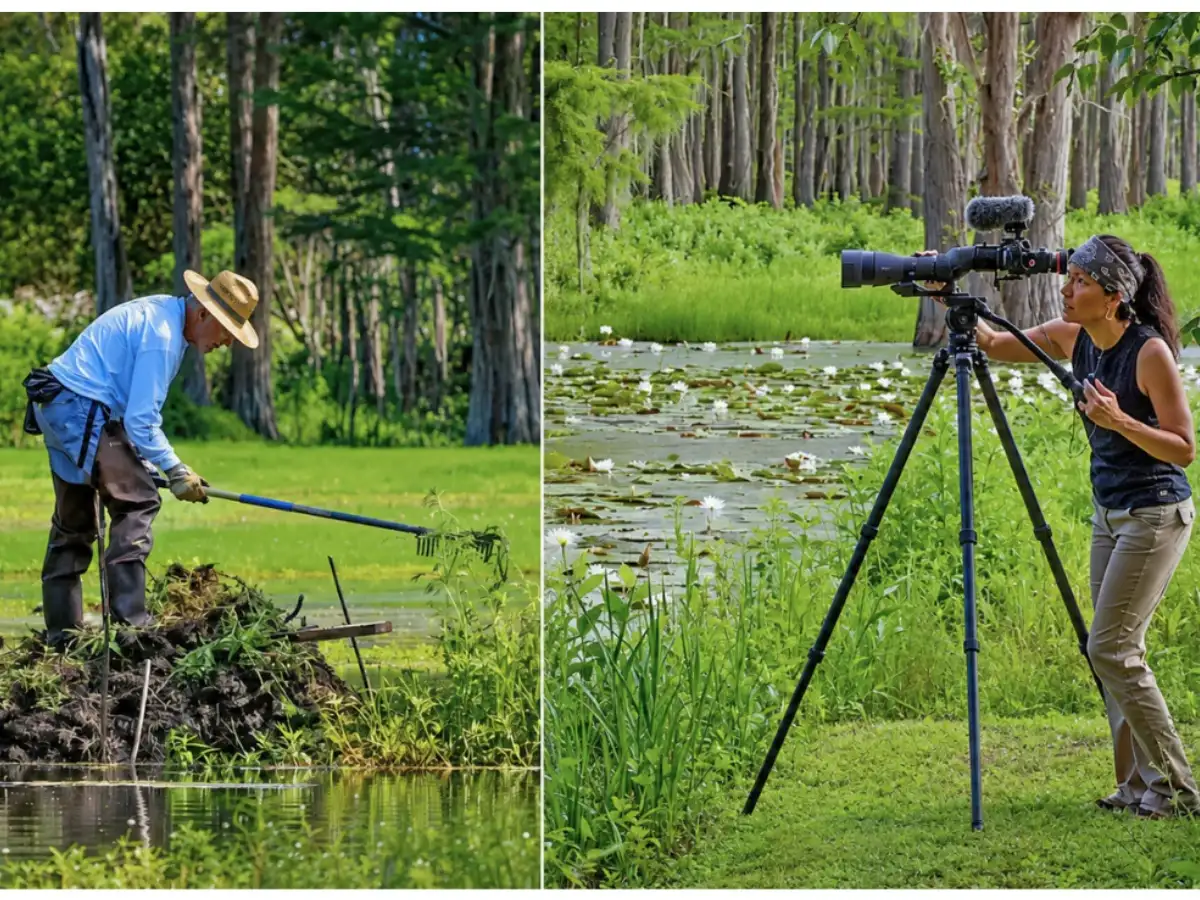
According to WFSU, Stevenson is a retired state park biologist who understood the ecological importance of the swamp, while Tanaka became an accomplished wildlife photographer and videographer who documented the animals living around their home.

The USFWS later highlighted their property as an example of how private landowners can contribute to wildlife conservation. The agency noted that private landowners control a substantial share of land in North America and can therefore play an important role in restoring and protecting habitat.

275 wood storks turned the backyard swamp into a wildlife haven

The most remarkable residents of the sanctuary are its wood storks.

The USFWS reported that the property was home to 275 nesting wood storks, making the privately owned swamp an important rookery.

But the storks are far from the only wildlife found there.

Great blue herons, great egrets, little blue herons and green herons use the wetland, while anhingas, common gallinules, wood ducks and black-bellied whistling ducks also nest there. Roseate spoonbills have been spotted visiting the property.

The sanctuary is also home to mammals and reptiles including bobcats, raccoons, red and grey foxes, otters, beavers, coyotes, marsh rabbits and alligators.

How Jim Stevenson manages the Florida wetland

Buying the swamp was only the beginning. Stevenson has spent years actively managing the habitat. Even before the couple purchased the property, he would paddle into the swamp and pull Chinese tallow trees from the water by hand.

The goal was to maintain the open-water conditions that wood storks need when searching for food.

He also uses prescribed fire on surrounding land to manage wildlife habitat. When dense vegetation threatens to cover floating islands and reduce open water, mechanical equipment is used to clear it.

Another unusual part of the habitat management involves the swamp's alligators. Stevenson created a small island where they could bask.

That may sound like an odd conservation strategy, but alligators can play an important role in a rookery. The USFWS noted that they can deter raccoons and other predators that might otherwise raid bird nests.

Tara Tanaka turned her home into a wildlife observatory

For Tanaka, conservation and photography became closely intertwined.

The award-winning wildlife photographer uses high-magnification equipment to observe and photograph animals without disturbing them. Her office overlooks the wetland, allowing her to watch birds from her home.

The USFWS reported that she could see wood storks arriving with sticks for their nests and recognised individual birds returning to the rookery.

"I love seeing them come back year after year," Tanaka said, according to the USFWS.

WFSU also described the property as a photographer's dream, with Tanaka using viewing areas and cameras to document wildlife in the swamp.

The couple put the swamp under permanent conservation protection

The couple eventually took steps to ensure that their conservation work would continue even beyond their own ownership.

In 2016, the Apalachee Land Conservancy placed a conservation easement on the property in perpetuity, according to the USFWS.

A conservation easement is a legal agreement that restricts development and certain other uses of privately owned land while allowing the owner to retain the property.

For the Tallahassee swamp, the arrangement means the wetland has additional legal protection against future development.

"No shooting, no fishing, even the frogs are protected," Tanaka said.

The protection also means the sanctuary's wildlife habitat can continue to exist alongside a growing urban area.

Why are wetlands so important to wood storks?

Wood storks depend heavily on healthy wetlands for feeding and nesting.

The USFWS explains that the birds breed when wetland water levels are falling and prey becomes concentrated, providing food for growing chicks. They generally build their nests in trees on islands or in trees surrounded by water.

That makes the preservation of cypress swamps particularly important.

WFSU noted that the 45-acre property is valuable not only because it provides habitat for birds, but also because protected wetlands around Tallahassee contribute to the wider ecosystem and help support the region's water resources.

The couple also taught other landowners about wildlife conservation

Stevenson and Tanaka did not stop at managing their own property.

Before the Covid-19 pandemic, they held quarterly sessions for private landowners who wanted to manage their properties for wildlife.

The sessions attracted around 45 to 50 people and regularly reached capacity.

Stevenson taught participants about prescribed fire, native plants, wildflowers and habitat management, while the couple used their own sanctuary to demonstrate what private conservation could achieve.

"Natural and restored lands held in private ownership by people and organizations who genuinely care about them will have to play a role in the future of wildlife protection," Tanaka said, according to the USFWS.

Wood storks have made a remarkable recovery in the US

The story of the Tallahassee swamp comes at an interesting time for wood storks.

The species' US breeding population once faced a serious decline. When wood storks were listed under the Endangered Species Act in 1984, their population had fallen from around 20,000 nesting pairs in the 1930s to fewer than 5,000.

The population has since rebounded.

In February 2026, the US Fish and Wildlife Service announced that the Southeast US distinct population segment of the wood stork had been removed from the federal list of endangered and threatened wildlife because the species had recovered.

The Service estimated the current US breeding population at 10,000 to 14,000 nesting pairs across roughly 100 colony sites, more than twice the number of nesting pairs and more than three times the number of colonies compared with when the species was listed.

The delisting took effect in March 2026, with a post-delisting monitoring plan put in place to track the species' recovery.

Sign up to read this article
Read news from 100's of titles, curated specifically for you.
Already a member? Sign in here
Related Stories
Top stories on inkl right now
One subscription that gives you access to news from hundreds of sites
Already a member? Sign in here
Our Picks
Fourteen days free
Download the app
One app. One membership.
100+ trusted global sources.