
Educational content creator Michael McBride, otherwise known as ‘idea.soup’ on TikTok, explained how Iran beat the United States in a fictional war game.
“A fictional Iran beat the US in war games, and we learned nothing from it,” McBride narrates the story of the Millennium Challenge to his audience on TikTok. Notably, the US government spent $250 million for the simulation. It’s the biggest wargame in US history.

“The soldiers were split into two teams. There’s blue, which is America, and there’s red, which is a generic Middle Eastern country.” The organizers then placed Marine Corps General Van Riper in charge of the red team.
“You see, the red team was supposed to lose. But Van Riper didn’t want to lose, so he played to win and used real-world asymmetric tactics,” McBride explained.
Riper served in the Vietnam War. Notably, the Vietnamese forces applied asymmetrical strategies, which American troops heavily struggled against. Aside from utilizing Vietnam’s rugged jungle terrain to their advantage, Vietnamese soldiers had decentralized command. Although the North Vietnamese Army (NVA) was uniformed, their guerrilla arm—the Viet Cong (VC)—was not.
Saigon would fall in 1975, and the United States would withdraw its troops. These were the conditions Riper toured under. He earned two Silver Star Medals for his service in the Vietnam War—the third-highest U.S. military decoration for valor in combat. Needless to say, Riper was packed with experience, and he intended to use it in the wargame.
A valuable learning experience
“They used civilian boats instead of military ones, they used motorcycle couriers and coded messages in mosque minarets because their cellphone networks had been hacked and compromised. They launched a bunch of missiles from small, explosive boats, and they beat the US,” McBride said. He added that the wargame was supposed to last fourteen days but ended much earlier.
In reality, it only took Van Riper’s red team less than two days to win.
“The US military was incredibly embarrassed, because this was supposed to show off all these new tactics and technologies,” McBride notes. The wargame restarted, and the participants were forced to follow a script to enable the United States to win.
In frustration, General Van Riper quit and wrote a 21-page recommendation so that the US military could evade the asymmetrical tactics. McBride says the tactics were classified instead. One year later, the United States invaded Iraq.
PBS Frontline interviewed Riper in 2004. “The real problems were we did not have a thorough understanding of war, an intellectual doctrine of foundation for Vietnam.” He acknowledged that although the United States has a well-funded army, it does not know how to get around the unconventional tactics.
It’s just fiction, right?
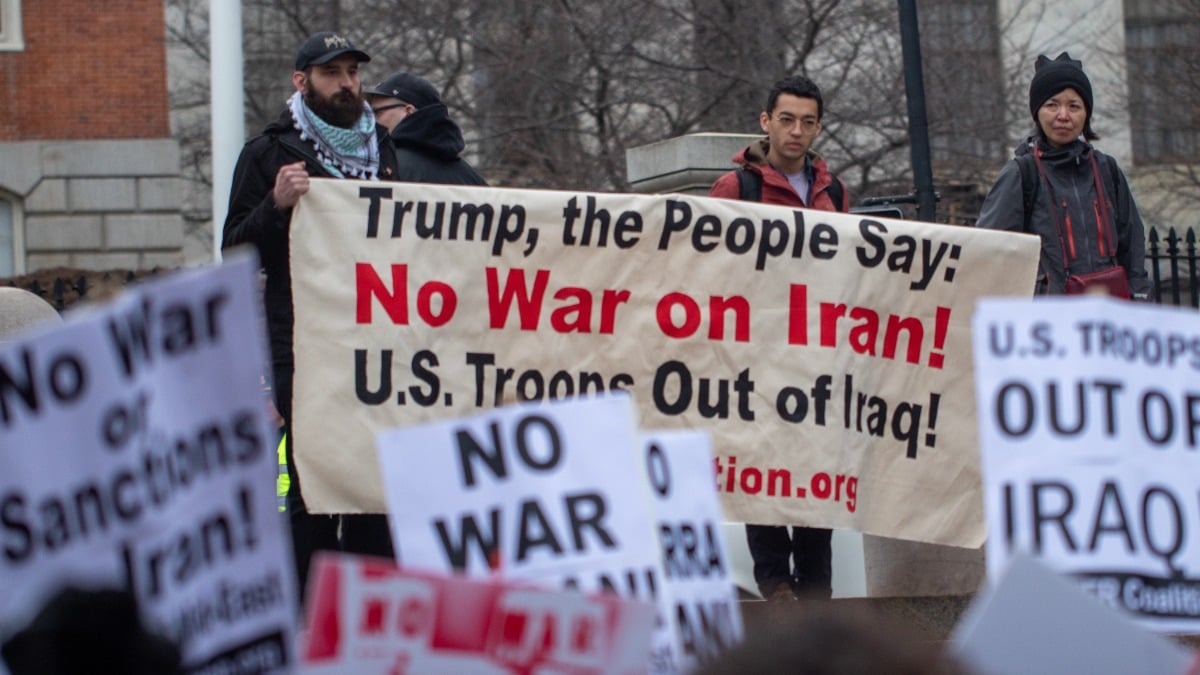
Thankfully, the fictional Iran Van Riper led wasn’t the real thing. In 2026, the United States attacked Iran and killed their supreme leader. Trump has already declared victory on multiple occasions. That’s the end of it, right?
Former Secretary of Defense James Mattis once said, “The enemy gets a vote.” Trump started this war with Iran, but ending it is a different story altogether. The United States may have cut the head of the snake off, but Iran’s military is still actively retaliating.
Regardless, the outcome of the war is yet to be decided. Unlike in the Millennium Challenge, the United States has the option not to let pride and hubris win.
Have a tip we should know? [email protected]







