This week, a federal judge ruled that a major provision of New Jersey's "assault weapon" ban is unconstitutional, but he was not happy about saying so. The decision illustrates how the Supreme Court's Second Amendment precedents have constrained the discretion of judges who are personally inclined to support gun control.
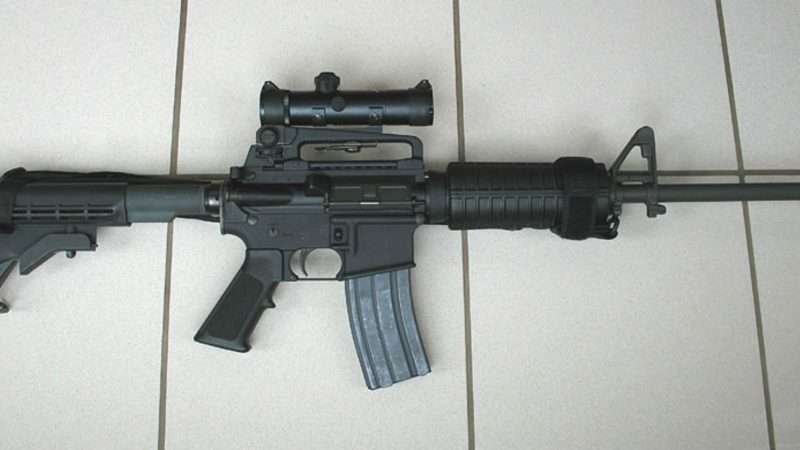
New Jersey's Assault Firearms Law—which the state Legislature approved in 1990, responding to a mass shooting at a Stockton, California, elementary school the previous year—bans a list of specific rifle models, along with "any firearm manufactured under any designation which is substantially identical to any of the firearms listed above." According to guidelines that New Jersey Attorney General Peter Verniero issued in 1996, the latter description encompasses semi-automatic rifles that accept detachable magazines and have at least two of five features: a folding or telescoping stock, a pistol grip, a bayonet mount, a flash suppressor or threaded barrel designed to accommodate one, or a grenade launcher. Illegal possession of "assault firearms" is a second-degree crime punishable by five to 10 years in prison and a maximum fine of $150,000.