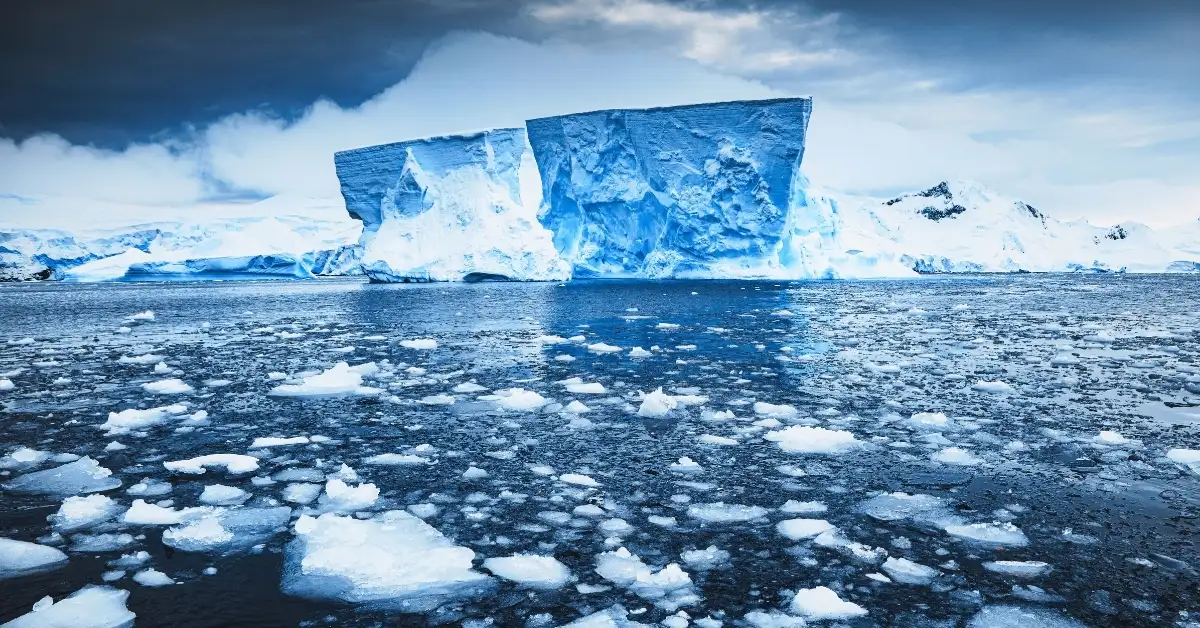
Deep beneath nearly 2 miles of Antarctic ice, scientists have discovered a giant fan-shaped geological structure that may rewrite the story of how Earth’s ancient supercontinent Gondwana broke apart. The hidden formation, known as the East Antarctic Fan-Shaped Basin Province, connects several massive underground basins once believed to be separate.
This buried Antarctic structure is more than an ancient rock formation. It is a geological time capsule that preserves clues about continental movement, tectonic forces, and the changing future of the Antarctic ice sheet. The discovery shows that Antarctica’s frozen surface hides a far more complex world beneath.

Researchers believe this fan-shaped basin system could explain how Antarctica separated from Australia millions of years ago. It may also reveal why some glaciers move along specific paths today. The finding changes how scientists view the continent’s hidden foundation.
East Antarctic fan-shaped structure reveals a hidden geological system beneath ice
The East Antarctic fan-shaped structure was identified by an international research team led by Egidio Armadillo from the University of Genoa. Scientists combined radar, gravity, magnetic, seismic, and topographic data to look beneath Antarctica’s thick ice cover.
Because more than 99% of Antarctica’s bedrock remains buried, researchers cannot directly observe its ancient landscape. Instead, they use advanced imaging techniques that work like a medical scan for Earth’s crust.
The data revealed that the Wilkes Basin, Aurora Basin, and the region surrounding Lake Vostok are not isolated geological depressions. They appear to be connected parts of one enormous Antarctic fan-shaped basin system. Scientists say this changes the way they understand Antarctica’s buried geology. Instead of studying separate basins individually, researchers can now examine a much larger tectonic story that stretches across the continent.
How did the Antarctic fan-shaped basin help break apart Gondwana?
The Antarctic fan-shaped basin may hold important evidence about the breakup of Gondwana, the ancient supercontinent that once joined Antarctica, Australia, Africa, South America, and India. Over millions of years, tectonic forces slowly pulled these landmasses apart.
Researchers suggest the fan-shaped structure formed through distributed rotational extension. In simple terms, Earth’s crust stretched and rotated around a central point, creating weaknesses that later influenced continental separation. This process may have weakened the northern edge of East Antarctica. Over time, these weakened zones could have guided the split between Antarctica and Australia, shaping the curved coastlines seen today.
The Antarctic fan-shaped basin was likely not the only reason Gondwana broke apart. However, it may represent a major piece of the puzzle that explains how massive continents reorganized across the planet.
The hidden Antarctic structure proves that ancient geological scars can remain active influences long after the original event disappears. What happened millions of years ago can still affect the world today.
Why does the hidden Antarctic structure matter for climate and glaciers?
The Antarctic fan-shaped structure is important not only for understanding ancient continents but also for studying modern climate risks. The shape of the land beneath the ice can influence how glaciers flow across Antarctica.
Researchers found that boundaries of the fan-shaped basin appear to align with major glaciers, including Totten, Vanderford, Denman, Frost, and Amery. These underground features may act like pathways that guide ice movement.
When ice rests on deep basins below sea level, it can become more vulnerable to ocean influence. Warmer seawater entering these regions may increase melting over long periods.
New Antarctic research continues to show that the continent cannot be treated as one simple frozen block. Different regions respond differently to warming because their hidden geology creates different conditions.
The Antarctic fan-shaped structure provides another reminder that Earth’s future is deeply connected to its past. Beneath the frozen surface lies a history of movement, pressure, and transformation that still shapes our oceans and climate.
This discovery does not simply add another map beneath Antarctica. It changes the way scientists understand the continent itself. The ice-covered land is not empty or lifeless. It is an ancient world carrying the evidence of planetary change.
The hidden Antarctic fan-shaped basin shows that even the coldest place on Earth holds stories from a warmer, more dynamic past. Those stories may become essential for predicting what happens next.
FAQs:
1. Why is Antarctica’s underground landscape difficult to study?Antarctica is one of the least explored places on Earth because extreme cold, thick ice, and harsh weather make direct investigation almost impossible. Scientists depend on remote sensing technologies that allow them to study buried landscapes without removing the ice. These methods help reveal ancient mountains, valleys, and rock formations hidden for millions of years.
2. What can ancient Antarctic geology tell us about Earth’s future?
Ancient geological records act like a timeline of how continents, oceans, and climate systems changed in the past. By understanding how Antarctica evolved, researchers can create better models of how ice sheets may respond to future warming and changing ocean conditions.
3. Could Antarctica’s hidden structures influence global sea levels?
Yes, underground features can affect where ice flows, how quickly glaciers move, and how vulnerable certain regions are to ocean warming. Understanding the shape of the land beneath the ice helps scientists estimate possible long-term changes in global sea levels.
4. Why do scientists study the breakup of supercontinents like Gondwana?
Supercontinent breakup explains how today’s continents formed and why they have their current positions. These events also reveal how Earth’s crust behaves over millions of years, helping researchers understand major geological changes still happening today.
5. Are there other unknown worlds hidden beneath Earth’s ice sheets?
Yes. Ice-covered regions, especially Antarctica and Greenland, contain many unexplored geological features. Scientists continue discovering buried lakes, ancient valleys, and unusual rock formations that provide clues about Earth’s climate and tectonic history.