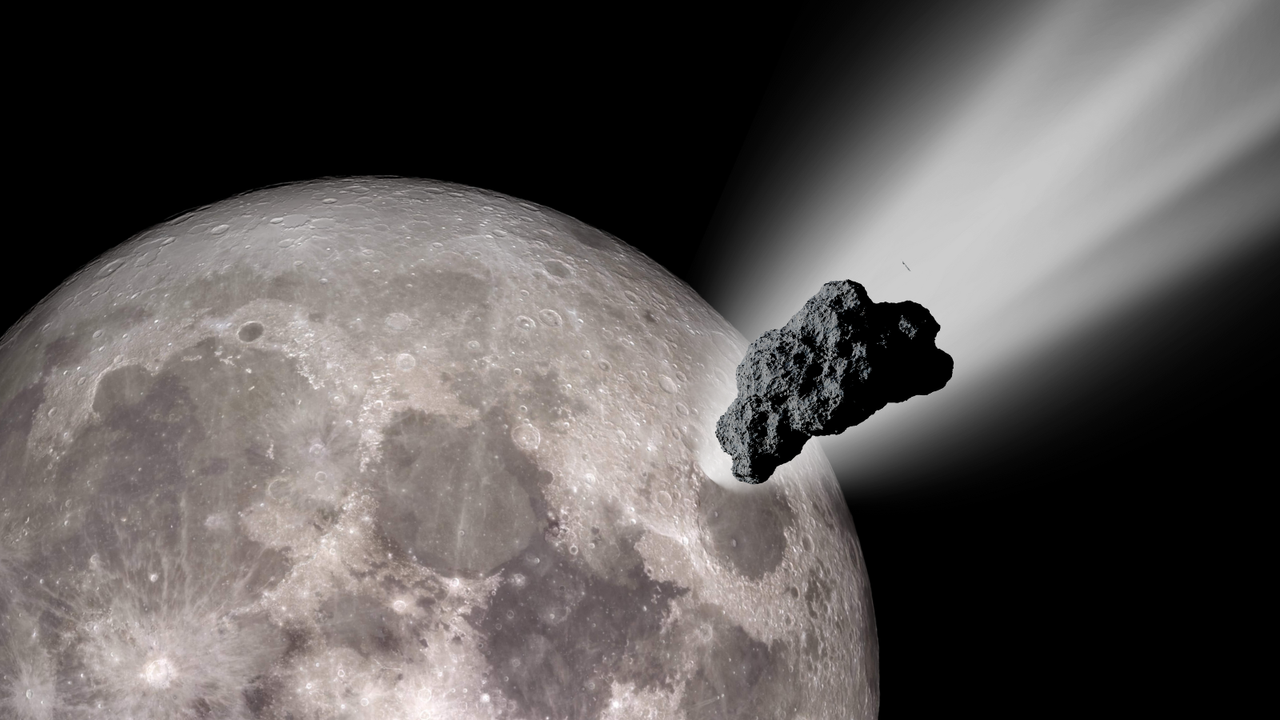
An unusual ratio of potassium isotopes, found in samples of basaltic rock brought back to Earth from the moon's South Pole–Aitken Basin by China's Chang'e 6 sample-return mission, has provided further evidence for how the impact that formed this gigantic basin is responsible for the asymmetry between the moon's near and far sides.
The moon's near side is familiar to us through the pattern of the 'Man in the Moon' that is made from the dark shapes of the lunar maria, which are vast volcanic plains. In contrast, the far side, visible only to spacecraft that go around the back side of the moon, has barely any dark maria.