
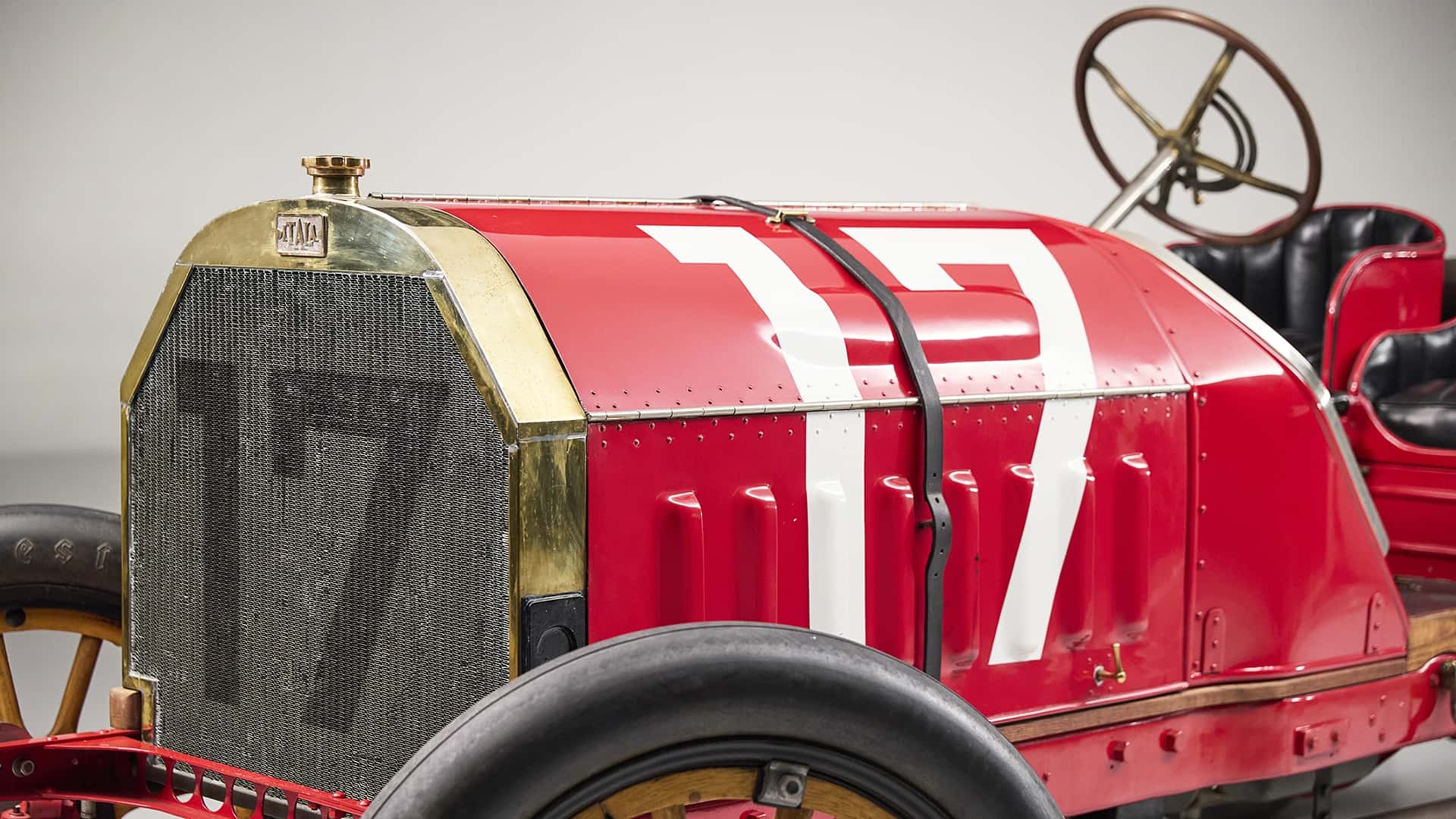
In 2026, the name Itala will make its return to European roads. The DR Automobiles Group recently announced that it had acquired the historic Italian brand, which wrote some of the most important chapters in the country’s automotive history more than a century ago.
The goal is to have the new Itala brand up and running by the end of 2026. It's unclear exactly what the DR Group has planned for this historic name, but there's hope that Itala will become a serious luxury car player in Europe over the next few years.
But in order to appreciate the symbolic weight of Itala's unlikely comeback, it’s worth looking back at one of the most fascinating stories from the early days of Italian motoring.
The Origins

Founded in Turin in 1903 by Matteo Ceirano, Itala was born in the heart of Italy’s first automotive industrial district. From the start, it distinguished itself through exceptional build quality and forward-thinking engineering, quickly establishing itself as one of the country’s leading automakers, second only to Fiat in production volumes.
Early models, such as the 16 HP and 24 HP, achieved immediate success in motorsport. That helped the brand earn a reputation for robustness, reliability, and performance.
A key turning point came in 1904, when major investment from Genoa led to the creation of Itala Fabbrica Automobili and the construction of a modern factory. Design was entrusted to leading engineers like Alberto Balloco, whose work produced cars that defined an era.
Among Balloco's creations, the Itala 100 HP became the undisputed star of the 1905 racing season. It won the Coppa Florio and outperformed rivals just down the road, including some of Fiat's best racers.
Success & Cutting-Edge Technology
In 1906, Itala won the first Targa Florio. In 1907, the brand cemented its legendary status with a Peking to Paris victory, won by Prince Scipione Borghese in an Itala 35/45 HP. More than a sporting achievement, the journey captured global attention, with Luigi Barzini’s reports in Corriere della Sera spreading the Itala name worldwide and increasing the brand’s prestige.
In the years leading up to World War I, Itala embodied Italian industrial excellence, offering a wide range of models, an international sales network, and groundbreaking innovations such as the "avalve" engine—a quiet, refined design without mechanical valves. These engines delivered performance up to 25 percent better than contemporaries, though at a high production cost.
It was Itala's pursuit of technical perfection, combined with lackluster financial management, that ultimately led to instability within the company.
War and Decline
World War I marked a dramatic turning point for Itala. The company shifted to licensed production of Hispano-Suiza aircraft engines, requiring massive investment. Government orders, however, fell sharply after the war, leaving Itala in financial difficulty. Despite producing elegant models such as the 50, 51, and the luxurious six-cylinder 55, Itala struggled to reconnect with a market transformed by the post-war era.
In the 1920s, Itala attempted to relaunch through state intervention and the arrival of Giulio Cesare Cappa, who designed the sophisticated Itala 61. Technically advanced, the model proved too expensive to produce. At the same time, visionary projects such as the 11 and 15 single-seaters—true engineering marvels—never progressed beyond the prototype stage.
Financial troubles deepened, leading to a 1929 merger with the Società Anonima Officine Metallurgiche e Meccaniche di Tortona and subsequent restructuring attempts. The final efforts by the "new" Itala SACA in the early 1930s failed to reverse the decline.
In 1934, the curtain finally fell on what many considered "the other Fiat," a brand that anticipated the future but was ultimately undone by its own structural limits.
A Legacy Reborn
The 2026 comeback under the DR Automobiles Group brings the Itala story back into the spotlight—a story defined by innovation, daring feats, and boundless ambition. Even today, it remains one of the noblest chapters in Italy’s automotive history.
We can't wait to see what's next for the Itala brand.
This story originally appeared in Motor1 Italy